



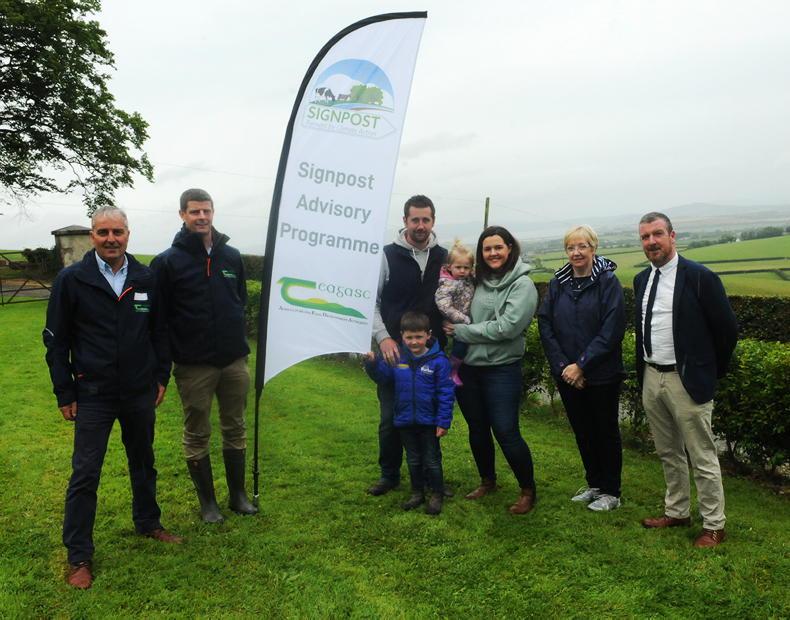
The launch took place last week of the new Signpost advisory programme in Donegal on the farm of Gareth, Enya and Anita Peoples.
So, what is the Signpost programme? The tag line is 'To support climate and sustainability action on farms'.
It consists of a recently put together team of 21 dedicated advisers covering the entire country, their sole mission being to help farmers to contribute to the emissions target reduction set for the industry.
The Signpost name comes from the fact that the programme is designed to point farmers in the right direction along the climate action road and is free for all farmers to sign up to, not just Teagasc clients.
I know we as farmers can often feel we are getting blamed for more than our fair share and that all the planes in the sky are causing way more harm than agriculture.
But with a 25% target reduction in agricultural emissions by 2030, industry is probably saying that we got off lightly.
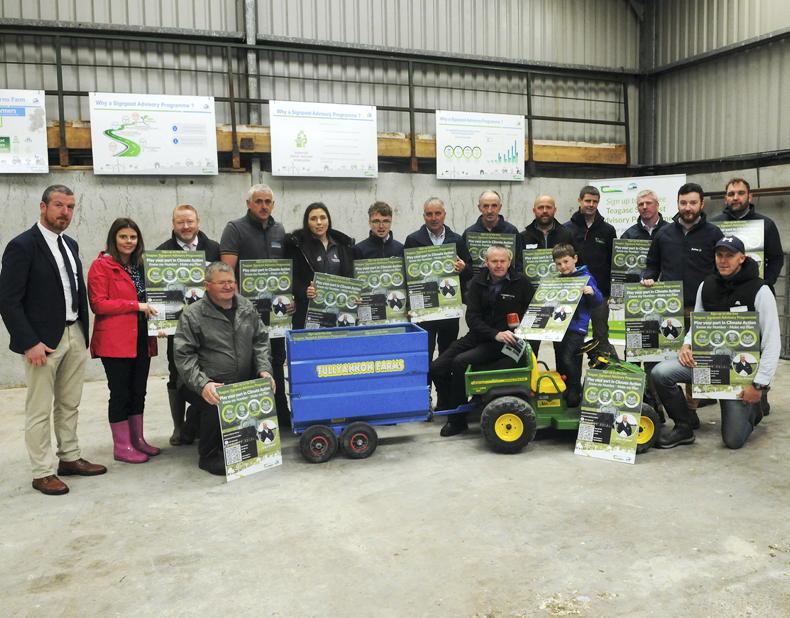
As was alluded to at the launch, it’s not for ourselves that we need to reduce these emissions, but for future generations.
I suppose when we think of the children of today and what the planet is going to be like for their future, it makes it a little easier to buy into and helps us all put our best foot forward and do our own little bit!
Steps
So, what kind of steps are involved in reducing gaseous emissions from your farm?
A lot of the measures are things that many farmers will be doing anyway, but I suppose the idea of the programme is to try to get all farmers to buy into them - things such as spreading protected urea instead of CAN-based fertilisers.
Protected urea is a urea nitrogen fertiliser made safe from ammonia loss through the addition of a urease inhibitor and is the technology that has the potential to give the largest and quickest reductions in greenhouse gas and ammonia emissions within agriculture and, trials have shown, will grow more grass than either CAN or urea.
Also, things such as spreading lime, building or maintaining soil fertility, using low emissions slurry spreading equipment, reducing the amount of chemical N spread by 10kg/ha.
Better grassland management, improved animal health via herd or flock health plans and the strategic use of vaccines improve animal quality through the use of better genetics.
Technology
The information available to farmers on genetics is at an all-time high and with the implementation of the new national genotyping programme is only set to get better.
Also, things such as reducing age of slaughter, which, if the aforementioned measures were incorporated into the system, is likely to happen anyway, producing top-quality silage and incorporating clover into swards, something I have done myself with red clover and, so far, am suitably impressed.
Nothing new there I hear many of you say and right you are, but I suppose sometimes it’s easy to get side tracked from implementing these things.
There will be other new technologies in the pipeline for reducing emissions such are feed additives for cattle, but they are just not at the on-farm stage yet.
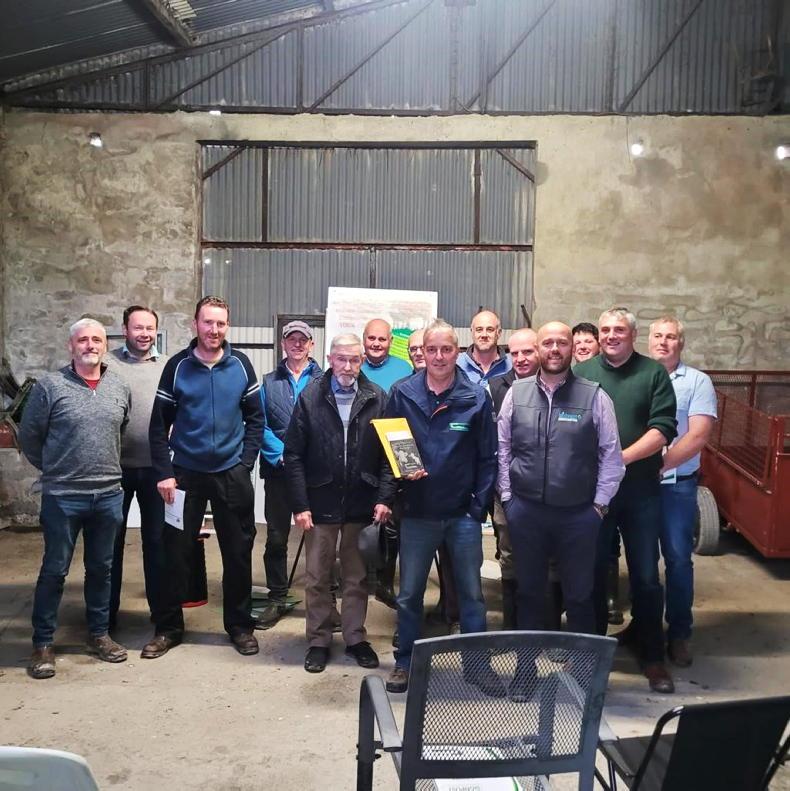
While we are delighted to see Gary move into his new role and look forward to continue working with him, myself and the rest of the members of the east Donegal beef discussion group are sorry to be losing him as our facilitator.
Gary held his last meeting on my farm last Monday night, where we also welcomed in Gary’s replacement Kevin McMenamin.



SHARING OPTIONS