‘What’s in a name? That which we call a rose by any other name would smell as sweet.” Those iconic lines from William Shakespeare’s play, Romeo and Juliet, question the general logic around word usage. Of course, a rose by any other name will still smell beautiful. But what happens when words are misleading?
This is a situation where the name – or, in this case, the label – is extremely important.
We often see brands and retailers sell foods with misleading labels. Technically speaking, they aren’t breaking any rules. The details are there, if you know where to look.
But when the label pops – when the Irish colours are proudly displayed, an Irish name is used, or the product is from a known Irish brand – it can be easy to ignore the fine print. However, food influencers are starting to speak out about this practise. Last month, a photo emerged of fresh tomatoes from Tesco labelled “Irish Tomatoes on the Vine”, while below, in smaller font, the country of origin was Spain.
Mick Kelly of Grow It Yourself (GIY) shared the image on his Instagram page and publicly shamed the retailer, who soon pulled the tomatoes off the shelf and apologised for what they said was a “labelling error”.
In another instance, influencer and author Sophie Morris visited the vegetable section of Dunnes Stores. She claimed that the display unit for loose onions made it appear that the produce were Irish. However, on closer inspection, the labelling revealed the onions were imported from New Zealand.
Onions are one of the few Irish vegetables available year round.
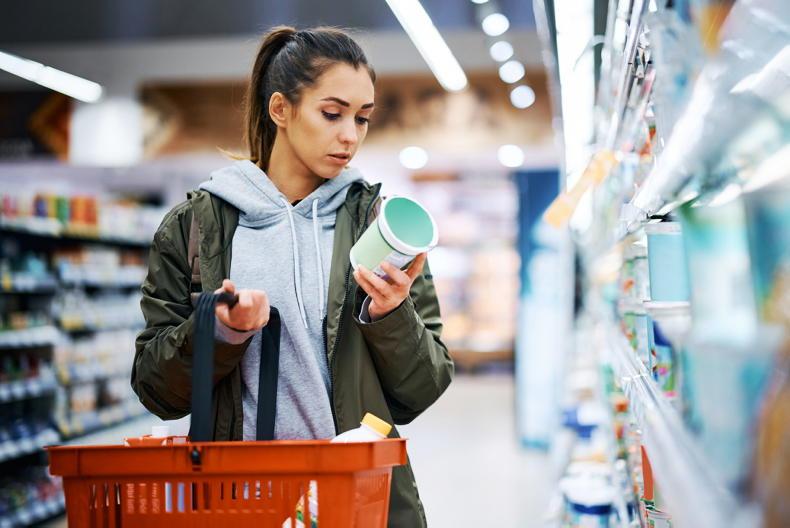
These are just two examples of publicised incidences, but the fact is, every time a consumer enters a shop with the intent to buy Irish, their label literacy is being tested.
Supporting Irish
Back in 2023, Bord Bia released its Locally Produced Food Report and found that nine in 10 consumers like to buy locally produced food.
They do this to strengthen their local economy, support small businesses, and make more climate-friendly choices. However, those surveyed had mixed views on what exactly defined “local” – some associated local with being made in Ireland, while others considered local more within their specific region.
Interestingly, the report also found that consumers heavily depend on store displays, signage and packaging to help them make local purchases.
Retailers are well-versed in consumer psychology (how our thoughts, beliefs, feelings and perceptions influence how we shop). They use this information to develop marketing strategies and encourage higher spends.
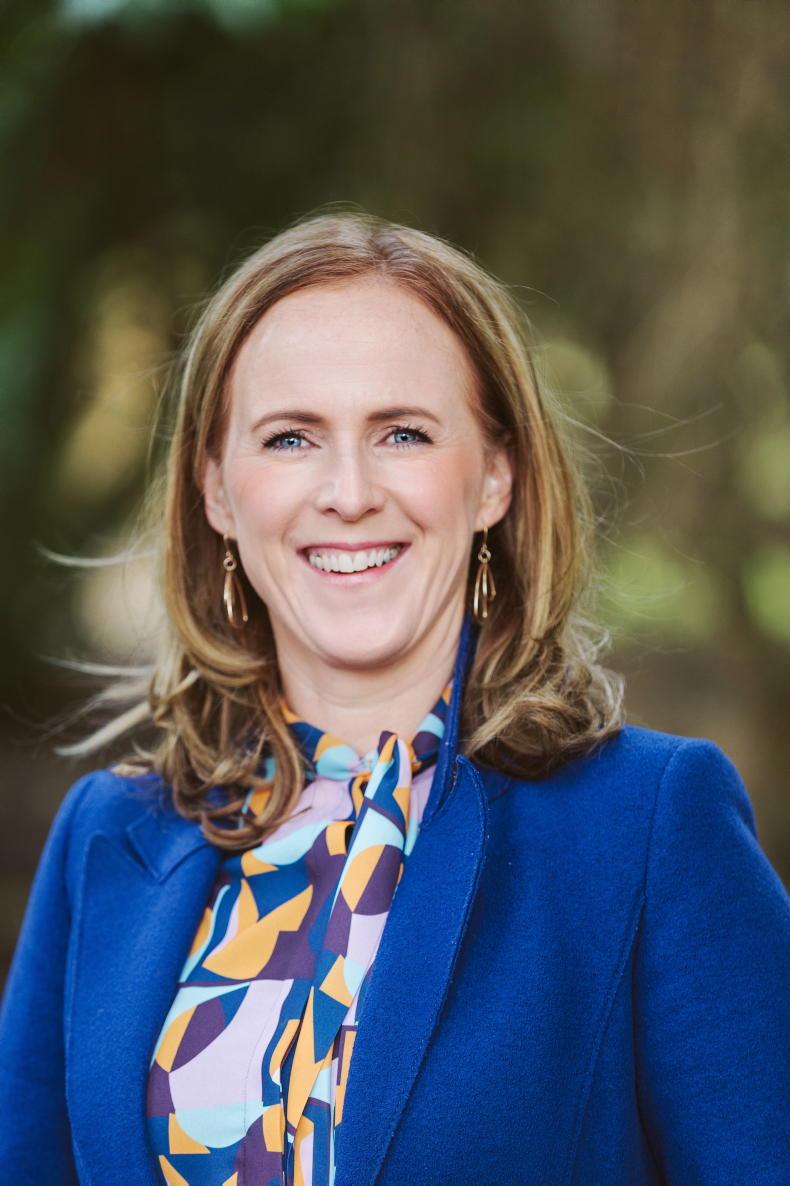
Gemma Smyth, managing director of &Smyth.
Gemma Smyth, managing director of Irish marketing and communications firm &Smyth, says the perceived quality and trust associated with Irish food creates an incentive for retailers and private label brands to make non-Irish products “appear” Irish.
“In many cases, this results not only in consumer confusion, but in cheaper, lower-quality imported products being positioned in a way that undermines the work of genuinely Irish producers,” she tells Irish Country Living.
“These practices can take business away from Irish food producers who invest heavily in quality, sustainability and high welfare standards, and I do think that retailers should be held to account when the presentation of a product could reasonably mislead.
“Consumers are becoming savvier,” she adds. “But we also have to recognise the reality of modern grocery shopping – families are under pressure, trying to balance budgets while buying the best they can. Many shoppers don’t have the time or headspace to scrutinise every detail on every label, and nor should they have to. Clear, consistent, trustworthy standards are essential.”
On Wednesday 11 February, food labelling was discussed at the Joint Committee on Agriculture and Food meeting, which included representatives from Bord Bia, the Food Safety Authority of Ireland (FSAI) and the Department of Agriculture, Food and the Marine (DAFM).
During the meeting, Aontú’s Paul Lawless TD pointed out a recent issue regarding misleading labels in SuperValu, specifically the supermarket’s Irish Herbs Thai Style Curry Mix.
This package features the image of an Irish farmer. It also appears to carry the Bord Bia Quality Assurance Mark. However, the country of origin is labelled as Kenya/Spain.
The product was withdrawn from SuperValu shelves in January, with the retailer stating it was a labelling error.
Bord Bia released a statement soon after the meeting, saying when it comes to their Quality Assured produce, facts matter: “The Bord Bia Quality Mark applies only to Irish farmed produce. It cannot be used on imported products.”
The statement continued, saying Bord Bia has a “robust monitoring programme in place to oversee use of the Quality Mark, and sanctions are applied where misuse occurs.”
The Quality Assurance Mark is one of the most trusted logos in Irish food but only applies to fresh food categories like fruits and vegetables, while logos like Love Irish Food and Guaranteed Irish operate independently – they use a variety of criteria and can allow for non-Irish ingredients in certain circumstances.
Martin Flynn: ‘So much Irish product is marketed under fake brands’
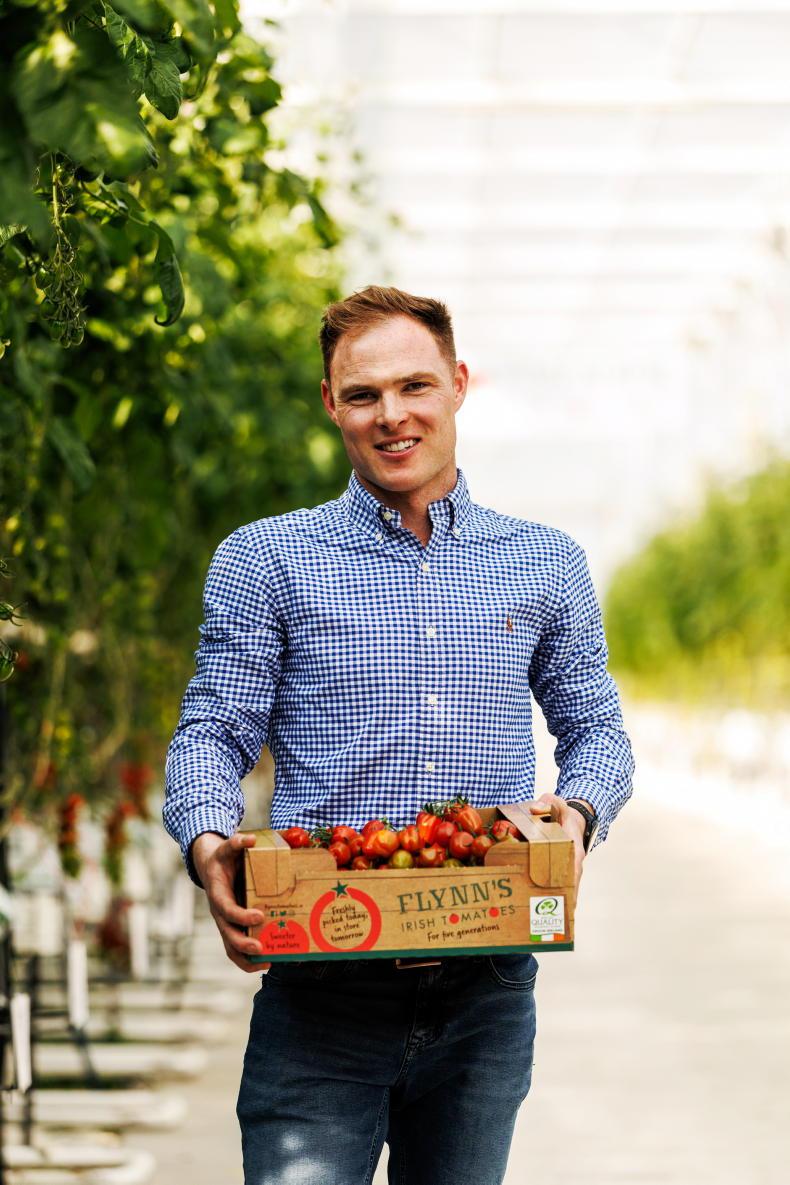
Martin Flynn of Flynns tomatoes in Swords, Co Dublin. \ Philip Doyle
Martin Flynn is one of just six commercial tomato growers in Ireland. Aside from his business, Flynn’s Tomatoes, he is also vice chairman of the IFA Field Vegetable and Protected Crops Committee. He tells Irish Country Living that food labels and marketing can often be a source of frustration for the commercial growers who supply Irish retailers.
“So much Irish product is marketed under fake brands,” he explains. “Retailers often prefer to pursue their own brand, so when consumers are doing their shop, they’re buying produce from farms that don’t exist. Consumers want to know where their food is coming from. Why not let growers be themselves?”
Private label branding is when a retailer has items packaged under its own branding, and this practise is common.
“Farmwashing” is a more recent development and occurs when retailers market produce – like cheese, meat, fruits and vegetables – under a fake brand which looks and reads like an Irish farm.
Martin feels that if retailers were to sell produce under the actual grower’s name, it would benefit everyone – the consumer, producer and retailer.
“Let the growers use their own brand so consumers know who is growing their vegetables. It’s providing complete traceability.”
Martin also adds, “Always check the country of origin. By buying Irish, you’re keeping growers in business. A lot of the commercial growers in Ireland are ageing with no one coming behind them. Who is going to produce in the future? Retailers need to be making the right investments to create secure supply.”
Aside from supermarkets “farm-washing” local produce, there are also well-known Irish companies selling imported foods under their brand. Though these businesses are Irish, the onus is on consumers to check where they are actually sourcing their produce from.
For example, Mitchelstown-based Horgans Delicatessen Supplies Ltd is a long-established family business that came under the spotlight recently – especially in light of the Mercosur debate.
Given the name of the brand, many assumed that their corned beef was Irish but it was actually sourced from Brazil. They have since issued a statement outlining that the rest of their product range is sourced in either Ireland or Europe.
Annie Dunne is a consultant with over 25 years of experience in food manufacturing and retail.
“My issue isn’t where food comes from – it’s how that story is presented,” she says.
“Importing produce, particularly when Irish food is in season, undermines the ‘local’ promise. Made up farm names only deepen that problem by implying a level of provenance and farmer connection that isn’t there.
“Real growers can’t compete with fictional stories that create emotional value at zero cost. The solution, I believe, is transparency and genuinely championing local – it’s better for consumers, producers, and retailers alike.”
‘What’s in a name? That which we call a rose by any other name would smell as sweet.” Those iconic lines from William Shakespeare’s play, Romeo and Juliet, question the general logic around word usage. Of course, a rose by any other name will still smell beautiful. But what happens when words are misleading?
This is a situation where the name – or, in this case, the label – is extremely important.
We often see brands and retailers sell foods with misleading labels. Technically speaking, they aren’t breaking any rules. The details are there, if you know where to look.
But when the label pops – when the Irish colours are proudly displayed, an Irish name is used, or the product is from a known Irish brand – it can be easy to ignore the fine print. However, food influencers are starting to speak out about this practise. Last month, a photo emerged of fresh tomatoes from Tesco labelled “Irish Tomatoes on the Vine”, while below, in smaller font, the country of origin was Spain.
Mick Kelly of Grow It Yourself (GIY) shared the image on his Instagram page and publicly shamed the retailer, who soon pulled the tomatoes off the shelf and apologised for what they said was a “labelling error”.
In another instance, influencer and author Sophie Morris visited the vegetable section of Dunnes Stores. She claimed that the display unit for loose onions made it appear that the produce were Irish. However, on closer inspection, the labelling revealed the onions were imported from New Zealand.
Onions are one of the few Irish vegetables available year round.
These are just two examples of publicised incidences, but the fact is, every time a consumer enters a shop with the intent to buy Irish, their label literacy is being tested.
Supporting Irish
Back in 2023, Bord Bia released its Locally Produced Food Report and found that nine in 10 consumers like to buy locally produced food.
They do this to strengthen their local economy, support small businesses, and make more climate-friendly choices. However, those surveyed had mixed views on what exactly defined “local” – some associated local with being made in Ireland, while others considered local more within their specific region.
Interestingly, the report also found that consumers heavily depend on store displays, signage and packaging to help them make local purchases.
Retailers are well-versed in consumer psychology (how our thoughts, beliefs, feelings and perceptions influence how we shop). They use this information to develop marketing strategies and encourage higher spends.
Gemma Smyth, managing director of &Smyth.
Gemma Smyth, managing director of Irish marketing and communications firm &Smyth, says the perceived quality and trust associated with Irish food creates an incentive for retailers and private label brands to make non-Irish products “appear” Irish.
“In many cases, this results not only in consumer confusion, but in cheaper, lower-quality imported products being positioned in a way that undermines the work of genuinely Irish producers,” she tells Irish Country Living.
“These practices can take business away from Irish food producers who invest heavily in quality, sustainability and high welfare standards, and I do think that retailers should be held to account when the presentation of a product could reasonably mislead.
“Consumers are becoming savvier,” she adds. “But we also have to recognise the reality of modern grocery shopping – families are under pressure, trying to balance budgets while buying the best they can. Many shoppers don’t have the time or headspace to scrutinise every detail on every label, and nor should they have to. Clear, consistent, trustworthy standards are essential.”
On Wednesday 11 February, food labelling was discussed at the Joint Committee on Agriculture and Food meeting, which included representatives from Bord Bia, the Food Safety Authority of Ireland (FSAI) and the Department of Agriculture, Food and the Marine (DAFM).
During the meeting, Aontú’s Paul Lawless TD pointed out a recent issue regarding misleading labels in SuperValu, specifically the supermarket’s Irish Herbs Thai Style Curry Mix.
This package features the image of an Irish farmer. It also appears to carry the Bord Bia Quality Assurance Mark. However, the country of origin is labelled as Kenya/Spain.
The product was withdrawn from SuperValu shelves in January, with the retailer stating it was a labelling error.
Bord Bia released a statement soon after the meeting, saying when it comes to their Quality Assured produce, facts matter: “The Bord Bia Quality Mark applies only to Irish farmed produce. It cannot be used on imported products.”
The statement continued, saying Bord Bia has a “robust monitoring programme in place to oversee use of the Quality Mark, and sanctions are applied where misuse occurs.”
The Quality Assurance Mark is one of the most trusted logos in Irish food but only applies to fresh food categories like fruits and vegetables, while logos like Love Irish Food and Guaranteed Irish operate independently – they use a variety of criteria and can allow for non-Irish ingredients in certain circumstances.
Martin Flynn: ‘So much Irish product is marketed under fake brands’
Martin Flynn of Flynns tomatoes in Swords, Co Dublin. \ Philip Doyle
Martin Flynn is one of just six commercial tomato growers in Ireland. Aside from his business, Flynn’s Tomatoes, he is also vice chairman of the IFA Field Vegetable and Protected Crops Committee. He tells Irish Country Living that food labels and marketing can often be a source of frustration for the commercial growers who supply Irish retailers.
“So much Irish product is marketed under fake brands,” he explains. “Retailers often prefer to pursue their own brand, so when consumers are doing their shop, they’re buying produce from farms that don’t exist. Consumers want to know where their food is coming from. Why not let growers be themselves?”
Private label branding is when a retailer has items packaged under its own branding, and this practise is common.
“Farmwashing” is a more recent development and occurs when retailers market produce – like cheese, meat, fruits and vegetables – under a fake brand which looks and reads like an Irish farm.
Martin feels that if retailers were to sell produce under the actual grower’s name, it would benefit everyone – the consumer, producer and retailer.
“Let the growers use their own brand so consumers know who is growing their vegetables. It’s providing complete traceability.”
Martin also adds, “Always check the country of origin. By buying Irish, you’re keeping growers in business. A lot of the commercial growers in Ireland are ageing with no one coming behind them. Who is going to produce in the future? Retailers need to be making the right investments to create secure supply.”
Aside from supermarkets “farm-washing” local produce, there are also well-known Irish companies selling imported foods under their brand. Though these businesses are Irish, the onus is on consumers to check where they are actually sourcing their produce from.
For example, Mitchelstown-based Horgans Delicatessen Supplies Ltd is a long-established family business that came under the spotlight recently – especially in light of the Mercosur debate.
Given the name of the brand, many assumed that their corned beef was Irish but it was actually sourced from Brazil. They have since issued a statement outlining that the rest of their product range is sourced in either Ireland or Europe.
Annie Dunne is a consultant with over 25 years of experience in food manufacturing and retail.
“My issue isn’t where food comes from – it’s how that story is presented,” she says.
“Importing produce, particularly when Irish food is in season, undermines the ‘local’ promise. Made up farm names only deepen that problem by implying a level of provenance and farmer connection that isn’t there.
“Real growers can’t compete with fictional stories that create emotional value at zero cost. The solution, I believe, is transparency and genuinely championing local – it’s better for consumers, producers, and retailers alike.”





SHARING OPTIONS