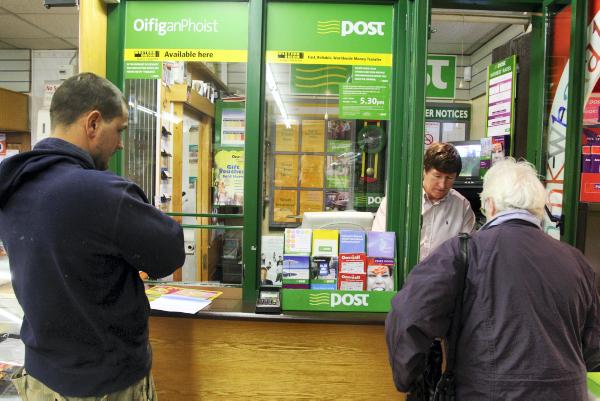
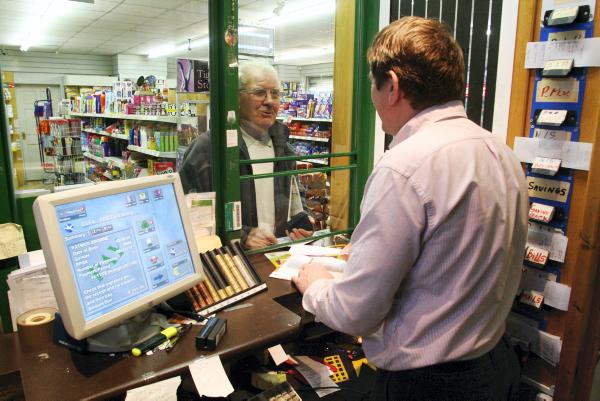
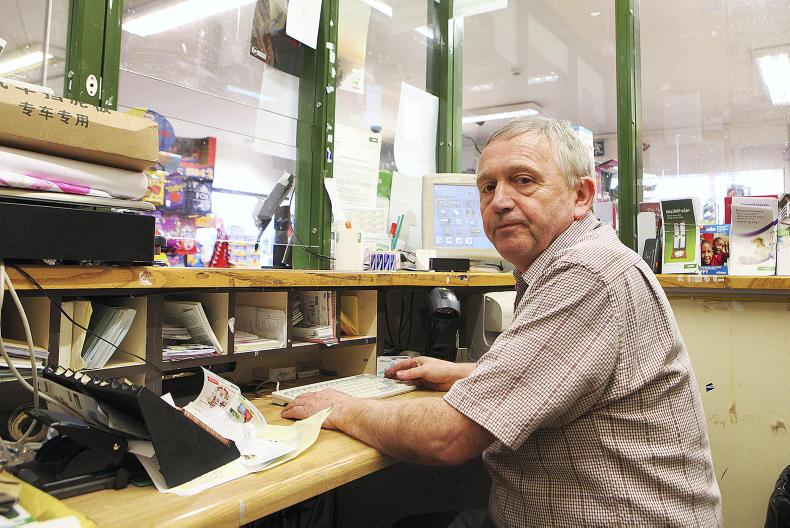
Collecting the children’s allowance, sorting your pension, posting a parcel to relations abroad or paying off your ESB bill – the local post office in rural towns is more than a place to buy a stamp.
For Mary O’Brien who lives outside Monaghan town, the local post office is part and parcel of her week. She says: “I probably visit the post office two or three times a week to collect the children’s allowance or to pay a bit off the ESB bill or TV licence. I bank with Bank of Ireland, but when it comes to paying my bills I’m one of those people who likes to pay with cash. I know that I can pay a bit off of everything rather than have one bill wipe out all my money for the week.”
Mary’s local post office is a 15-minute walk but if it was to disappear she would be looking at more bills than just her ESB.
“I don’t have any transport so if I was to go into town it would cost me €10 each way in a taxi.”
The Future for Post Offices
This, however, could be the reality facing Mary and thousands more consumers across the country, according to a report released last week by polling firm Grant Thornton. Presented at a meeting of over 30 people, including senators and TDs, the report, commissioned by the IPU (Irish Postmasters’ Union), highlights the need for government action now if our network of post offices is to survive.
At the helm of the matter was the future for social welfare payments. Ciaran McEntee, president of the IPU, says: “Post offices have the contract to issue social welfare payments for the next two years and there is a possibility that this may be extended, but the future is very unclear and a government plan, although promised, has to be put into action.”
Social Welfare
The fact is that the IPU is very dependent on the social welfare contract. It represents 30% of its annual revenue. If it was to disappear, anywhere between 400 and 500 post offices would close by 2017.
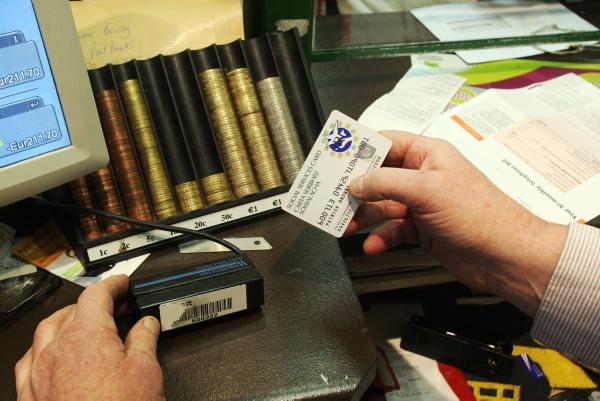
The real threat is if there is a complete move to a direct electronic payment scheme where people would have no option but to have their social welfare money transferred into their bank account. Currently, people have the option to receive it over the counter in post offices or into their bank account. Although, interestingly, Brian McGann of the IPU says they have evidence where people weren’t given this choice by their local social welfare and could not make a claim until their bank account details were provided.
Brian says: “The government is highlighting that the direct electronic payment scheme could save them up to €60 million, but that doesn’t reflect the full picture. The face-to-face nature of over-the-counter payments acts as a deterrent for fraud. On top of that, uncollected payments, which are a substantial amount of money every year, are returned to the Department of Social Protection. A system where the money goes straight into bank accounts means that money will be lost. That has to be taken into consideration.”
There’s also the fact that many people still want to collect the money in the post office themselves. The days of free banking have clearly disappeared, as many Irish Country Living articles have shown. So for those on a budget, it is a case of paying off what bills they can each week.
Lively Debate
While many points were taken on board by government officials, that’s not to say the debate wasn’t lively. At the moment, the post office network is overly dependent on the social welfare contract and it was argued that the IPU seriously has to look at its own business model. Electronic banking is becoming a reality and one that is being embraced by the vast majority of people, with four out of every five pensioners now receiving their pension into their bank account. Post offices are at the heart of local communities and a concerted effort both by the IPU and the government is essential if the post office network is to remain in rural Ireland.
The Changing Face of the Post Office
The social welfare issue isn’t the only threat facing the IPU. Last year, An Post and Tesco entered into a partnership to offer postal services. Now in certain Tesco shops around the country you can do everything you would do in a post office, apart from receiving social welfare payments and managing savings.
While this could be seen as a convenient move for consumers, it is important to be aware that staff operating in Tesco are not vetted or trained like the postmasters in your local post office. They are also not bound by the Official Secrets Act.
There is a fear that this partnership could be another move that will eliminate rural post offices at the heart of communities.
This partnership shouldn’t be confused with post offices operating in other stores. Some stores, such as certain SuperValus, now have full in-store post offices which are run by fully-qualified postmasters.
POTENTIAL SERVICES
It really is time for the IPU and the Government to start talking. Last year, An Post lost the contract to issue drivers licences. However, they do have the contract to issue a much more important document – our passports. How is that possible you may ask? There appears to be no clear plan for the future in what post offices can and should deliver. Here is just a selection of services that consumers nationwide could potentially benefit from in their local post office.
• Banking services. • Motor tax renewals (€60 million could potentially be saved over a five-year period by the post offices offering this service).• Household taxes.• Water charges.• Credit union transactions (deposits and loan replacements).• Driver licence renewal (based on the passport express model).• Value-added welfare services, such as helping people to fill in their social welfare forms.New Drive-Through Service with SuperValu
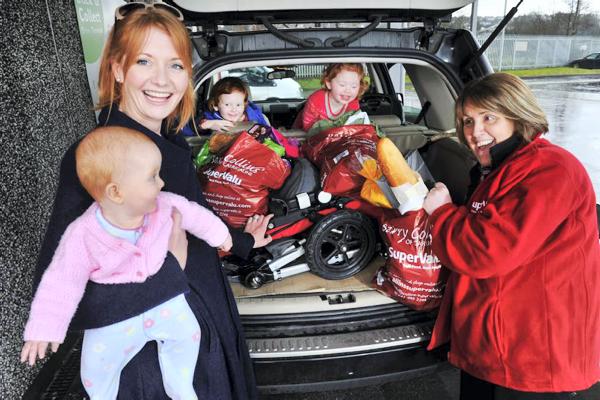
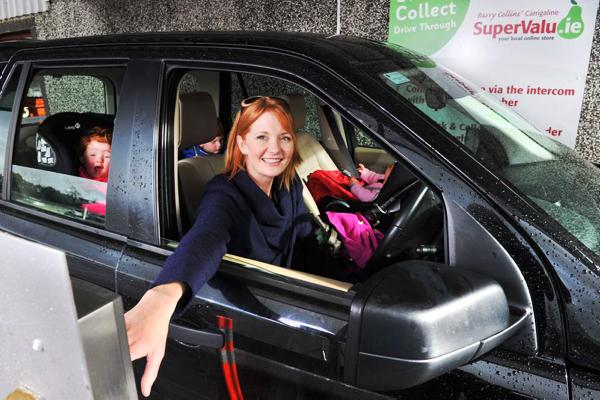
Forget fast-food drive throughs, the future is a healthier alternative. Last week, SuperValu launched its click and collect service in Carrigaline, Co Cork. This means consumers can place their orders online and then pick up their shopping without even entering the shop.
So busy mums, time-strapped dads and older shoppers can forget the queues and the shopping trolley traffic jams. To avail of this fuss-free service, all customers need to do is place their order online and then press the intercom button at the drive through, stating their name and order number. The shop assistants will even help pack the bags into the car. Remember though, if they ask: “Would you like fries with that?”, you’re at the wrong drive through.
Are you willing to make the switch?
When was the last time you switched a bill provider to save money? The value of switching your household bills cannot be underestimated and SmartShopper has regularly highlighted that on these pages. Switching your utility bills, bank account or even just your credit card can all save you money.
New research issued by Amárach Research, further highlights this. But when it comes to actually getting up and putting our good intentions into action, we Irish consumers are fairly reluctant. The one area where we want to find the best price possible is car insurance, with 65% of people regularly making the change. However, despite constantly increasingly banking fees, we’re still not keen to change that bank card.
Instead, it seems that rather than deal with the hassle of switching, we’re more inclined to reduce our spending on luxury items and bring our supermarket trollies to discount retailers such as Lidl and Aldi. While these cost-saving tactics may save us a few euro, Gerard O’Neill from Amárach Research says: “The reality is that if more people adopted a switching habit, they could probably afford that holiday or other luxury purchase that they have sacrificed – there are annual savings of over €1,200 to be made.”
The hassle could really be worth it.
Collecting the children’s allowance, sorting your pension, posting a parcel to relations abroad or paying off your ESB bill – the local post office in rural towns is more than a place to buy a stamp.
For Mary O’Brien who lives outside Monaghan town, the local post office is part and parcel of her week. She says: “I probably visit the post office two or three times a week to collect the children’s allowance or to pay a bit off the ESB bill or TV licence. I bank with Bank of Ireland, but when it comes to paying my bills I’m one of those people who likes to pay with cash. I know that I can pay a bit off of everything rather than have one bill wipe out all my money for the week.”
Mary’s local post office is a 15-minute walk but if it was to disappear she would be looking at more bills than just her ESB.
“I don’t have any transport so if I was to go into town it would cost me €10 each way in a taxi.”
The Future for Post Offices
This, however, could be the reality facing Mary and thousands more consumers across the country, according to a report released last week by polling firm Grant Thornton. Presented at a meeting of over 30 people, including senators and TDs, the report, commissioned by the IPU (Irish Postmasters’ Union), highlights the need for government action now if our network of post offices is to survive.
At the helm of the matter was the future for social welfare payments. Ciaran McEntee, president of the IPU, says: “Post offices have the contract to issue social welfare payments for the next two years and there is a possibility that this may be extended, but the future is very unclear and a government plan, although promised, has to be put into action.”
Social Welfare
The fact is that the IPU is very dependent on the social welfare contract. It represents 30% of its annual revenue. If it was to disappear, anywhere between 400 and 500 post offices would close by 2017.
The real threat is if there is a complete move to a direct electronic payment scheme where people would have no option but to have their social welfare money transferred into their bank account. Currently, people have the option to receive it over the counter in post offices or into their bank account. Although, interestingly, Brian McGann of the IPU says they have evidence where people weren’t given this choice by their local social welfare and could not make a claim until their bank account details were provided.
Brian says: “The government is highlighting that the direct electronic payment scheme could save them up to €60 million, but that doesn’t reflect the full picture. The face-to-face nature of over-the-counter payments acts as a deterrent for fraud. On top of that, uncollected payments, which are a substantial amount of money every year, are returned to the Department of Social Protection. A system where the money goes straight into bank accounts means that money will be lost. That has to be taken into consideration.”
There’s also the fact that many people still want to collect the money in the post office themselves. The days of free banking have clearly disappeared, as many Irish Country Living articles have shown. So for those on a budget, it is a case of paying off what bills they can each week.
Lively Debate
While many points were taken on board by government officials, that’s not to say the debate wasn’t lively. At the moment, the post office network is overly dependent on the social welfare contract and it was argued that the IPU seriously has to look at its own business model. Electronic banking is becoming a reality and one that is being embraced by the vast majority of people, with four out of every five pensioners now receiving their pension into their bank account. Post offices are at the heart of local communities and a concerted effort both by the IPU and the government is essential if the post office network is to remain in rural Ireland.
The Changing Face of the Post Office
The social welfare issue isn’t the only threat facing the IPU. Last year, An Post and Tesco entered into a partnership to offer postal services. Now in certain Tesco shops around the country you can do everything you would do in a post office, apart from receiving social welfare payments and managing savings.
While this could be seen as a convenient move for consumers, it is important to be aware that staff operating in Tesco are not vetted or trained like the postmasters in your local post office. They are also not bound by the Official Secrets Act.
There is a fear that this partnership could be another move that will eliminate rural post offices at the heart of communities.
This partnership shouldn’t be confused with post offices operating in other stores. Some stores, such as certain SuperValus, now have full in-store post offices which are run by fully-qualified postmasters.
POTENTIAL SERVICES
It really is time for the IPU and the Government to start talking. Last year, An Post lost the contract to issue drivers licences. However, they do have the contract to issue a much more important document – our passports. How is that possible you may ask? There appears to be no clear plan for the future in what post offices can and should deliver. Here is just a selection of services that consumers nationwide could potentially benefit from in their local post office.
• Banking services. • Motor tax renewals (€60 million could potentially be saved over a five-year period by the post offices offering this service).• Household taxes.• Water charges.• Credit union transactions (deposits and loan replacements).• Driver licence renewal (based on the passport express model).• Value-added welfare services, such as helping people to fill in their social welfare forms.New Drive-Through Service with SuperValu
Forget fast-food drive throughs, the future is a healthier alternative. Last week, SuperValu launched its click and collect service in Carrigaline, Co Cork. This means consumers can place their orders online and then pick up their shopping without even entering the shop.
So busy mums, time-strapped dads and older shoppers can forget the queues and the shopping trolley traffic jams. To avail of this fuss-free service, all customers need to do is place their order online and then press the intercom button at the drive through, stating their name and order number. The shop assistants will even help pack the bags into the car. Remember though, if they ask: “Would you like fries with that?”, you’re at the wrong drive through.
Are you willing to make the switch?
When was the last time you switched a bill provider to save money? The value of switching your household bills cannot be underestimated and SmartShopper has regularly highlighted that on these pages. Switching your utility bills, bank account or even just your credit card can all save you money.
New research issued by Amárach Research, further highlights this. But when it comes to actually getting up and putting our good intentions into action, we Irish consumers are fairly reluctant. The one area where we want to find the best price possible is car insurance, with 65% of people regularly making the change. However, despite constantly increasingly banking fees, we’re still not keen to change that bank card.
Instead, it seems that rather than deal with the hassle of switching, we’re more inclined to reduce our spending on luxury items and bring our supermarket trollies to discount retailers such as Lidl and Aldi. While these cost-saving tactics may save us a few euro, Gerard O’Neill from Amárach Research says: “The reality is that if more people adopted a switching habit, they could probably afford that holiday or other luxury purchase that they have sacrificed – there are annual savings of over €1,200 to be made.”
The hassle could really be worth it.







SHARING OPTIONS