



You’re sitting at the kitchen table, ogling an Easter egg of which you’ve just taken a generous bite. Suspiciously turning over the broken remains of chocolate in your hands, you ask yourself the question: does this taste less … chocolatey? It feels like you’re imagining things. But you’re not.
We are living in the bewildering heights of skimpflation: when manufacturers are cutting corners and replacing the more expensive ingredients, like cocoa beans, cocoa mass and cocoa butter, with cheaper ones, like sugar and vegetable fats. The hope is that consumers notice a price hike before they do a change to a recipe. However, savvy shoppers are becoming more aware of ingredient swaps.
When it comes to skimpflation, the example that many talk about is Cadbury Dairy Milk. A quick look at the back of the 242g Cadbury Dairy Milk Shell Easter Egg (€12) shows that the main ingredients are: milk, sugar, cocoa butter, cocoa mass, and vegetable fats (palm, shea). There are only 20% cocoa solids, which is very low for milk chocolate, and vegetable fats like palm oil are used to replace the dairy fat.
On the egg hunt
If you are planning an Easter egg hunt this year, virtually all bagged mini egg chocolates contain palm oil, including Cadbury Mini Eggs, Terry’s Chocolate Orange Mini Eggs, Kinder Bueno Mini Easter Eggs and After Eight Dark Mint Chocolate Mini Eggs.
From KitKat to Milkway to Mars, most of the Easter eggs on supermarket shelves also contain some sort of vegetable oil. The Galaxy Milk Chocolate Minstrels Easter Egg (€8) contains more cocoa solids than Cadbury (25% rather than 20%) but their milk chocolate contains vegetable fats in addition to cocoa butter. There is also palm fat.
Lir Chocolates and Lily O’Brien Chocolates are Irish brands that use palm oil in some of their chocolates. The truffles in Lily O’Brien easter eggs contain palm oil, and the truffles in the Lir Guinness Chocolate Rugby Ball Easter Egg (€15) contain vegetable oils (palm, rapeseed, sunflower).
“Palm oil is in everything,” remarks chef Conor Spacey, who is the director of FoodSpace, a sustainable workplace food company. “And when we look at mainstream chocolate products, the reason it’s there is because it basically mimics cocoa. When you add palm oil to chocolate, you can reduce the amount of cocoa fats and cocoa butter that you’re using in your chocolate, but you can retain the texture and it is one quarter of the price. And that’s literally what’s driving this.
“They’ve taken palm oil from where it originally grows and are growing on mass scale. And that then ties into deforestation and climate change and animal wildlife.”
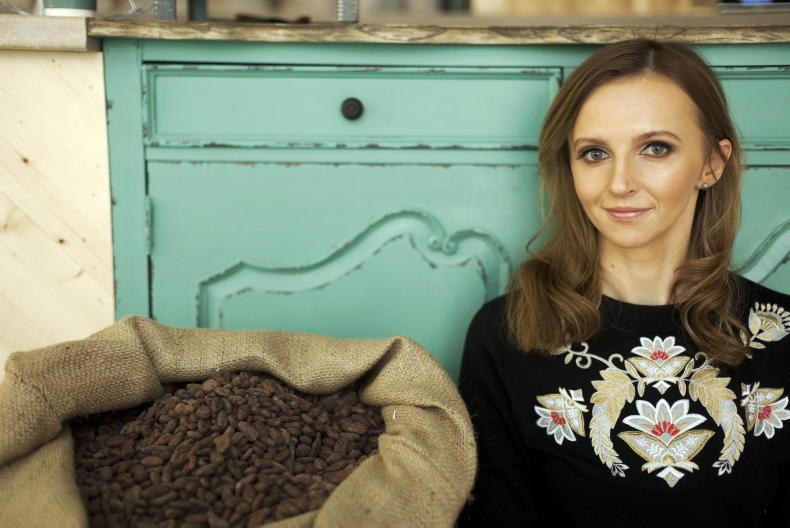
Chocolate maker, Kasha Connolly, advises consumers to look at the ingredient list of the chocolate that they are buying.
“If the first ingredient is sugar, then you’re really not eating a lot of chocolate,” says Kasha, who runs Hazel Mountain Chocolate, a bean to bar chocolate factory in the Burren that sources their cocoa beans from cooperatives in Ecuador, Cuba, Bolivia and Costa Rica.
“If cocoa mass or cocoa beans are on the third or fourth place, you’re not going to be eating a lot of chocolate,” says Kasha.
If you are looking for high quality chocolate, the first ingredient should be cocoa beans. “Cocoa solids often relates to the fats as well,” she explains. “Our milk chocolate is 42% cocoa beans. It’s so pure.”
If you want to avoid palm oil this Easter, do not despair. There are some great independent Irish chocolate options.
They’ve taken palm oil from where it originally grows and are growing on mass scale. And that then ties into deforestation and climate change and animal wildlife
Hazel Mountain Chocolate, Grá Chocolate, NearyNógs Stoneground Chocolate, Bean and Goose chocolate, Clo Chocolates, to name a few. Supermarkets also have some options at a lower price point, including the chocolate eggs by Butlers Chocolates which contain 32% cocoa solids (much higher than 20% in Cadbury).
Butlers also have chocolate bunnies and chicks which are good for children. The Simply Better range at Dunnes Stores also has a good offering of eggs that don’t contain palm oil, including the Handmade Single Origin Colombian Milk Chocolate Egg.

Skimpflation in dairy
Chocolate is just one example of how different categories of dairy products are being pumped with palm oil. Diarmaid Mac Colgáin is the founder and CEO of Concept Dairy, an agri-fin tech platform that offers price transparency and economic sustainability to the dairy supply chain.
Diarmaid started posting consumer-related videos on Instagram at the start of last year talking about price transparency for farmers. His following quickly went “bananas”, and with a strong 190k followers on the platform, Diarmaid remarks:
“It just shows how much the consumer cares about the farmer and how much the farmer gets paid, but also how much they’re being screwed over with palm oil going into everything.”

Diarmaid makes a lot of videos talking about how palm oil is used as a replacement for dairy fat. “When palm oil replaces the butter, farmers lose out. They lose out because there’s less dairy in the product and consumers lose transparency,” says Diarmaid. One example, he cites, is Dairygold spread. The first ingredient in a pack of Dairygold spread is cream, the second and third ingredients are palm oil and rapeseed oil respectively.
“The thing is that rapeseed oil or palm oil is not bad for you in small doses,” Diarmaid explains. “But the volume of it in our systems now is unbelievable.”
Creamfields Cheese Slices are another example. In Creamfields Cheese Slices 15 Pack (255g), there is only 22% cheese (milk) in the product. The third ingredient is palm oil. “The reason companies put vegetable fats in cheeses is because it replaces dairy fats. The farmer gets paid less and it’s cheaper for them to manufacture. It’s a highly processed product with vegetable fats.”
The question is: will skimpflation change peoples’ eating habits? Diarmaid thinks so. “What’s happening is the consumer is becoming more aware.” Obesity treatment drugs have also changed the conversation, he adds.
“If you’re spending 500 quid a month on your weight loss drug, you’re going to be a much more conscious consumer. You’re likely going to buy a much smaller bar of chocolate that is of much higher quality.”
Has skimpflation altered how you eat? Get in touch with us, icl@farmersjournal.ie



SHARING OPTIONS