We are a married couple with three children (all under 15) with a small, simple farm of 14ha in Laois. We both hold full-time jobs, as the farm is too small to sustain the family. My job allows me to work from home so I look after the farm when Eric is away. Currently, we have 20 bullocks which we rear for two years before sending them to the factory.
Although we are not in any financial trouble, I feel that we are at a complete standstill when it comes to increasing our income. There must be some way to generate more income from the farm.
For the last two years I have tried to keep a household budget based on your template, but then we never analyse the information and make no decisions to make a change.
I am acutely aware that we will need a serious education fund for the college fees in a few years’ time and the children’s allowance that I currently save is not going to cover that.
We would really appreciate your advice and would love to be chosen for OP€RATION CASHFLOW 2014, to represent all those small farmers who have to work off-farm to survive. We are both hard workers and would take it very seriously.
Regards,
Mary
The children were at swimming when I visited Mary and Eric and had to be collected in two hours.
I sat down and Mary showed me the budgets she had been keeping over the last few years. They were taking it very seriously already. The budgets were very, very detailed.
“You even have a line on how much Eric spends on snacks a month,” I said. Eric looked at me with a grin.
It was the most detailed budget I had seen and a credit to Mary.
“It has helped us to save money on our electricity, our phone and even our healthcare over the last few years. I just kept adding categories to give me a more detailed picture and seeing where I can make savings,” she said.
Looking down through the many columns, I could see that they were managing their money carefully.
“The cost of children’s activities is high,” said Mary. “But we feel we want them to experience as many sports and hobbies as they want at this stage,” she went on to explain. That is a personal decision, I said, and one you are totally justified in taking.
They were saving money for the children’s education fund.
“We know we need one, but don’t know how much,” said Mary. We agreed that we would look at that over the course of the year.
Eric had a work pension but was unsure what it was invested in. His job was to try and find out at work.
Mary also has an idea for her own business, but is nervous of making the jump. It was related to what she was working at, so she was in a position to develop the idea while she still worked part-time. Again the aim will be to develop that idea.
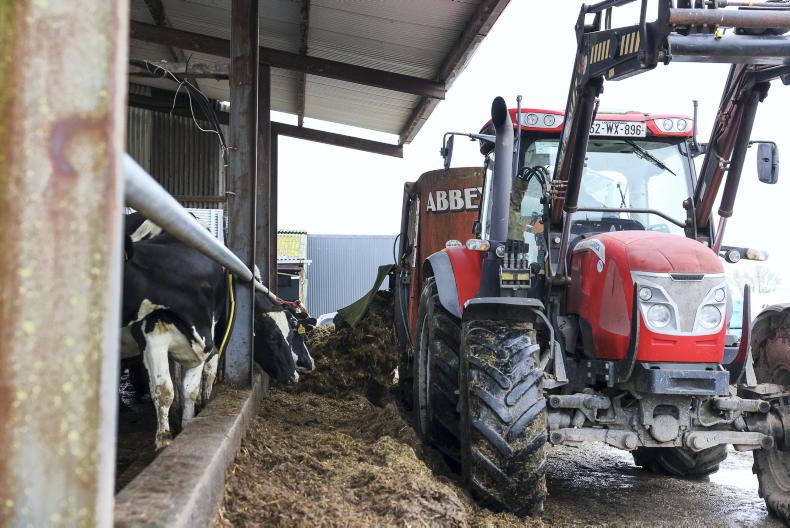
On the farm, things are kept very simple. They have enough machinery and the sheds are adequate. The biggest issue is cashflow. They buy Angus and Hereford male calves every second year and rear them until they are two-years-old. This is a very simple system, in that they have one group of stock.
However, it means that they only sell stock every second year. It’s like a feast or a famine. It also exposes them to the beef market when they bring the cattle to sale.
We looked at options of buying a mix of bulls and heifers. This would allow some heifers to be sold before the second winter, reducing costs and improving cashflow.
One cost I didn’t see on the farm accounts was accountant’s fees.
“We submit them ourselves by filling it in online on the Revenue online services website,” said Mary.
Over the last few weeks we have come across farmers who hadn’t submitted accounts at all. This was the other extreme, where the farmer put in the figures themselves.
This is possible, but comes with risks, in that if they put details in wrong it might trigger an audit. Also, they might not be making full use out of capital allowances.
I am going to get an accountant to look at the submission to see if they could do anything differently. But from the first meeting they are not doing bad at all.
In brief
• Tight control on costs. • Establish an education fund. • Look at pension. • You can submit your tax returns yourself. CLAdvice for not getting paid
I got a lot of feedback for the farmer/contractor who couldn’t get paid. Some farmers wrote in to give support, others asked if they were sending out invoices straight away as their own contractors don’t. One contractor called me to tell them to let his wife collect the money as it has worked for him in many cases.
We are a married couple with three children (all under 15) with a small, simple farm of 14ha in Laois. We both hold full-time jobs, as the farm is too small to sustain the family. My job allows me to work from home so I look after the farm when Eric is away. Currently, we have 20 bullocks which we rear for two years before sending them to the factory.
Although we are not in any financial trouble, I feel that we are at a complete standstill when it comes to increasing our income. There must be some way to generate more income from the farm.
For the last two years I have tried to keep a household budget based on your template, but then we never analyse the information and make no decisions to make a change.
I am acutely aware that we will need a serious education fund for the college fees in a few years’ time and the children’s allowance that I currently save is not going to cover that.
We would really appreciate your advice and would love to be chosen for OP€RATION CASHFLOW 2014, to represent all those small farmers who have to work off-farm to survive. We are both hard workers and would take it very seriously.
Regards,
Mary
The children were at swimming when I visited Mary and Eric and had to be collected in two hours.
I sat down and Mary showed me the budgets she had been keeping over the last few years. They were taking it very seriously already. The budgets were very, very detailed.
“You even have a line on how much Eric spends on snacks a month,” I said. Eric looked at me with a grin.
It was the most detailed budget I had seen and a credit to Mary.
“It has helped us to save money on our electricity, our phone and even our healthcare over the last few years. I just kept adding categories to give me a more detailed picture and seeing where I can make savings,” she said.
Looking down through the many columns, I could see that they were managing their money carefully.
“The cost of children’s activities is high,” said Mary. “But we feel we want them to experience as many sports and hobbies as they want at this stage,” she went on to explain. That is a personal decision, I said, and one you are totally justified in taking.
They were saving money for the children’s education fund.
“We know we need one, but don’t know how much,” said Mary. We agreed that we would look at that over the course of the year.
Eric had a work pension but was unsure what it was invested in. His job was to try and find out at work.
Mary also has an idea for her own business, but is nervous of making the jump. It was related to what she was working at, so she was in a position to develop the idea while she still worked part-time. Again the aim will be to develop that idea.
On the farm, things are kept very simple. They have enough machinery and the sheds are adequate. The biggest issue is cashflow. They buy Angus and Hereford male calves every second year and rear them until they are two-years-old. This is a very simple system, in that they have one group of stock.
However, it means that they only sell stock every second year. It’s like a feast or a famine. It also exposes them to the beef market when they bring the cattle to sale.
We looked at options of buying a mix of bulls and heifers. This would allow some heifers to be sold before the second winter, reducing costs and improving cashflow.
One cost I didn’t see on the farm accounts was accountant’s fees.
“We submit them ourselves by filling it in online on the Revenue online services website,” said Mary.
Over the last few weeks we have come across farmers who hadn’t submitted accounts at all. This was the other extreme, where the farmer put in the figures themselves.
This is possible, but comes with risks, in that if they put details in wrong it might trigger an audit. Also, they might not be making full use out of capital allowances.
I am going to get an accountant to look at the submission to see if they could do anything differently. But from the first meeting they are not doing bad at all.
In brief
• Tight control on costs. • Establish an education fund. • Look at pension. • You can submit your tax returns yourself. CLAdvice for not getting paid
I got a lot of feedback for the farmer/contractor who couldn’t get paid. Some farmers wrote in to give support, others asked if they were sending out invoices straight away as their own contractors don’t. One contractor called me to tell them to let his wife collect the money as it has worked for him in many cases. 




SHARING OPTIONS