


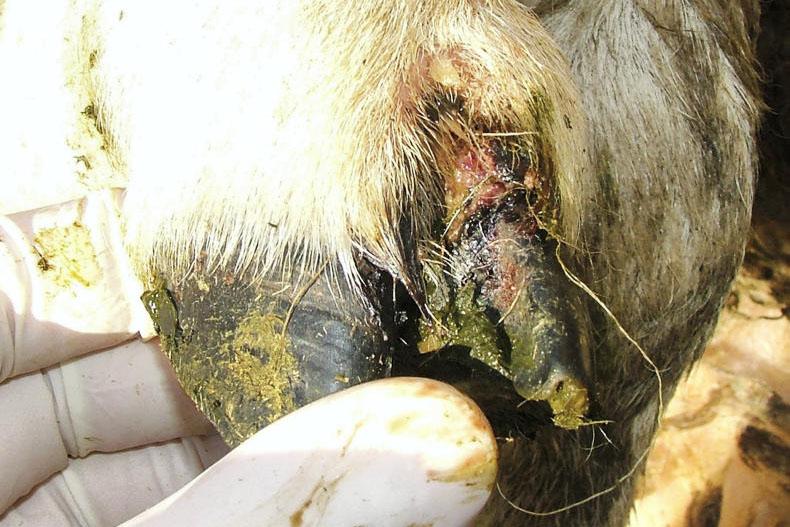
CODD is caused by spirochaete bacteria. It is a severe aggressive condition with a different clinical picture from that of classic foot rot. It can be spread by sheep to sheep interaction and should be treated immediately. The disease is generally introduced through the purchase of sheep and precautions should be taken to avoid its introduction.
Symptoms
The characteristic clinical picture is of a primary lesion at the coronary band (the junction between the hair and the hoof wall), with rapid invasion and under-running of the hoof wall from the coronary band downwards; this may result in complete shedding of the horn capsule of one or both claws. Sometimes the damage is so severe that regrowth of the hoof is permanently affected. There is usually some loss of hair above the coronary band, but there may be no interdigital involvement. It is best to consult your vet in order to reach an accurate diagnosis as it can be difficult to differentiate from virulent footrot.
Treatment
Conventional footrot treatments are often ineffective in sheep with CODD. Footbaths using formalin zinc sulphate and copper sulphate tend to be ineffective, as is the foot rot vaccine.
Antibiotic foot baths (although not licensed) daily, or antibiotic spray for three days can yield good results. If the decision is to use antibiotic footbaths, it is recommended to use once or twice at 48-hour intervals. It is important that antibiotic footbaths are made up fresh, with every effort made to remove excess faeces prior to the sheep entering the footbath to maximise exposure to the antibiotic. Ensure sheep do not drink any of the footbath solution, as it can destroy rumen bacteria, and give rise to ketosis.
However, injectable antibiotics are often required to get to grips with an outbreak, and therefore you should consult your vet if there is an outbreak in your flock. It is also worth consulting your vet in relation to the use of a suitable long-acting antibiotic.
Some feet may be left permanently damaged and animals may have to be culled as a result.
Prevention and control
Biosecurity is crucial in the prevention and control of CODD. Sheep should be purchased from flocks free of the disease. Before purchased animals are introduced into the flock they should be held in quarantine for 30 days to allow clinical signs to develop if the disease is present.
Inspect feet on arrival and thereafter each week. Walk all introduced sheep through a formalin footbath and inspect every foot before allowing sheep to join the flock. If you suspect a case of CODD in your flock, it is highly recommended you call your vet promptly before it gets established.



SHARING OPTIONS