


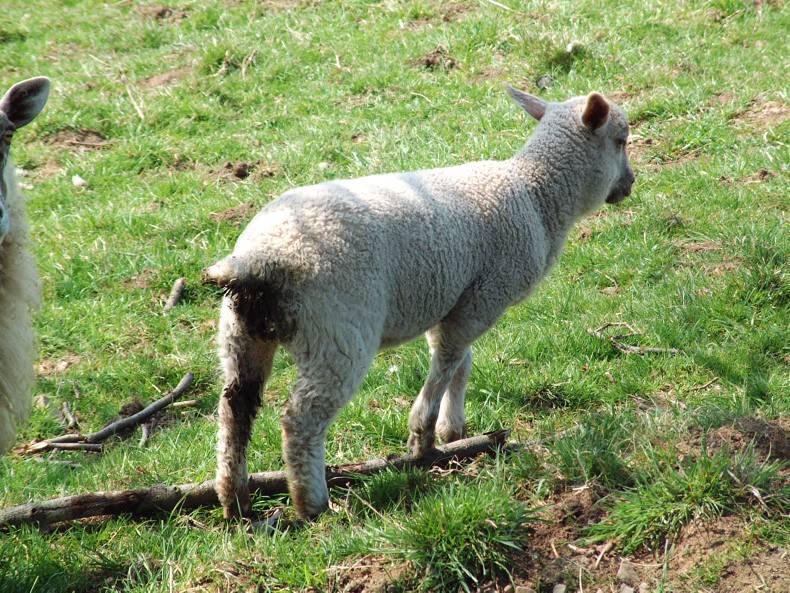
While nematodirus infestation is predominately an issue in sheep, it does on occasion occur in calves. It occurs predominately in the spring, as temperatures are starting to rise. If left unchecked, it can lead to major losses in terms of lamb mortality and lack of thrive in infected lambs that survive.
Cause
Nematodirus battus can cause a problem for lambs from four to 12 weeks old. There are several risk factors of concern to farmers which include lambs grazing pasture that was grazed by lambs or young calves the previous spring. When lambs get old enough and are consuming a significant amount of grass they face an increased risk of ingesting large numbers of worm larvae. Twin lambs will start grazing earlier and will be under threat at a slightly younger age.
A cold period followed by warm weather (typical of April / May) can trigger the synchronised hatching of eggs which are on the pasture since the previous spring, putting lambs at an increased risk. This warm spell following a cold period is a key feature of the epidemiology of the disease. Like fluke warnings in the autumn, the Met Office can provide warnings of particularly risky weather coming up. Once larvae are ingested, they will attack the lining of the gut causing a large amount of damage in a short time.
Therefore, lambs over five weeks old in April and May are most at risk. However, the disease can occur at other times. It is important to note that while larvae cause a lot of damage, it is only adult worms that produce eggs. Therefore, by the time there are faecal egg counts present in faecal samples, the infection is well and truly established in the flock. Any nematodirus eggs present in faecal egg counts are significant and dosing should take place immediately. Weather conditions rather than faecal egg counts should be used to inform the decision to dose young lambs. Due to the effect of the prevailing weather conditions, the Department of Agriculture, Food and the Marine (DAFM) regularly issues warnings, usually in April or May, when they predict a likely outbreak of the disease. These warnings should be treated seriously.
Symptoms
Lambs infected by the parasite may be seen with the head down, drooped ears, possibly with the abdomen tucked up due to pain. Lambs will typically develop a scour and, if allowed to develop, the infection can lead to profuse diarrhoea and wasting. However, as lambs may stop eating, the scour may only consist of slimy mucus. Due to dehydration, lambs will be thirsty and may congregate around a water trough. Mortality will be high in untreated lambs.
Treatment
Dose lambs with a white or yellow wormer (benzimidazole or levamisole) at five weeks of age to treat lambs suffering from a nematodirus burden. Please note avermenctin-type products lack efficacy against nematodirus.
Prevention and control
The infection is best prevented by keeping the current year’s lambs off grassland that was grazed by lambs the previous year. This could be on ground that was closed from early spring until after first-cut silage or grazed with adult cattle (excluding calves) in the previous year. In the absence of clean pasture, a dose is desirable. As outlined, weather conditions rather than faecal egg counts should be used to inform the decision to dose young lambs.




SHARING OPTIONS