



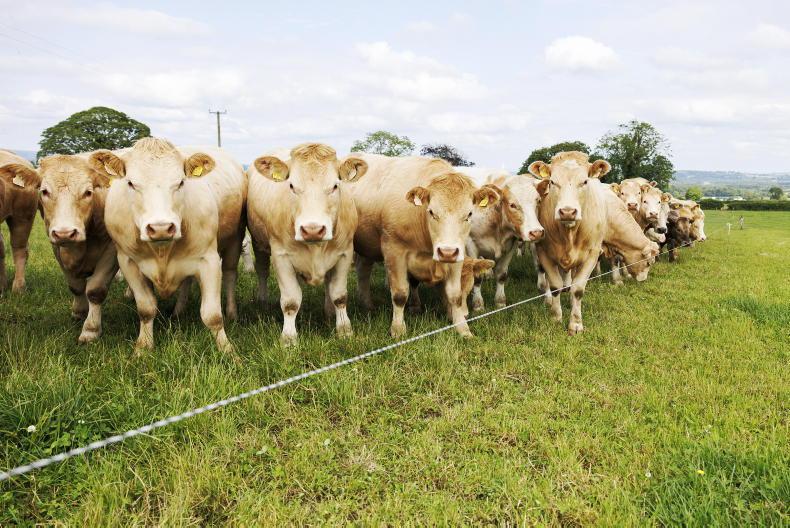
Good grass utilisation is a key driver in profit on drystock farms. It increases animal performance and efficiency in fertiliser usage, as well as allowing for increased stocking rates due to a higher annual tonnage of grass grown.
During the main growing season, the growing cycle for high quality perennial ryegrass swards should be 18-21 days. This grass should be grazed out in 1-3 days.
A paddock system enables a lot more high-quality grass to grow in comparison to set stocked paddocks, without the addition of any other inputs such as increased chemical fertiliser.
A proper paddock system will also reduce the frequency with which paddocks have to be topped, reduce weed and inferior grass encroachment and make herding of stock safer and easier.
Setting up a paddock system for the first time does not have to be overly complicated, and it is generally better to set up a system using temporary fencing and water supplies to ensure that the layout and paddock size is correct before committing to a larger spend on permanent infrastructure.
Develop a farm map
A detailed map of the farm is the first step to setting up a successful paddock system. Features such as boundary ditches and walls, as well as watercourses and drains, need to be marked out clearly as this will affect where fence lines go.
Having knowledge of the topography (hills and hollows around the field) will also affect how a field can be divided up; there is no sense in splitting a field in the middle if your dividing fence is going to be on a steep hill.
While there are a number of professional services that measure and mark out paddocks, there are also some good apps that can allow a farmer to do this themselves to a relatively good degree of accuracy.
A measuring wheel can be employed for on-the-ground marking thereafter.
The correct paddock size
While the ideal scenario is to graze a paddock as quickly as possible (24 hours), there is a high level of knowledge and skill needed to do this. Too much grass, and the paddock will be poorly cleaned out. Too little, and stock will be hungry.
While this is not a serious issue if it happens occasionally, a repeated case of this will lead to either poor quality swards or cattle that are not thriving. For this reason, two- or three-day paddocks are more suited to drystock farmers.
To calculate the paddock size needed, the number of livestock on the paddock and their weight are required. A good rule of thumb is to allocate 2% of an animal’s weight to the in grass dry matter. There should be seven to eight paddocks per grazing group to allow sufficient time to let grass recover.
Long narrow paddocks should be avoided where possible as cattle tend to walk up and down the length of these causing significant sward damage in wet weather so paddocks should be as square as possible.
A ratio of 2:1, so fields are twice as long as they are wide, is acceptable where fields are rectangular in shape.
Grass dry matter, livestock weight and livestock numbers can all fluctuate. To begin paddock grazing, use temporary reels and posts. This will allow you to increase or decrease allocations as and when required
When the amount of grass in a paddock is calculated, a residual of 100kg DM/ha should be subtracted. This is the bottom 4cm of grass at the base of the sward which is inedible to livestock.
Drinking points
Access to water is probably the greatest limiting factor in creating paddocks. When planning out paddocks, avoid locating troughs near gateways or in the corners of fields.
Position water troughs in a central location in the field, which can allow it to be split to serve a minimum of two paddocks.
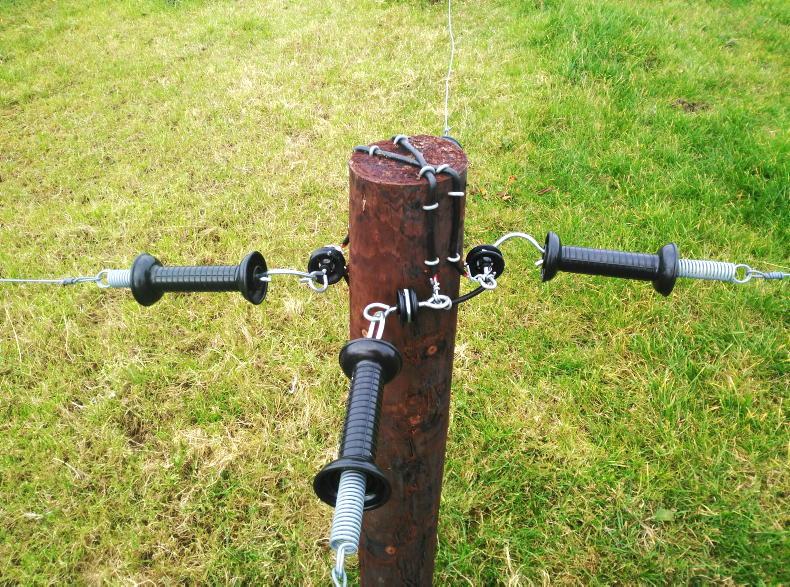
Where there is a roadway being used to access paddocks, a farmer can set up a water trough on the road and use this to service several fields, simply by opening the gap handle or gate and allowing animals access to the roadway.
In some cases, splitting fields like the spokes of a wheel from the drinker will ensure that cattle continue to have access to water while getting regular allocations of grass, although this should generally be avoided as it often creates irregular shaped, narrow paddocks.
Moveable water troughs mounted on a trailer are also a viable option, although the drawback with them is the need to move them each time livestock are moved.
Drystock mob numbers are generally small and don’t have the same water requirement as that of dairy herds, but caution needs to be exercised with regard to trough size.
While small troughs (40 gallons) would often be sufficient, these low troughs can attract badgers and other wildlife. Using a taller trough will help deter these wildlife if TB is an issue in your area.
Roadways
Budget will dictate roadway type. The ideal roadway is a hardcore gravel road which allows access for both livestock and machinery and should be ideally 4m wide or greater.
However, a sacrificed strip fenced off along a boundary that will act as a service lane to each paddock is sufficient to begin with. The strip can also be used for a water trough (as mentioned above).
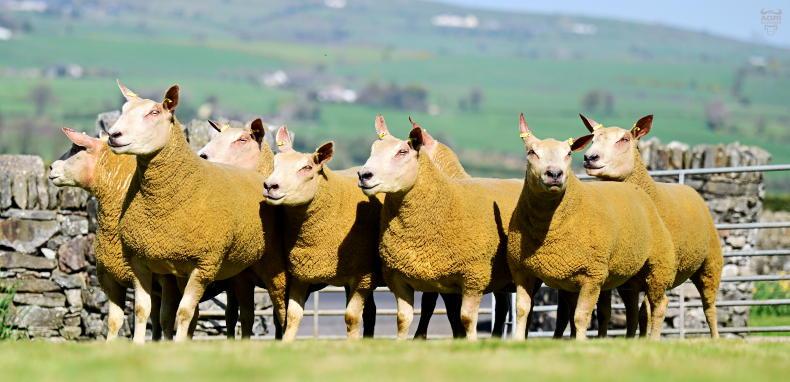
Paddocks for sheep
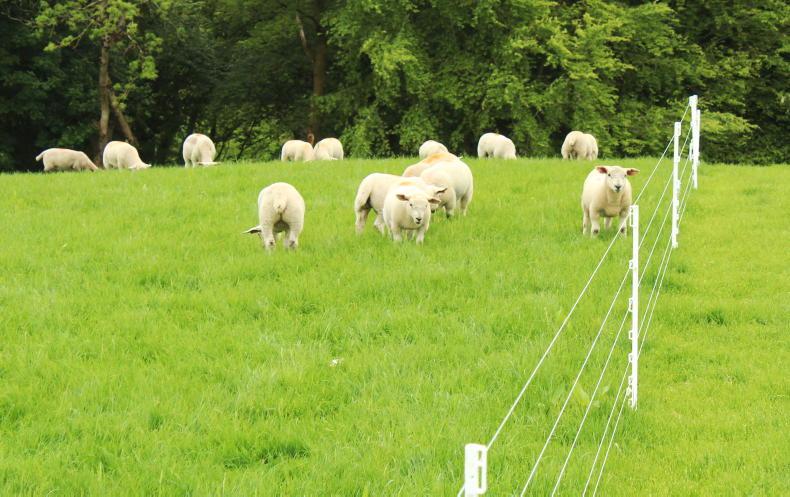
While a single line of polywire will generally hold in cattle of all ages, sheep are an altogether different matter, with three to four lines of poly wire needed for temporary fencing.
Plastic posts are the most commonly used in lieu of pigtails, with eight separate clip in points in the posts to allow for adjustable heights.
Many farmers will opt not to use four reels for installing temporary fencing, but instead will loop the fence whereby the one reel is looped back to work as two lines of the fence.
Some systems of reels exist, such as with popular fencing company Gallagher, whereby a combined reel – with four lines of wire and integrated posts – can be quickly installed, however these are generally only considered suitable for short runs.
The same can be said for sheep netting; short runs work best.
When calculating paddock size for sheep, remember that the optimum cover for sheep is 1,200kg DM/ha (7-8cm). This is when grass has its highest energy levels combined with optimum cover to allow sufficient intake.



SHARING OPTIONS