



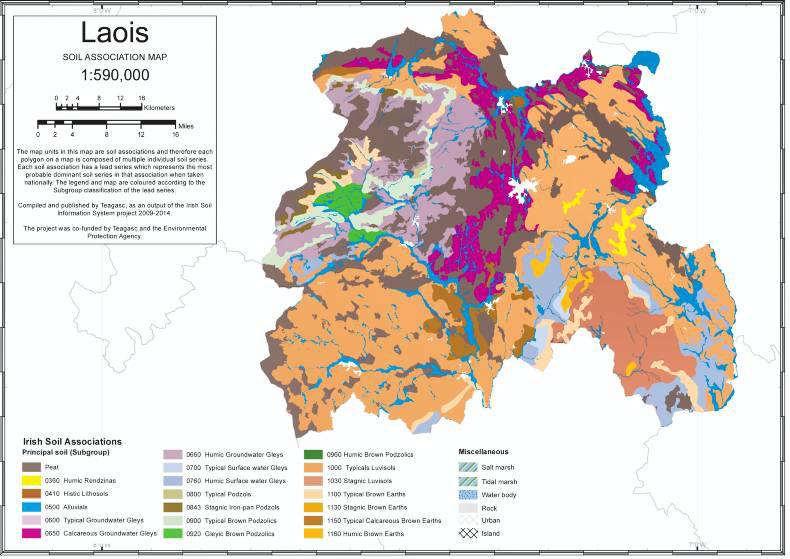
The River Barrow is the second longest river in Ireland and finds it source in the Slieve Bloom Mountains to the north-west of Co Laois, which are significant features on the landscape. The Slieve Bloom Mountains are characterised by upland sandstone and shale or slate bedrock with glacial drift made up of from these stone types.
These mountains reflect the typical soil sequence associated with a mountain scape – podzols and peat at the highest altitude, with brown podzolic soils further downslope and with surface-water gleys (slowly permeable sub-surface layer) on the lower slopes and some groundwater gleys found in depressions.
Podzols are nutrient-poor acidic mountainous soils and can be found here with blanket peat that is associated with the cold, wet climatic conditions.
Moving downslope, the landscape is characterised with brown podzolic soils. These soils have lost much of their nutrients, especially iron and aluminium, as a result of acidic conditions and high rainfall overtime.
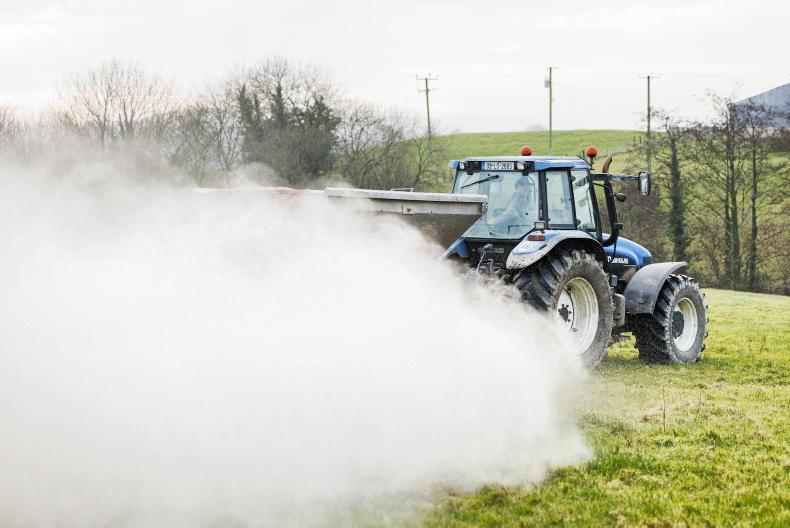
Consequently, these soils can be considered nutrient-poor and may benefit from liming periodically. They are naturally free-draining and should not require any additional drainage.
To the east of the Slieve Bloom Mountains, the landscape becomes wetter and is made up mainly of limestone glacial drift in lowland areas. Here, basin peat can be found, much of which has been cut-over or milled.
Finally, in the southeast, to the east of Portlaoise and Abbeyleix, the landscape is better described as a limestone glacial drift plateau. This is found with luvisols, which are soils where clay has moved down the soil profile.
Overall, luvisols are the most prevalent soil type found in Co Laois. The movement of clay from the topsoil into the subsoil means that these are very good agricultural soils due to their higher clay content as they retain nutrients well. However, the increased clay in the subsoil can slow down the movement of water through the profile, meaning that these soils can be moderately to imperfectly draining, depending on the soil texture.
Of the luvisols found here, two-thirds are the ‘Elton’ series (found in association 1000c led by subgroup 1000). These soils have good moisture-holding capacity, are very productive and have a wide use-range, including grazing and tillage. While these are good soils, they can have weak structure and could be prone to compaction or poaching if stocked during wetter periods.
A particularly prevalent soil type found in Co Laois are alluvial soils. These soils are formed in the deposits of rivers or lake alluvium.
There are two major river systems in Laois: the Barrow in the northeast and the Nore in the southwest. It is along these rivers and their tributaries that these soils can be found. In general, the use-range of these soils can be limited due to the high potential of regular flooding and the high water table.


SHARING OPTIONS