



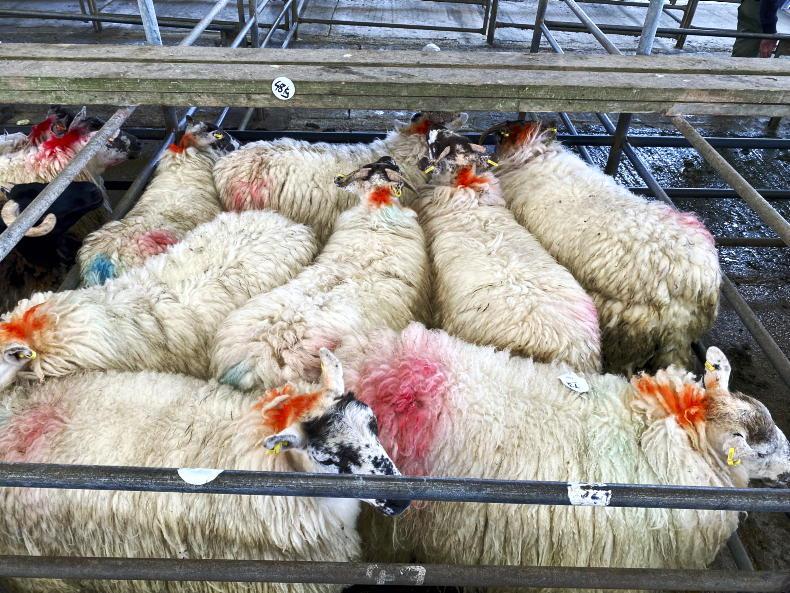
In-lamb yearling hoggets: Factory agents and mart managers are highlighting the importance of checking ewe hoggets before selling in terms of sheep having their teeth set or at risk of proving in-lamb.
Where there is any doubt that ewe hoggets could be in-lamb then it is important to have them scanned.
It is prohibited under animal health and welfare guidelines to present pregnant females for slaughter that are 90% or more through their expected gestation. Where animals are deemed unfit for transport then they are also deemed unsuitable for slaughter and as such there is a risk of no payment being made.
If sheep have started setting teeth or have their first two mature teeth set then it is important to confirm payment terms before presenting them for slaughter. Mart managers report that there is solid demand for ewe hoggets with breeding potential and this is worth considering for suitable types.
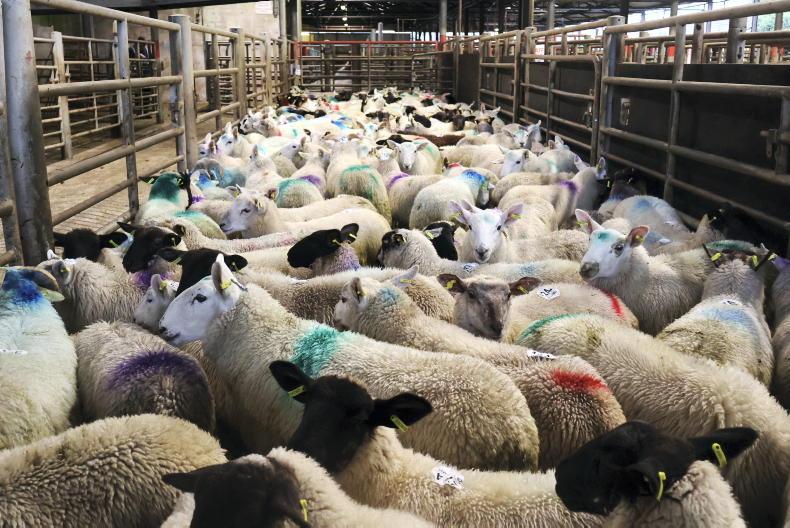
Marketing spring lambs: Demand for spring lambs is variable with factories continuing to focus primarily on hoggets.
Throughput is however rising with last week’s kill of lambs more than doubling to 2,025 head.
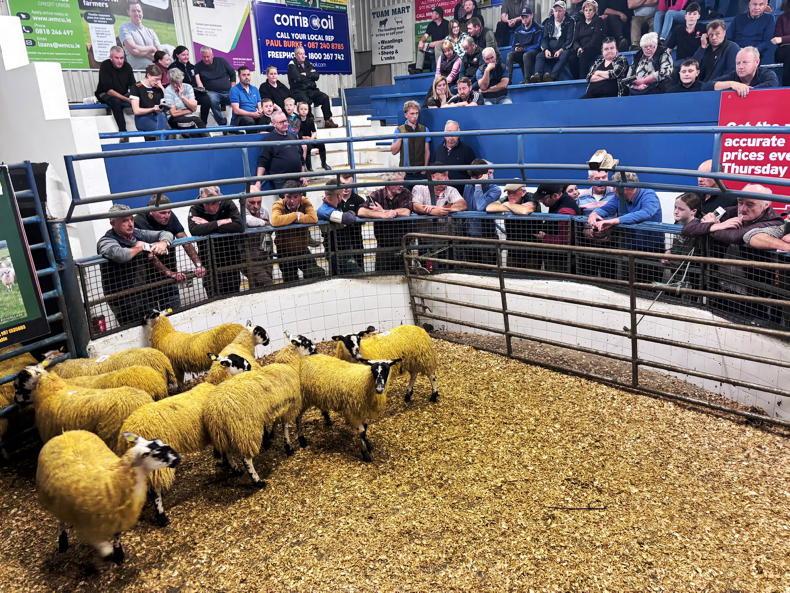
Factories are paying to 21kg carcase weight for lambs, but it is clear from mart sales that agents are having more success in securing more favourable weight limits or possibly negotiating payment terms for hoggets.
While butcher buyers seem to be more active for lambs over hoggets – which is helping demand in marts with a good butcher or wholesale trade.
It is worth considering the most suitable market outlet and weighing lambs regularly to avoid lambs going overweight and delivering free meat, which has come at a significant cost to produce. Young spring lambs that have been finished with access to ad-lib or a high level of concentrate feed will kill out in the region of 49% to 51%, with aged lambs lacking flesh possibly back to 47% to 49%.
Grass growth: The first dry week in quite some time has provided a long deserved respite to farmers. The change in wind direction and a harsh easterly wind mid-week is however holding growth back. It is, therefore, important that steps continue to be taken to try and conserve/build grass supplies.
For many this week is providing the first opportunity to get fertiliser applied. The volume applied will depend on the stocking rate and grass demand, with highly stocked farmers under more pressure to apply 25 to 30 units of nitrogen. Lower stocked farmers can get away with a lower application of 10 to 15 units, but there is possibly merit now in weighing up the best balance between applying a higher volume in light of high fuel prices now or going with a lower volume and two applications.
For silage fertiliser the typical recommendation is an application of 70 to 80 units nitrogen on permanent pasture or older swards and a higher application of 100 units on reseeded or young perennial ryegrass swards. The target cutting date also needs to be factored in to the equation with swards utilising about two units of nitrogen daily during normal grass growth rates in late April and May.
Account also needs to be taken of phosphorus (P) and potassium (K) with application rates based on soil fertility and whether slurry is being applied. For phosphorus check that you have an allowance to purchase and apply P.



SHARING OPTIONS