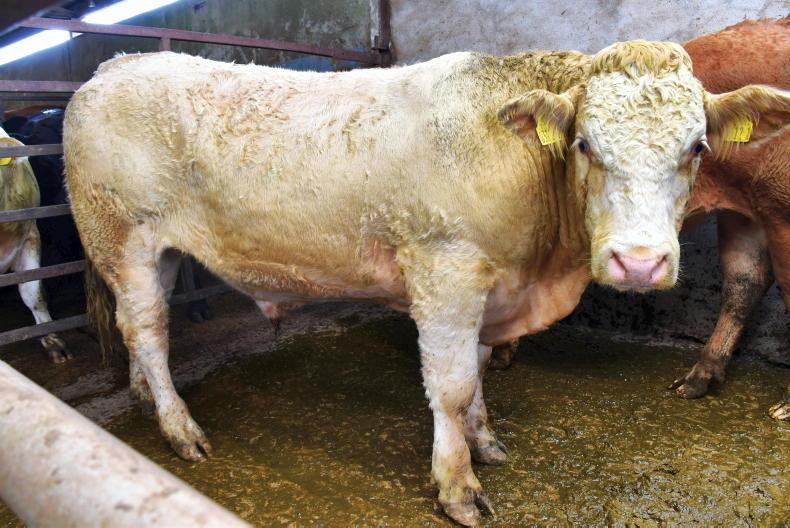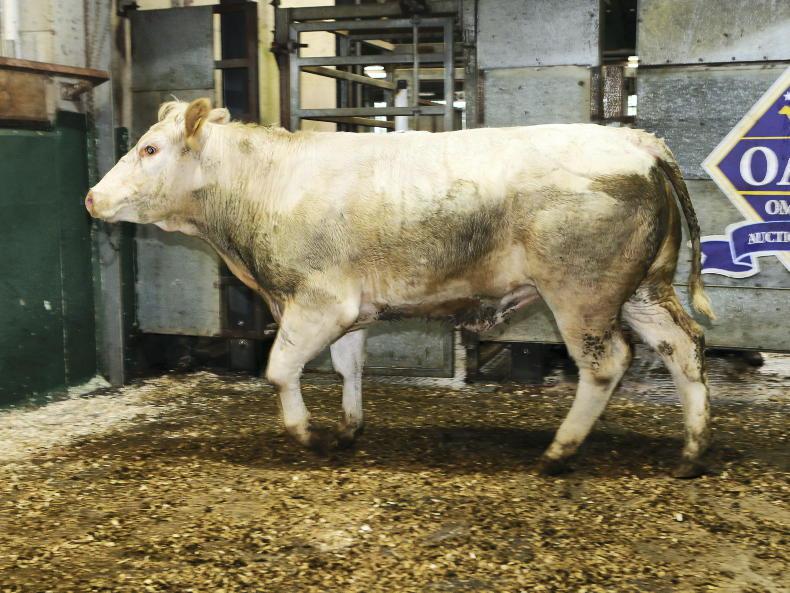
Between 2019 and 2025, daily liveweight gain (DLWG) on the Foyle finishing unit outside Cookstown in Co Tyrone has increased by 46% from 1.3kg to 1.9kg/head/day.
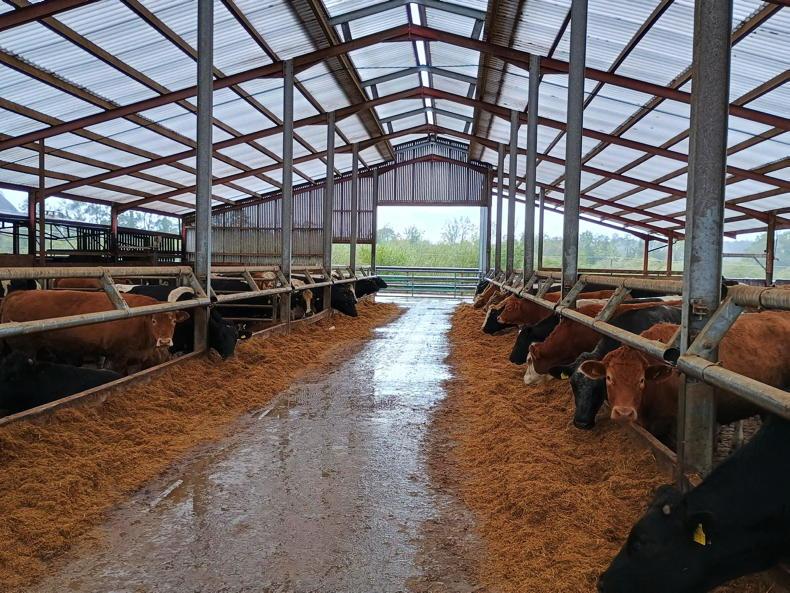
The unit, owned by Foyle Food Group director Wayne Acheson, is stocked with 1,100 head of cattle, with 100 to 120 animals per week sent to slaughter.
Speaking at an annual producer event last Friday, Gareth Anderson from FarmGate Nutrition said the performance now being achieved on the farm compares favourably with anything he has seen.
“These are exceptional figures. There wouldn’t be another yard in my travels throughout Ireland and the UK that has daily liveweight gain figures like that,” he said.
Ultimately, he maintained that management is key, with attention to detail across all areas, to include issues such as feed space, water quality, routine vet treatments and vaccinations. However, nutrition also plays a vital role, although when you are already achieving average weight gains of 1.9kg, it is about fine-tuning the diet – putting in an extra 1kg of rolled maize is unlikely to give you an economic return, said Anderson.
The basis of the diet on the unit is grass silage – there is no maize silage or wholecrop ensiled. Silage dry matter (DM) and protein is assessed daily via the technology fitted to a Keenan diet feeder, with a formal silage sample taken every month and diets adjusted accordingly.
As shown in Table 1, first-cut silage is excellent and one of the best silages ever made on the farm at 31% DM, 13.6% protein, ME12.1 and pH of 3.4.
“I see very few silages with energy levels above 12ME. That’s down to management – getting the right level of fertiliser and slurry on and getting silage in, in good order,” said Anderson.
However, one issue is the first cut is very acidic, with sugar converted to lactic acid leading to a pH of just 3.4 and lactic acid of 147g/kg. An overly acidic silage can lead to issues such as ruminal acidosis, digestive upsets and lower intakes.
“We have some additives in the diet to counteract that,” said Anderson.
Batched
On arrival on the unit, cattle are batched up according to weight. The target is to get cattle to eat 2.2% of body weight, so 600kg steers are offered 13.2kg of DM daily.
Each pen on the farm is fed to 95% of appetite, which in practice means all the feed is gone one hour before fresh material is offered. That should ensure maximum feed efficiency – feeding below 95% will have a negative impact on weight gains, while feeding over appetite risks cattle gorging on feed and problems with acidosis.
Cattle like a consistent routine, so are fed at the same time each morning, seven days per week.
However, there is some research from the US which suggests there is a significant benefit to be had from feeding three times per day, over once per day feeding. Given the willingness of management on the farm to push the boundaries of what can be achieved in animal performance, is that something they will try? “The only problem, you would never leave the yard, have no social life and never meet anybody. Probably stick to once a day,” said Anderson.

A self-propelled feeder wagon was bought earlier in 2025.
Three main straights included in beef blend
When cattle are brought onto the Foyle unit, they are gradually built up to their full diet.
For short-keep animals, finished in 30 days, this process will be done by day three. For lighter animals, to be on the farm three to four months, they will be on 80% of their full finishing diet by day 13. Ad-lib straw is offered during this transition phase.
Table 2 shows the finishing diet currently being offered. It is designed to have a DM of 44 to 45% and includes three main straights in a beef blend of rolled maize, followed by sugar beet nuts and maize distillers.
Until recently, like most other local farmers, the Foyle unit was feeding ground maize. However, on a visit to the US, Acheson noted finishers there preferred a rolled product in intensive diets as it resulted in fewer health problems.
“The farm here is seeing reduced digestive upsets, better feed digestibility and a lot less lameness. I don’t think they would switch back to ground maize – it is not all down to it, but it’s certainly a big benefit,” suggested Anderson.
There is no soya in the diet, with the main protein source being the maize distillers, as well as the protein in the silage – overall, the diet is at 14%.
Fibre comes from the silage, as well as some hay and/or straw and from the sugar beet nuts. The finishing diet also includes 8kg of brewers grains and 4kg of moist feed, a co-product from the distilling industry.

The self-propelled feeder wagon works up and down the feed face.
Additives
A number of additives are also included in the final diet. Anderson is a strong advocate of adding GlycoPass to both dairy and beef cattle diets. It is a source of rumen-protected glycerine, which helps to increase blood glucose levels.
“The animals are healthier – they will eat more and consequently have a higher daily weight gain,” he said. In early trial work, weight gains increased 0.1 to 0.2kg/day when 200-250g/day of GlycoPass was included. At a rough cost of around 18p for 200g, it is a payback of two to one at the minute, he said.
Also included in the beef blend is around 240g/head/day of Rumin Aid to help prevent acidosis and 50g of Rumenate, which helps to improve gut health and combat mycotoxins.
The final additive included is 10g per head of Elensis, which is designed to improve rumen fermentation.
“It has been fed for a number of years. Our experience on this farm and others, is significantly reduced sore feet, less acidosis and digestive upsets,” said Anderson.
Future
Looking ahead, he said the management on the farm are always looking to see if there are other products on the market that should be trialled.
One product that is going to be included in the diet is Lipidol, which is a product used in feedlots and dairy farms in the US. Research suggests it will help improve nutrient absorption.
Irrespective of whether various feed additives are added or not, all cattle diets should also include minerals and vitamins: “I don’t get too hung up on this. Go for a good basic, sensible mineral – after that, there should be no issue on the vast majority of farms,” said Anderson.

A Clean-flow drinker installed on the Foyle farm.
Clean water is
crucial for cattle
Finishing beef cattle can drink between 25l and 75l of water per day, depending on the DM of the diet, so it is very important that water is kept clean and fresh, said Anderson.
The Foyle unit has invested in some clean-flow drinkers made by French company, La Buvette, which are designed to prevent a build-up of food in the bottom of the drinker.
Investment made in
self-propelled feeder
A major investment was made on the Foyle finishing unit in early 2025, with the purchase of a Keenan self-propelled VA2-22 diet feeder.
The machine has a 22m3 capacity and can hold up to 10t of a mainly forage-based mix.
According to Anderson, one of main benefits of the machine is that the milling head works up and down the silage face, which helps to ensure that the diet is consistent each time.
“There could be 10 different fields in that pit, ranging in quality, but you are getting the average each time,” he said. That consistency in diet, which is added to by the Keenan technology, that ensures cattle are offered the same weight of feed dry matter daily, has helped deliver a 5% improvement in weight gains, added Acheson.
He said that the yard is also cleaner to work in as there is reduced spillage, while there is a 30% diesel saving and the time spent feeding each day has been reduced from four hours to two hours.
When asked how much he spent on the machine, he said it was similar to the cost of a tractor, diet feeder and loading shovel.

Gareth Anderson (left) from FarmGate Nutrition, with his colleagues, Ellie Stinson and Shea Moore.
Lots of small things combined
Commenting on the overall performance, Cara Moore from Foyle Food Group said the 1.9kg average daily weight gain being achieved was due to the cumulative impact of lots of small changes.
As well as improved silage quality, the use of feed additives, consistency in the feed being offered, clean drinkers etc, she said the farm also has timer switches installed to ensure there is only seven hours of darkness each day, to help drive feed intake.
In recent years, the farm has also trialled the inclusion of brushes in sheds as a means of promoting better welfare. Results across a number of trials suggest average weight gain has increased by 0.2kg/day. Most pens on the farm now contain brushes.
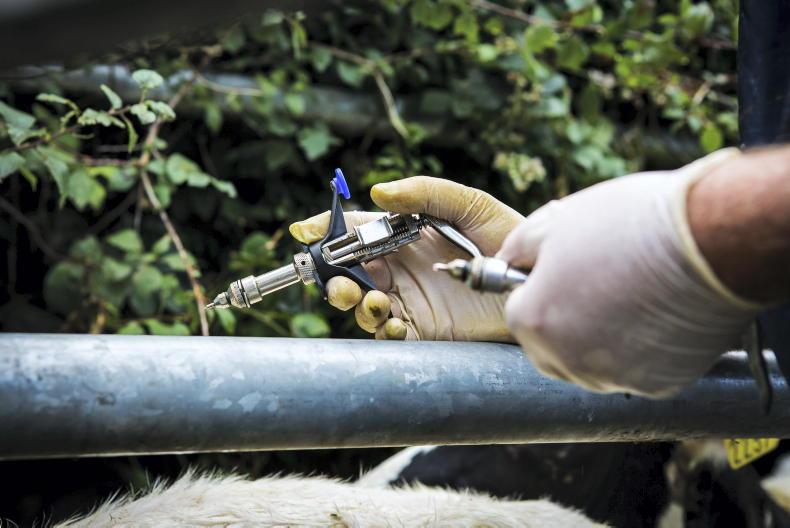
Finally, on arrival to the farm, cattle are now treated with a product called FerAppease. It is applied to the head and nose and has a calming effect on animals.

Brushes have been installed in most pens on the farm.
Between 2019 and 2025, daily liveweight gain (DLWG) on the Foyle finishing unit outside Cookstown in Co Tyrone has increased by 46% from 1.3kg to 1.9kg/head/day.
The unit, owned by Foyle Food Group director Wayne Acheson, is stocked with 1,100 head of cattle, with 100 to 120 animals per week sent to slaughter.
Speaking at an annual producer event last Friday, Gareth Anderson from FarmGate Nutrition said the performance now being achieved on the farm compares favourably with anything he has seen.
“These are exceptional figures. There wouldn’t be another yard in my travels throughout Ireland and the UK that has daily liveweight gain figures like that,” he said.
Ultimately, he maintained that management is key, with attention to detail across all areas, to include issues such as feed space, water quality, routine vet treatments and vaccinations. However, nutrition also plays a vital role, although when you are already achieving average weight gains of 1.9kg, it is about fine-tuning the diet – putting in an extra 1kg of rolled maize is unlikely to give you an economic return, said Anderson.
The basis of the diet on the unit is grass silage – there is no maize silage or wholecrop ensiled. Silage dry matter (DM) and protein is assessed daily via the technology fitted to a Keenan diet feeder, with a formal silage sample taken every month and diets adjusted accordingly.
As shown in Table 1, first-cut silage is excellent and one of the best silages ever made on the farm at 31% DM, 13.6% protein, ME12.1 and pH of 3.4.
“I see very few silages with energy levels above 12ME. That’s down to management – getting the right level of fertiliser and slurry on and getting silage in, in good order,” said Anderson.
However, one issue is the first cut is very acidic, with sugar converted to lactic acid leading to a pH of just 3.4 and lactic acid of 147g/kg. An overly acidic silage can lead to issues such as ruminal acidosis, digestive upsets and lower intakes.
“We have some additives in the diet to counteract that,” said Anderson.
Batched
On arrival on the unit, cattle are batched up according to weight. The target is to get cattle to eat 2.2% of body weight, so 600kg steers are offered 13.2kg of DM daily.
Each pen on the farm is fed to 95% of appetite, which in practice means all the feed is gone one hour before fresh material is offered. That should ensure maximum feed efficiency – feeding below 95% will have a negative impact on weight gains, while feeding over appetite risks cattle gorging on feed and problems with acidosis.
Cattle like a consistent routine, so are fed at the same time each morning, seven days per week.
However, there is some research from the US which suggests there is a significant benefit to be had from feeding three times per day, over once per day feeding. Given the willingness of management on the farm to push the boundaries of what can be achieved in animal performance, is that something they will try? “The only problem, you would never leave the yard, have no social life and never meet anybody. Probably stick to once a day,” said Anderson.

A self-propelled feeder wagon was bought earlier in 2025.
Three main straights included in beef blend
When cattle are brought onto the Foyle unit, they are gradually built up to their full diet.
For short-keep animals, finished in 30 days, this process will be done by day three. For lighter animals, to be on the farm three to four months, they will be on 80% of their full finishing diet by day 13. Ad-lib straw is offered during this transition phase.
Table 2 shows the finishing diet currently being offered. It is designed to have a DM of 44 to 45% and includes three main straights in a beef blend of rolled maize, followed by sugar beet nuts and maize distillers.
Until recently, like most other local farmers, the Foyle unit was feeding ground maize. However, on a visit to the US, Acheson noted finishers there preferred a rolled product in intensive diets as it resulted in fewer health problems.
“The farm here is seeing reduced digestive upsets, better feed digestibility and a lot less lameness. I don’t think they would switch back to ground maize – it is not all down to it, but it’s certainly a big benefit,” suggested Anderson.
There is no soya in the diet, with the main protein source being the maize distillers, as well as the protein in the silage – overall, the diet is at 14%.
Fibre comes from the silage, as well as some hay and/or straw and from the sugar beet nuts. The finishing diet also includes 8kg of brewers grains and 4kg of moist feed, a co-product from the distilling industry.

The self-propelled feeder wagon works up and down the feed face.
Additives
A number of additives are also included in the final diet. Anderson is a strong advocate of adding GlycoPass to both dairy and beef cattle diets. It is a source of rumen-protected glycerine, which helps to increase blood glucose levels.
“The animals are healthier – they will eat more and consequently have a higher daily weight gain,” he said. In early trial work, weight gains increased 0.1 to 0.2kg/day when 200-250g/day of GlycoPass was included. At a rough cost of around 18p for 200g, it is a payback of two to one at the minute, he said.
Also included in the beef blend is around 240g/head/day of Rumin Aid to help prevent acidosis and 50g of Rumenate, which helps to improve gut health and combat mycotoxins.
The final additive included is 10g per head of Elensis, which is designed to improve rumen fermentation.
“It has been fed for a number of years. Our experience on this farm and others, is significantly reduced sore feet, less acidosis and digestive upsets,” said Anderson.
Future
Looking ahead, he said the management on the farm are always looking to see if there are other products on the market that should be trialled.
One product that is going to be included in the diet is Lipidol, which is a product used in feedlots and dairy farms in the US. Research suggests it will help improve nutrient absorption.
Irrespective of whether various feed additives are added or not, all cattle diets should also include minerals and vitamins: “I don’t get too hung up on this. Go for a good basic, sensible mineral – after that, there should be no issue on the vast majority of farms,” said Anderson.

A Clean-flow drinker installed on the Foyle farm.
Clean water is
crucial for cattle
Finishing beef cattle can drink between 25l and 75l of water per day, depending on the DM of the diet, so it is very important that water is kept clean and fresh, said Anderson.
The Foyle unit has invested in some clean-flow drinkers made by French company, La Buvette, which are designed to prevent a build-up of food in the bottom of the drinker.
Investment made in
self-propelled feeder
A major investment was made on the Foyle finishing unit in early 2025, with the purchase of a Keenan self-propelled VA2-22 diet feeder.
The machine has a 22m3 capacity and can hold up to 10t of a mainly forage-based mix.
According to Anderson, one of main benefits of the machine is that the milling head works up and down the silage face, which helps to ensure that the diet is consistent each time.
“There could be 10 different fields in that pit, ranging in quality, but you are getting the average each time,” he said. That consistency in diet, which is added to by the Keenan technology, that ensures cattle are offered the same weight of feed dry matter daily, has helped deliver a 5% improvement in weight gains, added Acheson.
He said that the yard is also cleaner to work in as there is reduced spillage, while there is a 30% diesel saving and the time spent feeding each day has been reduced from four hours to two hours.
When asked how much he spent on the machine, he said it was similar to the cost of a tractor, diet feeder and loading shovel.

Gareth Anderson (left) from FarmGate Nutrition, with his colleagues, Ellie Stinson and Shea Moore.
Lots of small things combined
Commenting on the overall performance, Cara Moore from Foyle Food Group said the 1.9kg average daily weight gain being achieved was due to the cumulative impact of lots of small changes.
As well as improved silage quality, the use of feed additives, consistency in the feed being offered, clean drinkers etc, she said the farm also has timer switches installed to ensure there is only seven hours of darkness each day, to help drive feed intake.
In recent years, the farm has also trialled the inclusion of brushes in sheds as a means of promoting better welfare. Results across a number of trials suggest average weight gain has increased by 0.2kg/day. Most pens on the farm now contain brushes.
Finally, on arrival to the farm, cattle are now treated with a product called FerAppease. It is applied to the head and nose and has a calming effect on animals.

Brushes have been installed in most pens on the farm.
SHARING OPTIONS