When cows are indoors, having adequate cubicles and avoiding high-density housing where cows cannot stand comfortably is essential. Cows can spend up to 14 hours per day lying down, but they will only do this if they have a comfortable place to lie.
Cow lying time is important as it facilitates the manufacture of milk, but it also provides for rest and the recuperation of cows during the dry period. A comfortable lying area will also reduce the risk of lameness. It is also important that cubicles are clean (and easy to clean) to ensure good animal health.
Clean environments
Proper housing and bedding and rigorous hygiene are essential components of winter management and a successful dry period in preparation for calving on dairy farms. Whether milking or dry, dairy cows need a clean dry bed to lie on while indoors.
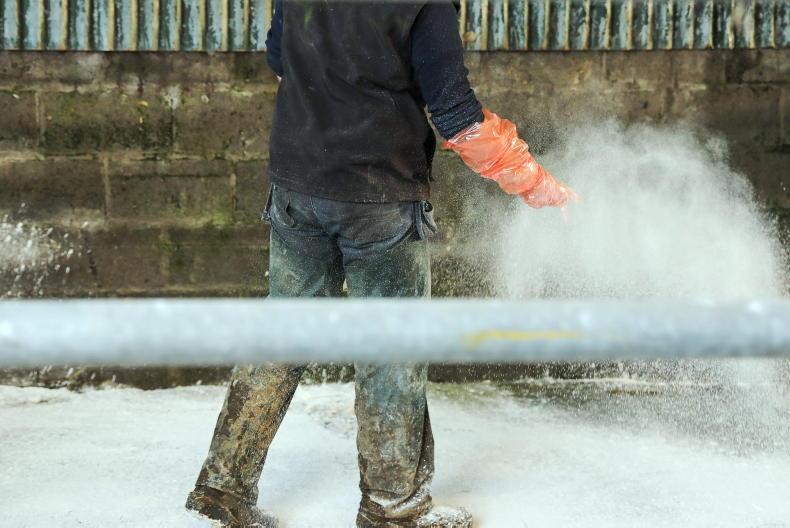
When milking cows are indoors full- time, cubicles should be limed twice a day to reduce infection risk. Equally, shed scrapers should be serviced now at the beginning of the winter period and run eight times per day during the fully housed period to keep the cubicle environment clean. On many dairy farms, scrapers are turned off at night for fear of an unexpected calving, however this results in dirty bedding and increased infection risk for the herd at an important time of the year.
The use of correctly placed brisket boards and neck rails will improve cow comfort and stability on cubicles and will also ensure that cubicles are cleaner right through the winter months.
Types of cubicle bedding
Bedding materials are aimed at providing a safe and comfortable resting environment for cows. Control of pathogens is crucial to prevent intramammary infections in dairy cows, as these can significantly impact milk quality, cow health, and farm productivity.
Studies comparing standard ground limestone to hydrated lime or indeed sawdust-based products have shown dramatic differences in bacterial survival.
While a well-maintained bed of sawdust keeps cubicle beds dry, once this becomes wet, bacterial growth can occur rapidly and can quickly result in high bacterial populations on teats. Adding hydrated lime to sawdust or wood shavings increases the pH and suppresses bacterial growth.
While studies evaluating the effect of hydrated lime on microbial populations in sawdust bedding showed a reduction in bacterial counts, the effects of adding hydrated lime are usually short-lived, typically lasting only between 24 and 48 hours.
In terms of types of conventional liming products available, previous research at Teagasc Moorepark by Dr David Gleeson investigated the effects of dusting cubicles with hydrated lime, ground limestone or a mixture of the two on teat end condition during the housing period.
All products were effective at disinfecting the cubicles without any adverse reaction to cows’ teats due to the higher pH of the hydrated lime.
Hydrated lime also has superior bacteriocidic properties with 50% lower staphylococcal bacteria counts and 45% lower streptococcal bacteria counts observed on teats using the hydrated lime treatments, compared to those bedded on standard cubicle limestone within the experimental studies
However, it is important to apply the recommended level of hydrated lime (170g) per cubicle bed, as higher application rates than that specified are considered unnecessary due to the drying properties of the lime and may lead to a deterioration in teat condition.
Hydrated lime blends absorb significantly more moisture than standard cubicle limestone, preventing the damp environments where environmental bacteria thrive.
Hydrated lime also has superior bacteriocidic properties with 50% lower staphylococcal bacteria counts and 45% lower streptococcal bacteria counts observed on teats using the hydrated lime treatments, compared to those bedded on standard cubicle limestone within the experimental studies.
In freshly calved cows housed indoors on these trials, somatic cell counts (SCC) started and remained low for all treatment groups evaluated. Irrespective of treatment group, no lesions were observed on legs or udders and only normal changes in teat end condition were observed over the six-week study period.
Common concern
A common concern for dairy farmers was whether high-alkalinity lime would negatively react with standard milking routines. Research evaluating the use of hydrated lime alongside post-milking teat dips found no adverse reactions and so it is safe to use hydrated lime in combination with both chlorhexidine and iodine-based teat disinfectants.
Nonetheless, some farmers using hydrated lime have seen a deterioration in teats or black spot cases with some iodine-based teat dips and so it is preferable to make sure that high levels of emollients are contained in teat dips during the indoor period.
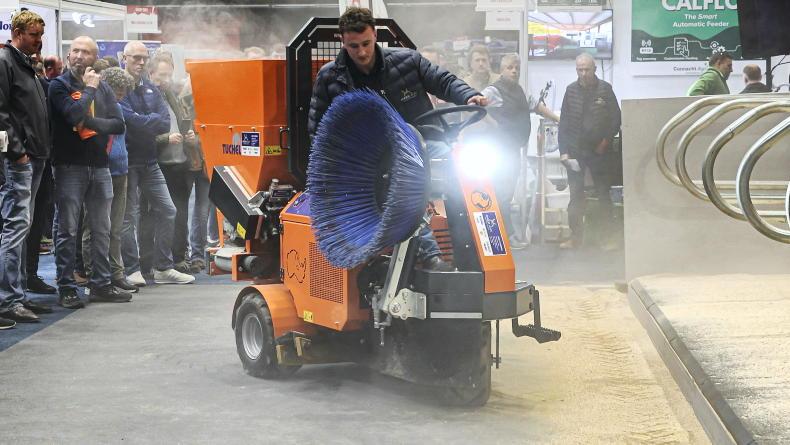
Recently, lime and sawdust mix products have become more popular on dairy farms to absorb moisture on cubicles. It’s important to note that these products contain only ground limestone. Consequently, such products will have inferior bacteriocidic properties and so maintaining dry clean cubicles are essential.
Practical cubicle bedding guides
Recent Teagasc surveys have found considerable variation in lime use on cow cubicles while the frequency of liming cubicles during winter also differs on different farms.
The following practical guidelines should be followed when bedding cubicles: