At the National Beef Conference, Dr Eddie O’Riordan presented data from research at Teagasc Grange on the economics of supplementing cattle at grass. The research was based on the implementation of a high level of grassland management while stock was grazing, and the use of high-quality 72 to 74DMD silage during the housed period. O’Riordan concluded that where good grassland management is adopted, and where silage quality is very high, the economics of supplementing cattle at pasture is questionable. However, concentrates can play a part where grass quality is an issue.
Winter weanling supplementation
O’Riordan showed the results of two separate trials. Table 1 details work carried out on the effect of supplementation over the first winter on carcase weight of weanling steers.
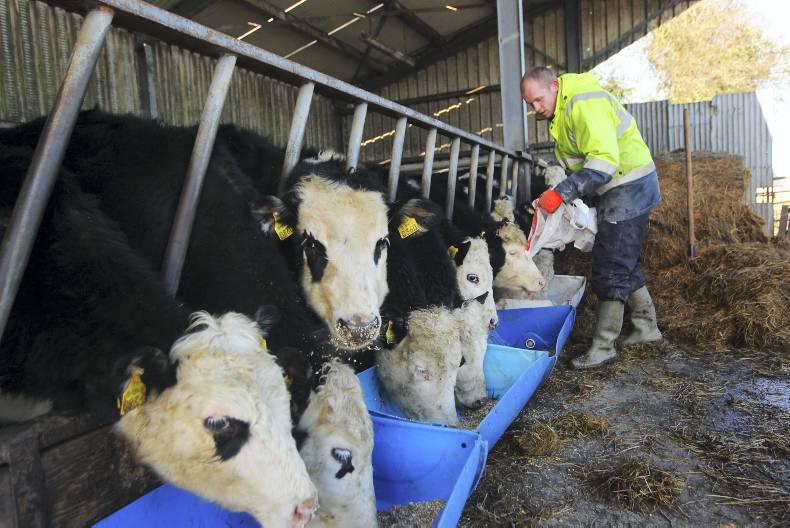
In the case of bull weanlings, he showed results of a trial where bulls were fed 2kg, 4kg or 6kg of ration per day during the winter period on high-quality silage. Table 2 details the results of that trial. O’Riordan said that there was no significant difference in slaughter weights of the various treatments, kill-out percentages or fat scores. Over the course of the first winter, the bulls fed 2kg of ration per day gained 0.79kg/day during the housed period, those fed 4kg gained 1.01kg/day and those on 6kg/day gained 1.27kg/day.
He concluded that where silage quality is very good (72 to 74DMD), supplementation with more than 2kg/head/day is not economical where bulls are being held over to run at grass the following year, as compensatory growth will be achieved in the spring.
However, he said that where farmers are targeting the sale of these weanlings the following spring, the weight gain from additional supplementation at current market rates may provide a return. This comes with the caveat that weanlings fed on high concentrate levels over the winter will not achieve as weight gains as high off grass the following year.
Supplementation in spring
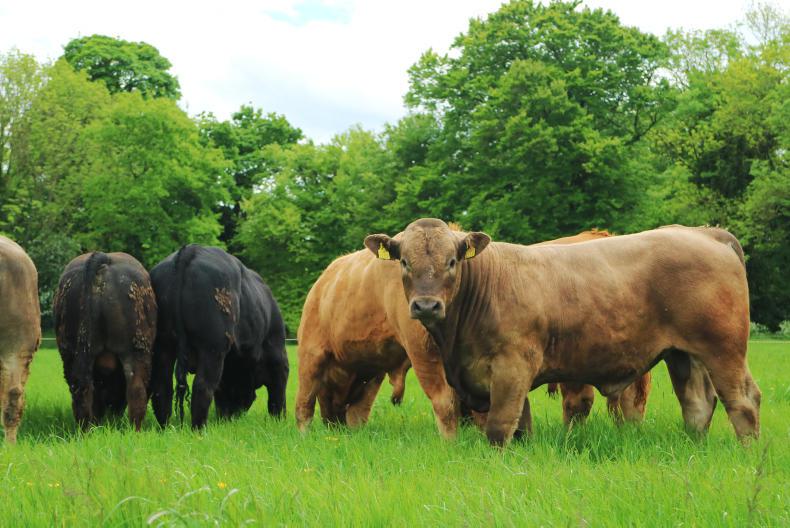
Trials conducted with bulls that were turned out to pasture for 100 days prior to finishing showed that there was no economic response to supplementing with 2.7kg or 5.3kg of ration per head per day where good grassland management was taking place.
In a trial conducted last year on finishing aged bulls at grass with no supplementation, or fed 3kg or 6kg of ration per day, it was shown that there was no economic response to supplement feeding on carcase weight. However, feeding 6kg/day increased fat score, while ad-lib finishing increased carcase fat further.
O’Riordan said that if the bulls are going indoors to finish on a high-concentrate diet after a period at grass in the second season, there is no economic advantage of supplementing at grass in the spring.
Supplementing at pasture prior to indoor finishing
Trials on the economics of supplementing at pasture for Angus crossbred cattle suggest that there was no significant difference on carcase weight for cattle supplemented with 1.5kg or 3kg of concentrates for a 112-day period at grass prior to being housed for an 89-day intensive finishing period to those who were not supplemented on good-quality grass prior to housing for finishing.
However, those supplemented at grass had a slightly higher kill-out percentage and a higher fat score. While slightly higher daily liveweight gains can be achieved through supplementation at grass, O’Riordan said that the economics would have to be questioned.
Supplementation of 30-month
continental steers at grass
The final scenario that O’Riordan looked at was the economics of feeding concentrates to steers in their third season at grass where the target is to slaughter them at 30 months of age. He said they can expect to gain 0.6-1.0kg per day at grass and can be finished at grass without supplementation. He said that where cattle are to be housed and fed indoors from November to February and then turned out for a third season at grass, there is unlikely to be a response to concentrate feeding over that winter where good quality silage is fed.
Read more
Focus: Winter indoor management
At the National Beef Conference, Dr Eddie O’Riordan presented data from research at Teagasc Grange on the economics of supplementing cattle at grass. The research was based on the implementation of a high level of grassland management while stock was grazing, and the use of high-quality 72 to 74DMD silage during the housed period. O’Riordan concluded that where good grassland management is adopted, and where silage quality is very high, the economics of supplementing cattle at pasture is questionable. However, concentrates can play a part where grass quality is an issue.
Winter weanling supplementation
O’Riordan showed the results of two separate trials. Table 1 details work carried out on the effect of supplementation over the first winter on carcase weight of weanling steers.
In the case of bull weanlings, he showed results of a trial where bulls were fed 2kg, 4kg or 6kg of ration per day during the winter period on high-quality silage. Table 2 details the results of that trial. O’Riordan said that there was no significant difference in slaughter weights of the various treatments, kill-out percentages or fat scores. Over the course of the first winter, the bulls fed 2kg of ration per day gained 0.79kg/day during the housed period, those fed 4kg gained 1.01kg/day and those on 6kg/day gained 1.27kg/day.
He concluded that where silage quality is very good (72 to 74DMD), supplementation with more than 2kg/head/day is not economical where bulls are being held over to run at grass the following year, as compensatory growth will be achieved in the spring.
However, he said that where farmers are targeting the sale of these weanlings the following spring, the weight gain from additional supplementation at current market rates may provide a return. This comes with the caveat that weanlings fed on high concentrate levels over the winter will not achieve as weight gains as high off grass the following year.
Supplementation in spring
Trials conducted with bulls that were turned out to pasture for 100 days prior to finishing showed that there was no economic response to supplementing with 2.7kg or 5.3kg of ration per head per day where good grassland management was taking place.
In a trial conducted last year on finishing aged bulls at grass with no supplementation, or fed 3kg or 6kg of ration per day, it was shown that there was no economic response to supplement feeding on carcase weight. However, feeding 6kg/day increased fat score, while ad-lib finishing increased carcase fat further.
O’Riordan said that if the bulls are going indoors to finish on a high-concentrate diet after a period at grass in the second season, there is no economic advantage of supplementing at grass in the spring.
Supplementing at pasture prior to indoor finishing
Trials on the economics of supplementing at pasture for Angus crossbred cattle suggest that there was no significant difference on carcase weight for cattle supplemented with 1.5kg or 3kg of concentrates for a 112-day period at grass prior to being housed for an 89-day intensive finishing period to those who were not supplemented on good-quality grass prior to housing for finishing.
However, those supplemented at grass had a slightly higher kill-out percentage and a higher fat score. While slightly higher daily liveweight gains can be achieved through supplementation at grass, O’Riordan said that the economics would have to be questioned.
Supplementation of 30-month
continental steers at grass
The final scenario that O’Riordan looked at was the economics of feeding concentrates to steers in their third season at grass where the target is to slaughter them at 30 months of age. He said they can expect to gain 0.6-1.0kg per day at grass and can be finished at grass without supplementation. He said that where cattle are to be housed and fed indoors from November to February and then turned out for a third season at grass, there is unlikely to be a response to concentrate feeding over that winter where good quality silage is fed.
Read more
Focus: Winter indoor management






SHARING OPTIONS