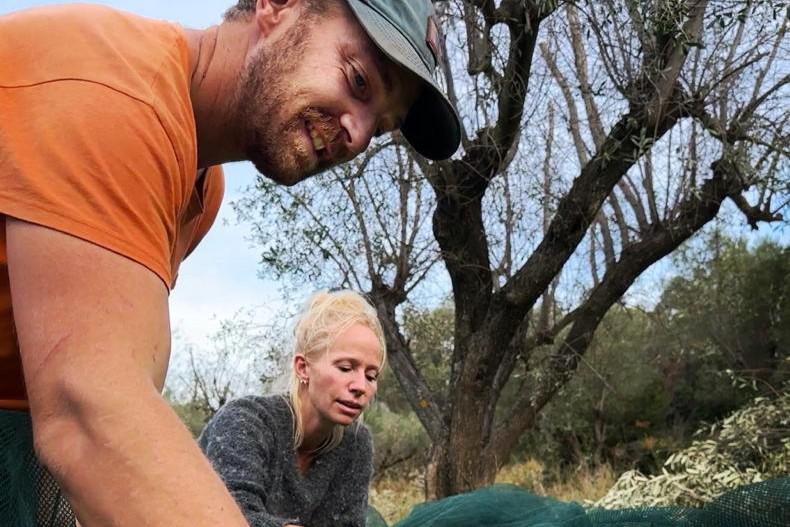
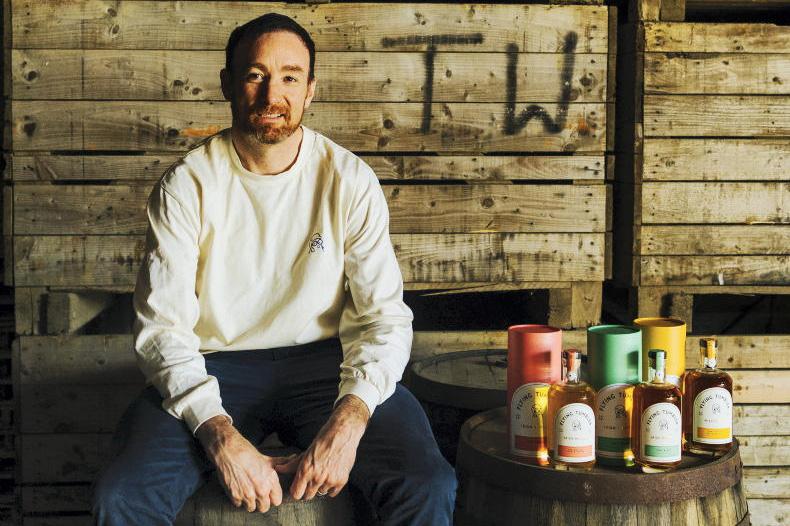
Robin and Sarah Peters decided to move to Ithaca, Greece following the COVID-19 pandemic to produce olive oil. Robin had grown up in Ithaca until the age of 14 before moving to the UK, where he stayed for the following 17 years and worked as a theatre manager in Bristol.
However, the pandemic made he and Sarah re-assess their lives, and they made the return to Ithaca and to the olive grove that has been in the Peter’s family for three generations.
Ithaca is a small island which is home to fewer than 2,000 people in the winter months. Having ties within the local community proved crucial in Robin and Sarah’s efforts to take up farming.
“Old school mates took me by the hand and showed me, step-by-step, the ways of tending to the olive trees,” Robin says.
It was initially difficult, because, like most of the olive groves on the island, the trees on Robin and Sarah’s property had been abandoned for some time.
“We had to start with a heavy pruning to try and lower the trees that had come to be 4-5m high after 15 years of neglect,” Robin explains. “We are now seeing them gradually get back into production. We harvested just three trees last year. We hope to harvest about 60 next year and gradually bring our entire 200 trees back into production.”
In the meantime, the couple are renting olive groves to ensure their current production needs.
While Robin was taught the first steps of olive farming from his local community, he and Sarah have also decided to do some things differently.
“Reading up on olive tree farming, we realised that some practices are outdated and do not always yield the best results,” Robin says. The pair are turning their pruned branches into wood chips to use as mulch, instead of burning them as would be the norm. Robin also prefers to trim the trees during the winter months rather than combining this work with the harvest time in autumn. He uses battery-powered olive harvesters instead of standard petrol-driven ones to avoid leaving any fumes on the fruit.
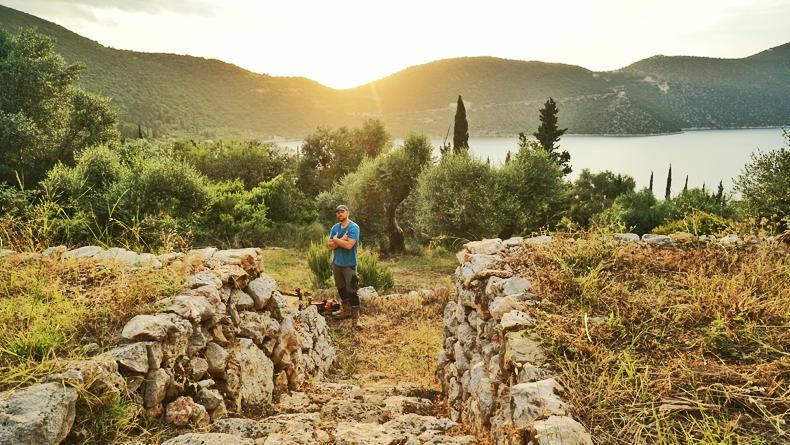
The couple's olive grove, which has been in Robin's family for three generations, was neglected for 15 years and requires significant care to restore its yield potential.
Quality extraction
Applying modern know-how at the stage of extraction at the mill is also crucial.
“Because millers are mostly paid in kind and keep a part of the olive oil extracted, they have little incentive to improve quality,” Robin says. “As a result, the olive paste is usually kneaded too long while the temperatures are too high, which leads to lower quality olive oil. Moreover, olive mills in Ithaca open late into the season, when the fruit is past the stage when it can yield optimal quality juice.”
To ensure their olive oil is of premium quality, Robin travels to the neighboring island of Cephalonia for milling, which carries its own set of complications.
“A rain during the harvest will lead us to stop working before we have collected enough olives to take them to the mill,” he says.
Even if all goes well harvesting is demanding.
“We usually harvest for two days, and on the evening of the second day we board the last boat to Cephalonia and drive the fruit straight to the mill to extract the olive oil [at around midnight]. We get back on the first boat that leaves in the morning to return to Ithaca and go straight back into the field to continue harvesting.”
Robin and Sarah plan to expand their business into olive oil tourism and hope to possibly, one day, own their own mill. Robin’s vision is to make the olive oil of Ithaca known internationally, and to make it worthwhile to farm the olive groves on the island once more.
“Today, the island only produces around 30t of olive oil, but I would like to see that increase,” he says. “It is a long-term project that will take a minimum of a decade to achieve. The other option is to focus on producing and promoting my own olive oil, possibly selling it to the tourists that visit in the summer. But that is not enough of a drive for me – I feel there is more work to be done.”
Find out more at aetosithaki.com.
Robin and Sarah Peters decided to move to Ithaca, Greece following the COVID-19 pandemic to produce olive oil. Robin had grown up in Ithaca until the age of 14 before moving to the UK, where he stayed for the following 17 years and worked as a theatre manager in Bristol.
However, the pandemic made he and Sarah re-assess their lives, and they made the return to Ithaca and to the olive grove that has been in the Peter’s family for three generations.
Ithaca is a small island which is home to fewer than 2,000 people in the winter months. Having ties within the local community proved crucial in Robin and Sarah’s efforts to take up farming.
“Old school mates took me by the hand and showed me, step-by-step, the ways of tending to the olive trees,” Robin says.
It was initially difficult, because, like most of the olive groves on the island, the trees on Robin and Sarah’s property had been abandoned for some time.
“We had to start with a heavy pruning to try and lower the trees that had come to be 4-5m high after 15 years of neglect,” Robin explains. “We are now seeing them gradually get back into production. We harvested just three trees last year. We hope to harvest about 60 next year and gradually bring our entire 200 trees back into production.”
In the meantime, the couple are renting olive groves to ensure their current production needs.
While Robin was taught the first steps of olive farming from his local community, he and Sarah have also decided to do some things differently.
“Reading up on olive tree farming, we realised that some practices are outdated and do not always yield the best results,” Robin says. The pair are turning their pruned branches into wood chips to use as mulch, instead of burning them as would be the norm. Robin also prefers to trim the trees during the winter months rather than combining this work with the harvest time in autumn. He uses battery-powered olive harvesters instead of standard petrol-driven ones to avoid leaving any fumes on the fruit.

The couple's olive grove, which has been in Robin's family for three generations, was neglected for 15 years and requires significant care to restore its yield potential.
Quality extraction
Applying modern know-how at the stage of extraction at the mill is also crucial.
“Because millers are mostly paid in kind and keep a part of the olive oil extracted, they have little incentive to improve quality,” Robin says. “As a result, the olive paste is usually kneaded too long while the temperatures are too high, which leads to lower quality olive oil. Moreover, olive mills in Ithaca open late into the season, when the fruit is past the stage when it can yield optimal quality juice.”
To ensure their olive oil is of premium quality, Robin travels to the neighboring island of Cephalonia for milling, which carries its own set of complications.
“A rain during the harvest will lead us to stop working before we have collected enough olives to take them to the mill,” he says.
Even if all goes well harvesting is demanding.
“We usually harvest for two days, and on the evening of the second day we board the last boat to Cephalonia and drive the fruit straight to the mill to extract the olive oil [at around midnight]. We get back on the first boat that leaves in the morning to return to Ithaca and go straight back into the field to continue harvesting.”
Robin and Sarah plan to expand their business into olive oil tourism and hope to possibly, one day, own their own mill. Robin’s vision is to make the olive oil of Ithaca known internationally, and to make it worthwhile to farm the olive groves on the island once more.
“Today, the island only produces around 30t of olive oil, but I would like to see that increase,” he says. “It is a long-term project that will take a minimum of a decade to achieve. The other option is to focus on producing and promoting my own olive oil, possibly selling it to the tourists that visit in the summer. But that is not enough of a drive for me – I feel there is more work to be done.”
Find out more at aetosithaki.com.
SHARING OPTIONS