



It seems like a lifetime ago, but once I was a young, energetic woman working in busy Toronto restaurants. I was lucky enough to work under some of Canada’s best chefs, including a man named Anthony Walsh. Similarly to how we were asking the question “What is Irish food?” 10 years ago, Anthony is credited for being one of the first to work with Canadian indigenous ingredients; to really celebrate the multicultural food mosaic which is Canada.
During my time in Toronto, he was a wonderful mentor: patient, calm and supportive. He was (and still is) a real “dad” – he loves the world of gastronomy, but he lives for spending time with his family.
I remember once he, his wife and their three young kids took an epic trip around the Iberian Peninsula. When he came back, he wrote all about it. As the resident journalist, it was my job to edit his writing into several easy-to-read blog posts for the company website. As I recall, they ate very well on their travels (of course they did) and at one point, he wrote that his child “overdosed on baby eels” while they were in Madrid. I thought to myself, “Someday I’m going to have kids who are adventurous eaters, too.” I was so naïve.
Fast-forward a few years and I was suddenly the mother of three of the pickiest eaters of all time. I did all of the things – devoured articles and how-tos on baby-led weaning, offered them the same meals my husband and I ate – at first, it worked – they ate what we ate. Then, all of that effort suddenly made no difference. When my eldest started playschool and saw what other kids had at snack time, that was it. We started living in a continuous cycle of ham sandwiches on sliced pan, Tuc crackers and plain buttered pasta.
My other two followed suit, with a few variations. Before I had kids I had strong opinions on parenting. I was fully in the “I will never make more than one meal at a time” camp.
However, I was soon making one meal for myself and my husband and one meal I knew my children would eat (does “eating your words” count as an additional meal? In that case, I was making three separate meals a day). I am not the type of person to force food down anyone’s throat, so I have a “one bite” policy for any “exotic looking” foods (like broccoli).
I figure if they take one bite of something new at each meal, eventually they will get used to different flavours and textures. I had hoped this pickiness was something they would grow out of. I was a very picky eater myself, growing up, so I know it is most likely a phase. But it is still very frustrating and, also, kind of embarrassing – what kind of a chef has kids who will only eat plain buttered pasta, and can’t even handle a bit of black pepper on their chicken?
When my eldest started playschool and saw what other kids had at snack time, that was it. We started living in a continuous cycle of ham sandwiches on sliced pan, Tuc crackers and plain buttered pasta
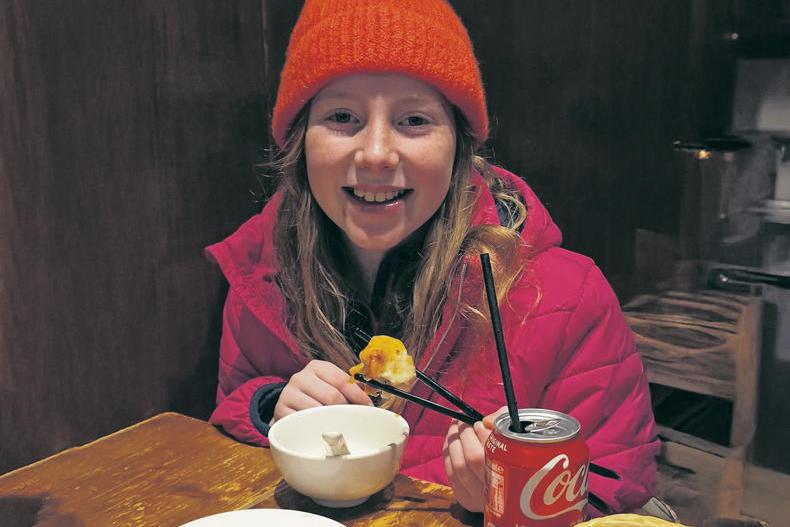
I couldn’t figure out what Anthony and his wife did to make their kids such adventurous eaters, and what did to make my kids so picky. I blamed myself. Then, my eldest hit the age of 12 and suddenly started eating curries, dumplings and Frank’s hot sauce on her scrambled eggs.
Today, while still fairly picky, she is more of a pleasure to take out for a meal. She is willing to try a bit of whatever I’ve ordered, while also enjoying her own food. The other two are still picky (we live in hope).
All of this makes me wonder: how much of this picky eating business is nature over nurture?
As it happens, there is scientific evidence around genetic pre-disposition to pickiness.
“What we like is determined by the unfathomable variability between us, our genetic programming, experiences, environment and culture,” states Cassandra Lee on the McGill University Office for Science and Society website. Her article entitled The Science of Taste: why are people picky eaters? explains
the complex relationship humans have with foods and flavour. The article delves into how we experience flavour through a chemical process with our taste buds and how, depending on our genetic make-up, flavours can be experienced differently by different people.
She gives the example of spiciness as a polarising experience – some have a high tolerance while others can’t handle even mildly spicy foods.
A 2020 paper (Considering Nature and Nurture in the Etiology and Prevention of Picky Eating: A Narrative Review) from researchers at the University of Illinois considers the idea that some children are genetically pre-disposed to avoid vegetables due to something called PROP sensitivity. They also discuss how small children have an evolutionary-driven preference for sweet flavours and an aversion to bitterness. These usually start to wane by late adolescence, when they stop having growth spurts.
There is absolutely a nurture element to the argument, though, which is why picky eating is such a complex issue. How you expose your kids to food, from the moment they’re born and how you choose to feed them, will impact their relationship and attitudes to food as they grow.
So, now that we know picky eating is both nature and nurture, what can we do about it? At the end of the day, if your kids aren’t experiencing medical issues around food – if they aren’t malnourished and they are growing as they should – there is very little to be done, aside from the age-old “wait it out” method.
Understanding this has made me feel much better – like less of a failure – as a food-obsessed mother. Like many people who enjoy food and cooking, I show my love for my family through the foods I prepare, so there is nothing quite as heartbreaking as your child turning up their nose to one of your from-scratch creations. But I’m going to keep exposing my kids to new foods and flavours and trust the process.



SHARING OPTIONS