


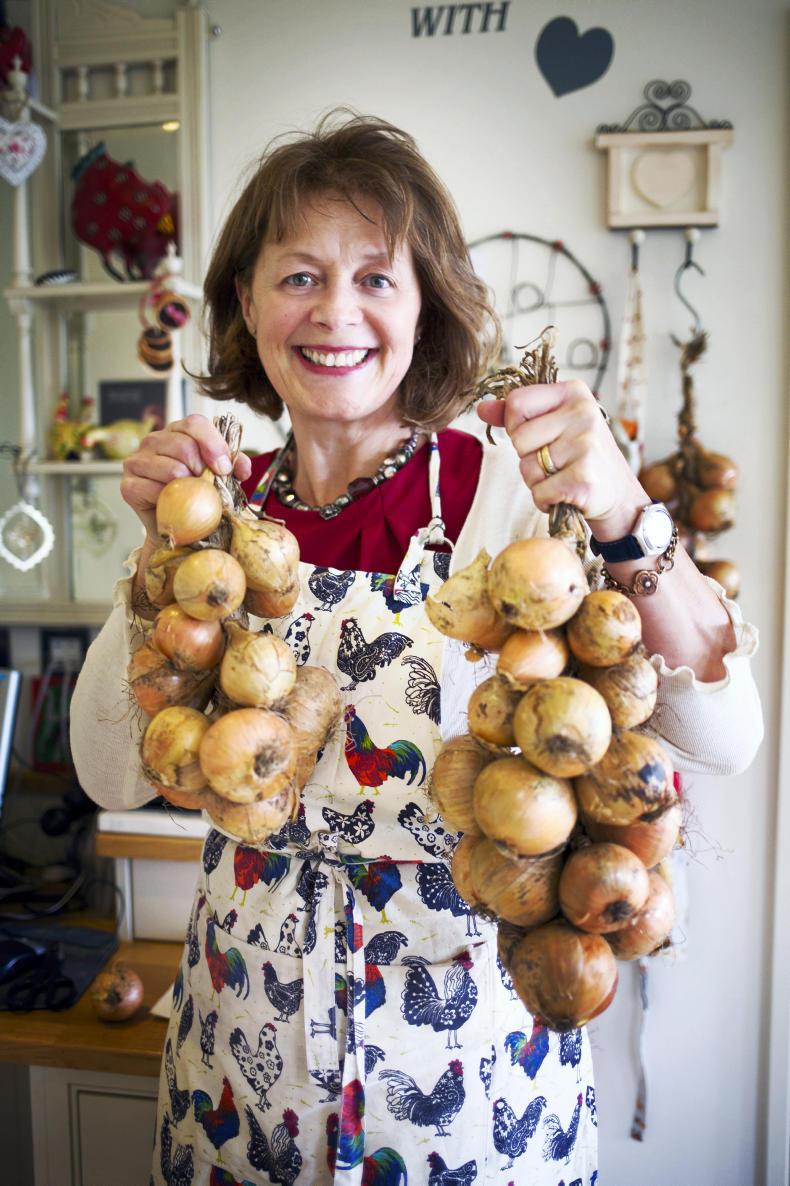
The harvest is plentiful but the labourers are few so the plot and kitchen are in full swing at the moment. Between braiding onions, boiling beetroot, digging and weeding, I am like the good Lord himself with the burst blisters on the palms of my hands – manicures are not my thing.
After being away for a few weeks, I arrived back to a plot full of weeds, nettles and thistles and it did look a sorry sight. But the rain meant the ground was soft and everything I had left in the earth over the summer survived and even thrived. Just goes to show, you can go away and all will be well. It’s probably our soft Irish rain.
Leeks, savoy cabbage, beetroot, celery and broad and string beans were all no worse for wear. My wildflower border was in full and magnificent bloom and was a welcome sight. A full day spent out there and I had it fairly respectable again. It helps that it’s not a big space and I grow full beds of the one veggie.
After all that back bending and lifting, I think I need yoga or some stretching class to help me straighten up again. To those of you who work in acres and not in hours, I salute your backs.
I have been planting more spinach, cabbage and broccoli, earthing up the leeks to blanch them and thinning out and replanting others. I have to own up to having disastrous carrots, three attempts and three disasters. The first year I grew them they were beauties – must have been beginner’s luck.
The last crop, before I headed to the Shannon, was peas. I had a marvellous crop of peas and we lived on pea salad, pea soup, peas for lunch and dinner for weeks and when they were gone, they were gone (to borrow a slogan). That’s what’s nice about growing vegetables and eating them as they come into season – I just cannot say enough about the taste; a veritable explosion of flavour.
The onions had spent several weeks drying out on the shed roof, so for the last fortnight I have been braiding them every evening after work. My lads are swapping them for home-grown cucumbers and courgettes as I haven’t any, so the faster I get them braided, the more I’ll have.
I gather them all and put them in different barrels according to size (large, medium and small). I peel off some of the papery outside skins. I keep back the wee ones for using whole in casseroles. Those without tails and any that are less than perfect or those I don’t think will make it through the winter, I keep out and use to make French onion soup.
You do need string for this job and YouTube is great for watching how it’s done. It’s basically just like plaiting hair. Tie them off when you are happy, make a loop and hang them somewhere cool, dry and fairly dark, but not under the stairs lest you want onion perfume wafting around.
And then for dinner it has to be soupe à l’oignon: big steamy bowls of onion-rich loveliness with a lid of bread and cheese.
But before I give my speedy recipe, I would like to thank those of you who wrote such lovely letters to Irish Country Living. It is heart warming to know I gave some people the jump-start they needed to get a plot going. Don’t get disillusioned if the plot has more weeds than edibles. It happens to us all – it’s called life. Get to know about green manure – the latest way to keep weeds at bay and a method I’ll be trying out myself.
French Onion Soup without the hassle
Don’t worry about weighing and measuring for soup. You can manage the consistency by adding more or less stock.
Onions, lots and lots of them.
Beef stock cubes (I use Just Bouillon)
Olive oil
Butter
Thyme or other herb
Browning (I keep a bottle of Sarson’s on hand)
Some nice crusty bread
Gruyere or any cheese
1 Peel and slice all the onions. On a low heat, sauté them in hot oil and butter. The butter will help brown them and give them flavour. Do this over a low heat, stirring occasionally to prevent them sticking. It will take up to half an hour to do this. When softened and turning golden, make up enough stock to cover them by an inch or two. Add in the herbs and a few drops of browning to get a rich colour. Bring to the boil and let it simmer. It is almost ready at this stage.
2 Meanwhile, grate the cheese – it can be any cheese but traditionally it is gruyère. Slice the bread into thick slices. I ladle it into big wide soup mugs and dunk the bread just under, topped with a generous amount of grated cheese and put under a hot grill until the cheese is melted and bubbling.
3 Serve up to the sound of French café music (available on YouTube) and imagine you are on a Parisian sidewalk, soaking up the soup and the sounds. As my son has just said after reading this: “Ah! That soup IS so nice mam.” CL





SHARING OPTIONS