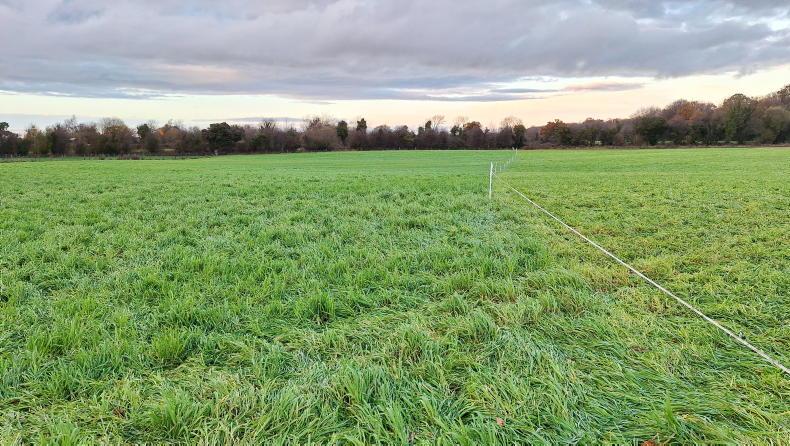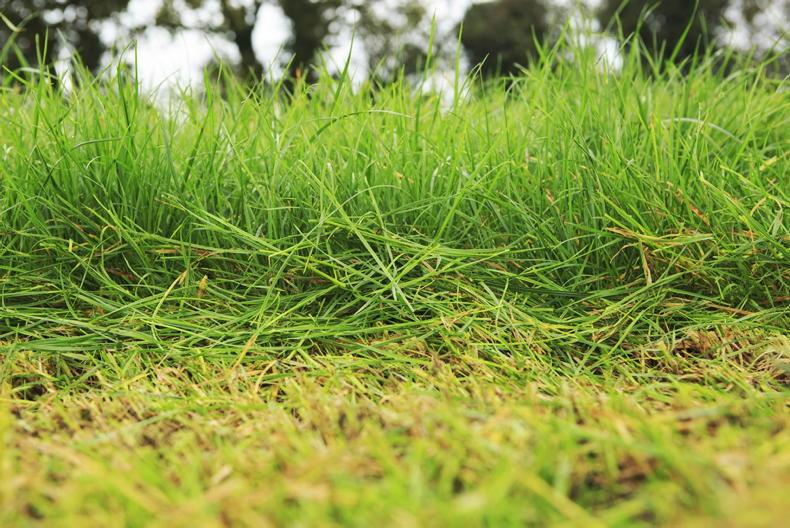
With 92% of Ireland’s agricultural land under grass and perennial ryegrass accounting for 95% of seed sales, grass underpins Ireland’s €19 billion agri-food export sector.
National policy identifies grass-based livestock systems as central to future growth; however, the climate that made Ireland so good at growing grass is changing.
National PastureBase Ireland data shows average annual grass growth falling from 13.1t DM/ha (10-year average) to 12.3t DM/ha (five-year average), partly reflecting changes to the Nitrates Directive as well as climate change. In 2024, a wet spring followed by a dry summer reduced national production by 1.3t DM/ha, and some farms lost up to 3t DM/ha. Spring 2026 brought exceptionally heavy rain, followed by the second-warmest July since 1990.
I have seen these contrasting impacts first-hand: summer drought at UCD Lyons Farm and tighter grazing and silage windows in the west. This Nuffield Ireland Scholarship took me to 11 countries across five continents to ask how grass-based systems can adapt.
Irish case studies show the scale of change. At Teagasc Curtin’s Farm in Fermoy, grass production in 2024 and 2025 averaged about 10t DM/ha, against previous records of 13-14t DM/ha. Subsequently, stocking rates have fallen by 0.5 cows/ha, and each cow now requires an extra 300kg DM of purchased forage and 400kg of concentrate. Drought-affected farmers described feeling overlooked. “The adviser dismissed the drought when I mentioned it, not understanding that drought dictates everything here,” said one. Another observed: “It’s easier to be depressed in wellies.”
Research gap
My review found that while Irish grassland research has rightly focused on mitigation and sustainability, there is a big gap in research and support for climate adaptation.
Apart from multispecies swards, extra silage reserves and stocking rate changes, there is little adaptation guidance or research ongoing.
Research, let alone plant breeding research, takes years, so lead times for adaptation strategies are long and overdue.
The Nuffield global network opened doors to farms and research centres already adapting to climate pressures. In Australia, the Victorian Drought Resilience Adoption and Innovation Hub brings farmers, researchers and industry together to develop locally tailored solutions, combining proactive risk planning with peer support. It treats resilient people as just as important as resilient farm businesses.
Forage rotation
In Belgium, Hooibeekhoeve demonstrates how diverse forage rotations can improve soil health and sustainable home-grown feed production.
Meanwhile, New Zealand farmers are trialling alternative grass species, diverse multispecies swards and mixed summer crops to sustain production through drought.
As Rogier Schulte, professor at Wageningen University, states, “resilience is the new efficiency.” International examples highlight that building resilient farm businesses must go hand in hand with supporting resilient people and the tools to adapt as climate pressures intensify.
The report also examines the Bord Bia Grass-Fed Standard, Ireland’s water storage capacity (the EPA’s Matthew Craig says “solutions are going to be all about storage”), silvopasture for shade and shelter, and the integration between tillage and livestock.
The message is clear. There is no single solution.
Irish farms urgently need a toolbox of strategies tailored to their soil, region and system.
Dr Zoe McKay’s recommendations for future-proofing Ireland’s grasslands will be revealed at the Nuffield Ireland 30th Anniversary Conference, “Farming the Future – People, Purpose and Possibilities”, on Friday 6 November 2026 at the Hodson Bay Hotel, Athlone.