


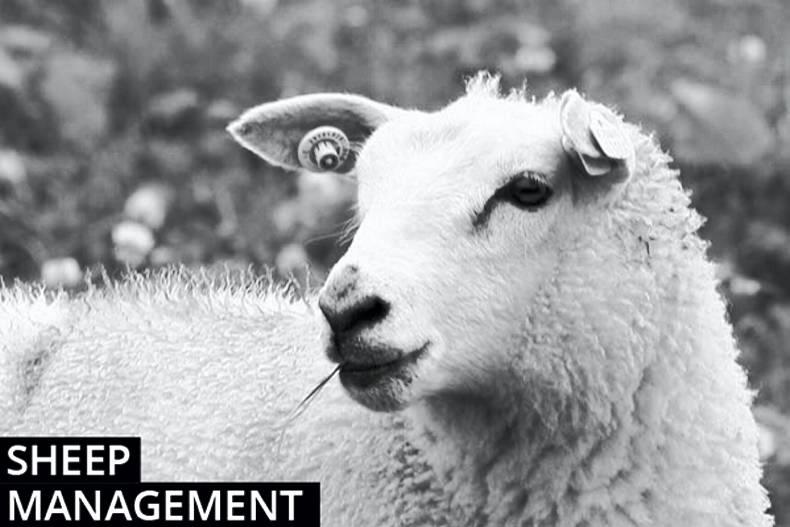
Grassland management: Heavy rainfall has added to difficulties in maintaining high-quality grass ahead of grazing animals. This is occurring at a critical time frame where lambs are being weaned or those remaining suckling are more reliant on grazed grass to drive performance. Swards that have accumulated a build-up of lower quality stemmy grass are presenting the greatest challenges. Where these swards exist, it is important to move lambs on to new pasture once higher quality grass has been consumed and avoid forcing lambs to graze poorer quality grass that will greatly hit performance. These swards should be brought back into control by topping to 3.5cm to 4cm or preferably using weaned and dry ewes to clean out paddocks. Applying small volumes of nitrogen, even 10 to 15 units, will help to keep quality in the sward. Where there is any doubts over soil fertility, compound fertilisers should be selected over straight nitrogen products while there will also be benefits on shallow soils in using a product that contains sulphur.
Controlling lameness: Variable weather and wet underfoot conditions are giving rise to higher incidence of scald in lambs. If left untreated, it can significantly affect lamb performance with a risk of serious cases progressing to footrot. Foot-bathing will generally be sufficient to treat and prevent scald, with copper sulphate, zinc sulphate and formalin the most commonly used products.
For treatment, the recommendation is generally 10% concentration for copper and zinc sulphate and 3% to 5% for formalin, reducing to half rate where running lambs through the footbath regularly for prevention. Take care with formalin not to leave lambs in the solution too long and for operator safety make sure foot-bathing is carried out in a well-ventilated area. For treatment with copper and zinc sulphate, the general recommendation is to leave affected lambs stand in solution for 30 to 60 seconds.
Footbath preparation and solution consistency is also important. For best results, lambs should be walked through a bath of water if required or enter the footbath solution free of dirt as contamination will reduce the effectiveness of copper sulphate and formalin. There are also other products on the market while individual cases can be controlled on a shorter-term basis with aerosol sprays.
Early lambing: Easter falls over two weeks later in 2017 with Easter Sunday on 16 April. Early lambing flocks have some difficult decisions to make given the uncertainty in the market in recent years, the narrow window for trading and high costs of production. Allowing 13 to 14 weeks to prepare lambs for slaughter, lambing will need to take place in early January with breeding in late July/early August. If synchronisation is or isn’t being used, taking the correct management decisions in having ewes in optimum body condition (BCS 3.5) and ensuring adequate nutrition pre-, during and post-mating will help to increase conception rates and litter size. Having enough rams present for synchronised breeding and in the optimum BCS of 3.5 to 4 is another important consideration. Mature rams are better suited than ram lambs with one ram recommended for every seven to eight ewes.



SHARING OPTIONS