



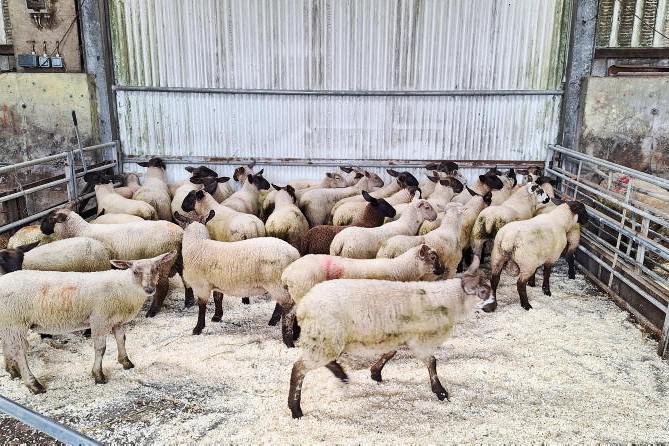
Faecal egg counts: reports indicate that worm burdens in faecal egg counts remain low.
However, with temperatures forecast to increase significantly next week it is important to be mindful to the potential of an increasing worm burden on swards and to gear up to commence the practice of faecal egg counts (FECs). Page 49 discusses how farmers can identify haemonchus contortus early.
There are numerous veterinary practices and consultants offering a FEC service but take note that for flocks participating in the parasite control (FEC) action of the Sheep Improvement Scheme FECs must be submitted to a laboratory approved by the Department of Agriculture. A full listing can be found on the SIS page of the Department’s website.
To recap on the FEC action – lowland flocks must submit a minimum of two faecal egg counts between 1 June and 30 September 2025. The second count must be taken at least seven days after the first. Hill flock participants must carry out one faecal egg count on lambs for the presence of worms within four weeks post-weaning within the scheme year.
Scheme dates: for farmers participating in the National Sheep Welfare Scheme who selected the body condition score (BCS) action, note that the first BCS assessment takes place between 15 April and 15 July.
The number of ewes which are below optimum condition should be recorded and these should be afforded preferential treatment as per the guidelines of the scheme.
For the flystrike control action in the Sheep Improvement Scheme sheep must be flocked at least once during the period from 1 June to 30 September. Intervention to prevent flystrike includes dagging and chemical control options, where applicable. Remember details of any practices should be recorded in the scheme action booklet.
Drafting lambs: lamb prices are currently on a high with demand boosted by buying for the Islamic religious festival of Eid al-Adha.
The festival will likely run from Tuesday 26 to Saturday 30 May. Prices in the wake of the festival will depend on supply and demand but it is probable that factories may try and initiate some seasonal price pressure.
It is worth weighing lambs on high levels of feed regularly and making wise marketing decisions while demand is strong. In some cases it may be more beneficial to draft well-fed lambs that will achieve positive slaughter performance at lighter weights than weaning and/or delaying drafting and aiming to bring lambs to heavier weights.
Shearing progress: the shearing season has started very slowly with only small numbers of dry ewe hoggets sheared so far. Some contractors comment that hoggets are just about fit to shear but they are expecting a significant change next week with a forecast increase in temperatures.
Ewes with young lambs and sheep which faced a significant nutritional challenge are reported as needing more time with such fleeces very dry and sheep taking a long time to shear. Where such sheep are being shorn then it is important that they are stocked in fields with good shelter post-shearing to prevent a risk of health issues and milk yield being compromised. The risks are much lower for ewes with aged lambs.



SHARING OPTIONS