It’s a Friday afternoon at Hillsborough Castle and Gardens, and the sun is high in the sky. An artistic display of delicate blue scilla, butter cream crocuses and tiny ‘Jack Snipe’ daffodils crowns the entrance to the Georgian estate.
“That was only put together this week,” quips Claire Woods, the head gardener who is here to take Irish Country Living on a tour around the grounds, just 20 minutes from Belfast.
This is Claire’s seventh year working at Hillsborough Castle, the official royal residence in Northern Ireland. Historical Royal Palaces, an independent charity that owns five other palaces in the UK, took out a 25-year lease of the estate in 2014.
“We’re over 10 years in,” she explains. “We did a five-year redevelopment project, which included the gardens, and we opened fully to the public in April 2019. Eleven months later, we closed again due to Covid, and then we had a very slow reopening. A lot of what you see in the gardens was done between 2016 and 2019.”
Having spent the entirety of her career working in horticulture – Claire was awarded an MBE (a royal honour) three years ago for her services to horticulture – her main task at Hillsborough has been growing the gardens, and bringing the horticultural, political and social history of the estate to the fore. Claire says that her team of 10 gardeners, casual staff and volunteers have planted “somewhere near 32,000 new plants” since 2016.
Blooming amazing
Overseeing the 100ac of woodlands, meadow and formal gardens (not to mention the lake and three ponds) is a mighty task, but Claire appears motivated by the challenge, describing it as “amazing”.
The first stop on our tour is the walled garden, and although the landscaping feels like it has been here for a very long time, she remarks “there was still sheep grazing in it” as recently as 2018.
The garden walkway is studded with white hellebores, their cup-shaped petals trumpeting upwards, and the stone-grey walls are lined with ‘Rip Van Winkle’ daffodils, an unusual variety of daffodil with tousled yellow petals that was first discovered in Ireland in the 19th century. Rows of espalier apple trees grow flatly on the garden perimeter, and the paths are lined with firm green tips of tulips that will be in bloom from the first week of April.
Clumps of blue rush spill over the rims of a raised wildlife pond, a water feature in the centre of the garden that has become a home to little fish and newts.
At the very back of the walled garden is the pavilion, overlooked by crab apple trees and a proud collection of 12 varieties of Northern Irish-bred daffodils. “Northern Ireland is synonymous with breeding daffodils,” says Claire.
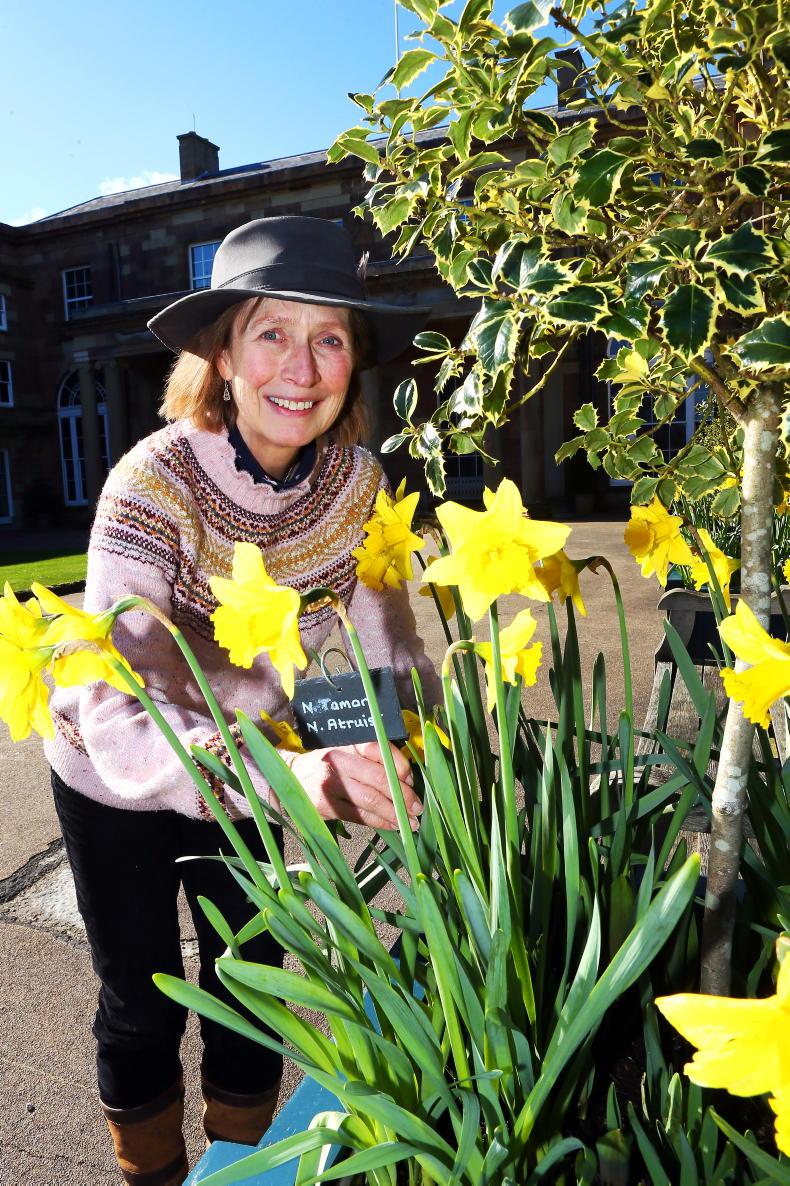
Claire Woods says it is hard not to be cheered up by the vibrant daffodil blooms dotted across the 100ac grounds. \ Peter Houston
Part of the 4ac walled garden is a kitchen garden, an area used to grow fruit and vegetables. There’s the promise of blackberry, logan and tay berries in August, and already, the glossy stems of red rhubarb are muscling through the soil. Pausing by the beds, Claire explains that this is a ‘no-dig garden’, which is really important for soil health. “We are not registered organic, but we follow organic principles, so we don’t use any artificial chemicals or fertilisers.
“In our vegetable area, we use mulches. We mulch heavily with materials that arise on site, so grasses that we’ve cut down, compost that we make ourselves, and we make our own leaf mould, and we use that then to mulch the beds.
“We do all we can to support biodiversity and sustainability,” she continues, pointing out the perennial wildflower meadow which is only cut once a year. The area is scattered with daffodils, and cowslips about to rear their heads, and framed by cobnut trees and Irish heritage varieties of apple trees that will bear fruit later in the year.
“There’s never a day in the year that you wouldn’t find something flowering in the gardens,” Claire adds. “We support the All-Ireland Pollinator Plan. It’s about having things for pollinators all year round, if we can.
“We leave ivy, where we can, to flower and provide nectar over the winter. We have some really early flowering plants that will come into flower in January/February time. We have plants that will continue flowering right through until November/December.”
The woodlands and glen
We leave the walled garden and start to slowly circuit around the grounds, passing trees “of all sorts of ages”, many of the bigger ones dating from the 1840s.
The day of the head gardener begins at half seven each morning, and every day Claire notices something different.
“I’m just noticing the light on the water over there today,” she gestures. We are in the glen, the oldest part of the garden, and a small silvery stream cuts through its dipped green centre.
“This is an area of calm tranquillity down here in the glen,” Claire says. “There’s always something of interest.”
The area is shaded with magnolias, camelias and rhododendrons, and the flowing water is framed by frothy ferns and older shrubs generously coated with moss, which Claire explains is “a sign of good air and very damp air.”
We reach Hillsborough Castle, with its cornices, pillars and symmetrical windows. The grand sandstone building is positioned on an elevated site with views of Belfast hills, its western front fleeced with lilac wisteria that comes out in May. The castle is the official Northern Ireland residence of His Majesty The King, and members of the Royal Family use Hillsborough as their base on their visits.
“If they come to visit, we flip and we stop being a visitor attraction, and we are a private residence for those few days,” says Claire.
The castle is open for visitor tours, permitting the public to explore eight key rooms, including the Throne Room and the State Drawing Room, and it is even licensed for weddings. “We can do small intimate weddings in the house, with up to 80 people in the Throne Room.”
It is in the immediate area around the castle where a lot of transformation has happened. “This was a sea of gravel,” she says. “There were a few climbers in the house like the big evergreen magnolia, which was planted by the Queen in 1953 on her coronation visit. But all the planters are new.”
Claire says spring is her favourite season to be working in the garden, and it is easy to see why. “It’s busy, and there’s so much to do,” she enthuses. “You’re sowing seeds and you’re seeing the results of all the work you did in the autumn, planting all the bulbs. I mean who couldn’t see joy in these gorgeous little sunny faces of the day?” she asks, cupping the face of a yellow daffodil in her hands.
And what about her garden at home? Claire laughs lightly: “it’s lacking in care!”

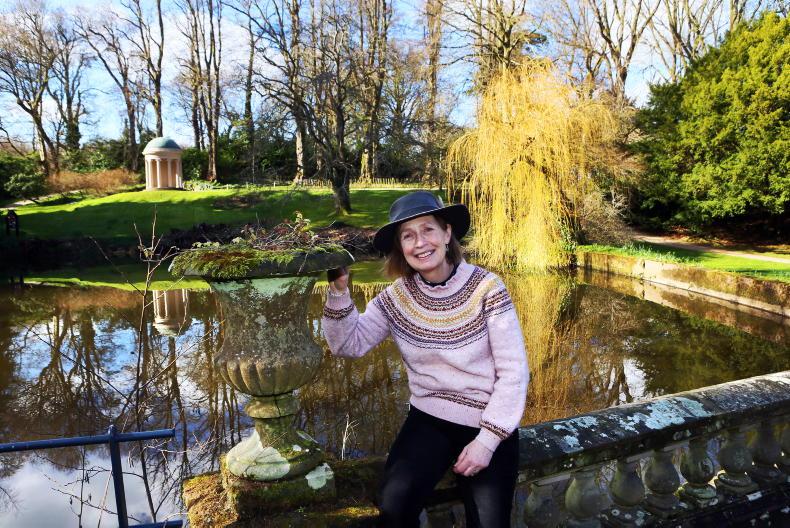
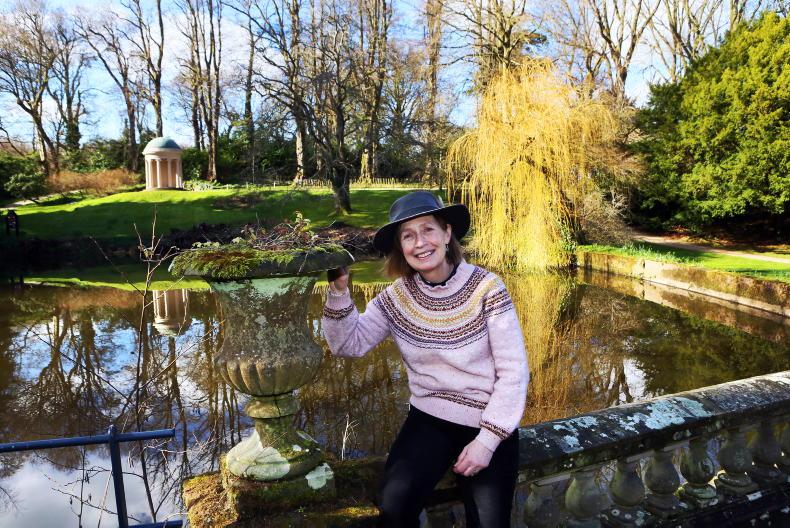
Claire Woods, head gardener at Hillsborough Castle and Gardens, takes Irish Country Living on a turn about the estate. \ Peter Houston
“Like so many gardeners, I try and do a bit of everything. I’ve grass for grandkids to play on. I’ve got a vegetable garden, I’ve got a winter garden, I’ve got trees and shrubs, lots and lots of plants.
“At home, my own garden is very much about the process. It’s about being able to spend time in it, being able to connect with nature in it. I’m not hugely focused on the outcome.
“When I’m gardening here, the final product is important, because we’re gardening publicly. We’re a garden that is a royal residence. So it has got to look good – not just for royal visit – we want all our visitors to feel as if they’ve been treated like royalty when they come here.”
We begin to loop back to where we started, climbing beside diagonal verges spilling with snowdrops and upright wands of pussy willow.
We pass Lady Alice’s Temple, a wedding gift to Lady Alice Hill in 1867, followed by a string of lime trees, and an infused sea of purple and lilac crocuses, their petals emitting a luminous glow. There’s a crunch of gravel underfoot and chirrup of birdsong as we walk.
See more hrp.org.uk
It’s a Friday afternoon at Hillsborough Castle and Gardens, and the sun is high in the sky. An artistic display of delicate blue scilla, butter cream crocuses and tiny ‘Jack Snipe’ daffodils crowns the entrance to the Georgian estate.
“That was only put together this week,” quips Claire Woods, the head gardener who is here to take Irish Country Living on a tour around the grounds, just 20 minutes from Belfast.
This is Claire’s seventh year working at Hillsborough Castle, the official royal residence in Northern Ireland. Historical Royal Palaces, an independent charity that owns five other palaces in the UK, took out a 25-year lease of the estate in 2014.
“We’re over 10 years in,” she explains. “We did a five-year redevelopment project, which included the gardens, and we opened fully to the public in April 2019. Eleven months later, we closed again due to Covid, and then we had a very slow reopening. A lot of what you see in the gardens was done between 2016 and 2019.”
Having spent the entirety of her career working in horticulture – Claire was awarded an MBE (a royal honour) three years ago for her services to horticulture – her main task at Hillsborough has been growing the gardens, and bringing the horticultural, political and social history of the estate to the fore. Claire says that her team of 10 gardeners, casual staff and volunteers have planted “somewhere near 32,000 new plants” since 2016.
Blooming amazing
Overseeing the 100ac of woodlands, meadow and formal gardens (not to mention the lake and three ponds) is a mighty task, but Claire appears motivated by the challenge, describing it as “amazing”.
The first stop on our tour is the walled garden, and although the landscaping feels like it has been here for a very long time, she remarks “there was still sheep grazing in it” as recently as 2018.
The garden walkway is studded with white hellebores, their cup-shaped petals trumpeting upwards, and the stone-grey walls are lined with ‘Rip Van Winkle’ daffodils, an unusual variety of daffodil with tousled yellow petals that was first discovered in Ireland in the 19th century. Rows of espalier apple trees grow flatly on the garden perimeter, and the paths are lined with firm green tips of tulips that will be in bloom from the first week of April.
Clumps of blue rush spill over the rims of a raised wildlife pond, a water feature in the centre of the garden that has become a home to little fish and newts.
At the very back of the walled garden is the pavilion, overlooked by crab apple trees and a proud collection of 12 varieties of Northern Irish-bred daffodils. “Northern Ireland is synonymous with breeding daffodils,” says Claire.
Claire Woods says it is hard not to be cheered up by the vibrant daffodil blooms dotted across the 100ac grounds. \ Peter Houston
Part of the 4ac walled garden is a kitchen garden, an area used to grow fruit and vegetables. There’s the promise of blackberry, logan and tay berries in August, and already, the glossy stems of red rhubarb are muscling through the soil. Pausing by the beds, Claire explains that this is a ‘no-dig garden’, which is really important for soil health. “We are not registered organic, but we follow organic principles, so we don’t use any artificial chemicals or fertilisers.
“In our vegetable area, we use mulches. We mulch heavily with materials that arise on site, so grasses that we’ve cut down, compost that we make ourselves, and we make our own leaf mould, and we use that then to mulch the beds.
“We do all we can to support biodiversity and sustainability,” she continues, pointing out the perennial wildflower meadow which is only cut once a year. The area is scattered with daffodils, and cowslips about to rear their heads, and framed by cobnut trees and Irish heritage varieties of apple trees that will bear fruit later in the year.
“There’s never a day in the year that you wouldn’t find something flowering in the gardens,” Claire adds. “We support the All-Ireland Pollinator Plan. It’s about having things for pollinators all year round, if we can.
“We leave ivy, where we can, to flower and provide nectar over the winter. We have some really early flowering plants that will come into flower in January/February time. We have plants that will continue flowering right through until November/December.”
The woodlands and glen
We leave the walled garden and start to slowly circuit around the grounds, passing trees “of all sorts of ages”, many of the bigger ones dating from the 1840s.
The day of the head gardener begins at half seven each morning, and every day Claire notices something different.
“I’m just noticing the light on the water over there today,” she gestures. We are in the glen, the oldest part of the garden, and a small silvery stream cuts through its dipped green centre.
“This is an area of calm tranquillity down here in the glen,” Claire says. “There’s always something of interest.”
The area is shaded with magnolias, camelias and rhododendrons, and the flowing water is framed by frothy ferns and older shrubs generously coated with moss, which Claire explains is “a sign of good air and very damp air.”
We reach Hillsborough Castle, with its cornices, pillars and symmetrical windows. The grand sandstone building is positioned on an elevated site with views of Belfast hills, its western front fleeced with lilac wisteria that comes out in May. The castle is the official Northern Ireland residence of His Majesty The King, and members of the Royal Family use Hillsborough as their base on their visits.
“If they come to visit, we flip and we stop being a visitor attraction, and we are a private residence for those few days,” says Claire.
The castle is open for visitor tours, permitting the public to explore eight key rooms, including the Throne Room and the State Drawing Room, and it is even licensed for weddings. “We can do small intimate weddings in the house, with up to 80 people in the Throne Room.”
It is in the immediate area around the castle where a lot of transformation has happened. “This was a sea of gravel,” she says. “There were a few climbers in the house like the big evergreen magnolia, which was planted by the Queen in 1953 on her coronation visit. But all the planters are new.”
Claire says spring is her favourite season to be working in the garden, and it is easy to see why. “It’s busy, and there’s so much to do,” she enthuses. “You’re sowing seeds and you’re seeing the results of all the work you did in the autumn, planting all the bulbs. I mean who couldn’t see joy in these gorgeous little sunny faces of the day?” she asks, cupping the face of a yellow daffodil in her hands.
And what about her garden at home? Claire laughs lightly: “it’s lacking in care!”
Claire Woods, head gardener at Hillsborough Castle and Gardens, takes Irish Country Living on a turn about the estate. \ Peter Houston
“Like so many gardeners, I try and do a bit of everything. I’ve grass for grandkids to play on. I’ve got a vegetable garden, I’ve got a winter garden, I’ve got trees and shrubs, lots and lots of plants.
“At home, my own garden is very much about the process. It’s about being able to spend time in it, being able to connect with nature in it. I’m not hugely focused on the outcome.
“When I’m gardening here, the final product is important, because we’re gardening publicly. We’re a garden that is a royal residence. So it has got to look good – not just for royal visit – we want all our visitors to feel as if they’ve been treated like royalty when they come here.”
We begin to loop back to where we started, climbing beside diagonal verges spilling with snowdrops and upright wands of pussy willow.
We pass Lady Alice’s Temple, a wedding gift to Lady Alice Hill in 1867, followed by a string of lime trees, and an infused sea of purple and lilac crocuses, their petals emitting a luminous glow. There’s a crunch of gravel underfoot and chirrup of birdsong as we walk.
See more hrp.org.uk







SHARING OPTIONS