How should a dairy business be financially assessed? At the moment it is fair to say most dairy farmers don’t crunch any numbers. About 1,000 farmers complete a Teagasc Profit Monitor at the start of the year. Another share of farmers compare total figures, while the balance probably have a peep at the tax accounts.
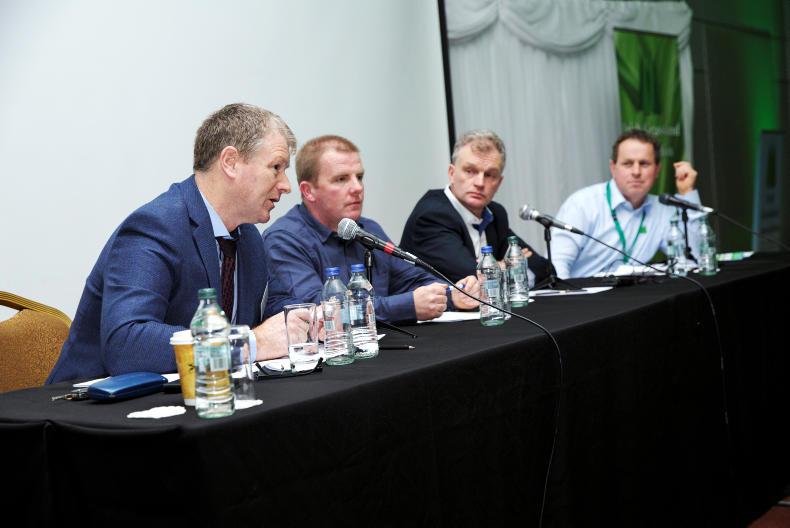
At the Irish Grassland Association annual dairy conference last week, Cork dairy farmer and IGA council member Michael Bateman presented a paper outlining what he feels needs to be included when comparing costs and profits on dairy farms.
He said: “With the help of some of the Teagasc lads, some bankers, and fellow grassland members, we sat down as a working group to try and identify the important financial targets because we believe there is a lot of confusion out there as to what are the best figures to present at conferences and farm walks. Confusion exists about what the figures mean when compared to targets and what is included or not included in the costs.”
The grassland team are suggesting that, when comparing numbers, all hectares farmed should be included in the per-hectare figures – not just the milking platform hectares. Also included should be a charge for all labour worked including that of the farm family (valued at €15/hour) – not just the cost of hired labour. The team also suggested contract-rearing costs should be included as a separate category and not lumped into feed, labour or any other category. They suggest whole farm figures should be used so, for example, if the total fertiliser bill is €30,000, then this figure is used no matter where it is spread on the farm whether that is the milking platform, rented land, or indeed land used for heifer rearing etc.
This is exactly the way we have been displaying the Greenfield Farm figures for the last eight years as all labour is paid labour, all costs are open and transparent. At farm level, some farmers are sensitive to some figures being as transparent. So what will come of the Irish Grassland Association initiative? Much depends on the Teagasc response to how they adapt to structuring the outputs of the Profit Monitor. As has been discussed in previous articles, all the information is already being collected, so how this information is presented is the key.
Is €2,500 net profit per hectare possible?
With the common principles of comparison laid out (so we are comparing apples with apples), the grassland team pulled off the Teagasc Profit Monitor results that already have been submitted from the first 60 spring milk producers to complete the profit monitor for 2017. As you can see in the graph, the per-hectare figures fall well short of the Moorepark targets. Why? The grassland team identifed the following reasons: about one-third of the land farmed by the 60 farmers was rented compared with all owned land in the Moorepark model, so this would have lowered the comparable net profit and increased costs. In the Moorepark model all the land farmed is producing milk compared with about 25% of the land farmed occupied by replacement heifers. The cost of production, at €3.65/kg MS, was €0.70 higher than in the Moorepark model. Grass utilised by the group was 11.3t DM/ha, lower than the Moorepark target of 13t DM/ha. What should have helped the 60 farmers is that the milk price received was much higher than the 29c/l base price used for the Moorepark targets.
Kerr and Ahern steal the labour show
David Kerr and Kevin Ahern spoke in a very good morning session about what they do to operate single-labour-unit businesses. Both rely heavily on machinery contractors and relief help when needed. David Kerr is milking 155 cows delivering 493kg MS/cow (1,281kg M/ha) feeding 550kg meal per cow with 90% of cows calving down in a six-week calving period. David outlined very basic principles in relation to the setup (milking parlour and roadways) and grassland targets. David’s female calves leave the farm once they are weaned. He has another contractor making the pit silage, another spreading fertiliser, another on slurry and a relief milker for the last 25 years that also looks after hoofcare. A big help to David is the fact his father George can still oversee the business when David is away.
Kevin Ahern is farm manager on the Shinagh demonstration farm near Bandon in west Cork. Again Kevin is the only full-time employee and he takes in a student each spring and local help as well as contracting out all the machinery work. When he counted up all the hours worked, he estimates that it comes in about 19 hours worked per cow. For the first three weeks of the calving season there is someone on the farm 24 hours a day. Similar to David, there is a 20-unit herringbone parlour on this farm, which means milking must be a one-person job at certain times of the year. There are always two people in the parlour for February and March and during the first three weeks of breeding. The rest of the time it’s one person milking. Relief milkers are guaranteed every second weekend on milking duty and they also provide cover for holidays and busy days such as herd testing or vaccinating.
Kerr on
Stocking rate: “We have mixed heavy and dry soils, we are stocked at 2.6 cows/ha and buy 70 to 80 bales of hay.”
Pre-breeding checks: “We carry out no pre-breeding checks (I’ve seen too many teams lose because of over training) but be very careful unless you have a highly fertile herd.”
Milking parlour: “Three most important things about our parlour – cow flow, cow flow, cow flow.”
Most important machine – “The Aflco drafting system.”
Contractor: “Mows, teds, wraps and baling has replaced topping.”
Slurry: “80% in geomembrane lined open tank and this is emptied once in April ... no tankers just umbilical.”
Winter feeding: “Contractor with industrial loader.”
Ahern on
School: “I hated the first day, the last day and every day in between, but I got there.”
Objective of Shinagh: “Lease a full farm, have no SFP and see what cash can be left.”
Equipment purchase: “We have no drafting or feeders in the parlour so I’d have to go for an automatic type drafting mechanism.”
On key stats: “We grew 17t, produced 92,000kg of milk solids and are stocked at 2.9cows/ha on the milking platform.”
Machinery work: “I estimate silage feeding takes 140 hours/year, fertiliser spreading 120 hours/year, and slurry spreading about 220 hours/year. All that works out at about 2 hours/cow so I reckon if I was doing it myself it would be 3 to 4 hours per cow.”
On hours worked: “The farm needs a total of over 4,000 hours per year and it peaks in February and March when the farm needs about 800 hours per month. This works out about 19 hours per cow per year plus 2 hours per cow from machinery contracting.”
Workload: “Must I do everything – no.”
Objective: “Replication instead of complication – keep it simple.”
How should a dairy business be financially assessed? At the moment it is fair to say most dairy farmers don’t crunch any numbers. About 1,000 farmers complete a Teagasc Profit Monitor at the start of the year. Another share of farmers compare total figures, while the balance probably have a peep at the tax accounts.
At the Irish Grassland Association annual dairy conference last week, Cork dairy farmer and IGA council member Michael Bateman presented a paper outlining what he feels needs to be included when comparing costs and profits on dairy farms.
He said: “With the help of some of the Teagasc lads, some bankers, and fellow grassland members, we sat down as a working group to try and identify the important financial targets because we believe there is a lot of confusion out there as to what are the best figures to present at conferences and farm walks. Confusion exists about what the figures mean when compared to targets and what is included or not included in the costs.”
The grassland team are suggesting that, when comparing numbers, all hectares farmed should be included in the per-hectare figures – not just the milking platform hectares. Also included should be a charge for all labour worked including that of the farm family (valued at €15/hour) – not just the cost of hired labour. The team also suggested contract-rearing costs should be included as a separate category and not lumped into feed, labour or any other category. They suggest whole farm figures should be used so, for example, if the total fertiliser bill is €30,000, then this figure is used no matter where it is spread on the farm whether that is the milking platform, rented land, or indeed land used for heifer rearing etc.
This is exactly the way we have been displaying the Greenfield Farm figures for the last eight years as all labour is paid labour, all costs are open and transparent. At farm level, some farmers are sensitive to some figures being as transparent. So what will come of the Irish Grassland Association initiative? Much depends on the Teagasc response to how they adapt to structuring the outputs of the Profit Monitor. As has been discussed in previous articles, all the information is already being collected, so how this information is presented is the key.
Is €2,500 net profit per hectare possible?
With the common principles of comparison laid out (so we are comparing apples with apples), the grassland team pulled off the Teagasc Profit Monitor results that already have been submitted from the first 60 spring milk producers to complete the profit monitor for 2017. As you can see in the graph, the per-hectare figures fall well short of the Moorepark targets. Why? The grassland team identifed the following reasons: about one-third of the land farmed by the 60 farmers was rented compared with all owned land in the Moorepark model, so this would have lowered the comparable net profit and increased costs. In the Moorepark model all the land farmed is producing milk compared with about 25% of the land farmed occupied by replacement heifers. The cost of production, at €3.65/kg MS, was €0.70 higher than in the Moorepark model. Grass utilised by the group was 11.3t DM/ha, lower than the Moorepark target of 13t DM/ha. What should have helped the 60 farmers is that the milk price received was much higher than the 29c/l base price used for the Moorepark targets.
Kerr and Ahern steal the labour show
David Kerr and Kevin Ahern spoke in a very good morning session about what they do to operate single-labour-unit businesses. Both rely heavily on machinery contractors and relief help when needed. David Kerr is milking 155 cows delivering 493kg MS/cow (1,281kg M/ha) feeding 550kg meal per cow with 90% of cows calving down in a six-week calving period. David outlined very basic principles in relation to the setup (milking parlour and roadways) and grassland targets. David’s female calves leave the farm once they are weaned. He has another contractor making the pit silage, another spreading fertiliser, another on slurry and a relief milker for the last 25 years that also looks after hoofcare. A big help to David is the fact his father George can still oversee the business when David is away.
Kevin Ahern is farm manager on the Shinagh demonstration farm near Bandon in west Cork. Again Kevin is the only full-time employee and he takes in a student each spring and local help as well as contracting out all the machinery work. When he counted up all the hours worked, he estimates that it comes in about 19 hours worked per cow. For the first three weeks of the calving season there is someone on the farm 24 hours a day. Similar to David, there is a 20-unit herringbone parlour on this farm, which means milking must be a one-person job at certain times of the year. There are always two people in the parlour for February and March and during the first three weeks of breeding. The rest of the time it’s one person milking. Relief milkers are guaranteed every second weekend on milking duty and they also provide cover for holidays and busy days such as herd testing or vaccinating.
Kerr on
Stocking rate: “We have mixed heavy and dry soils, we are stocked at 2.6 cows/ha and buy 70 to 80 bales of hay.”
Pre-breeding checks: “We carry out no pre-breeding checks (I’ve seen too many teams lose because of over training) but be very careful unless you have a highly fertile herd.”
Milking parlour: “Three most important things about our parlour – cow flow, cow flow, cow flow.”
Most important machine – “The Aflco drafting system.”
Contractor: “Mows, teds, wraps and baling has replaced topping.”
Slurry: “80% in geomembrane lined open tank and this is emptied once in April ... no tankers just umbilical.”
Winter feeding: “Contractor with industrial loader.”
Ahern on
School: “I hated the first day, the last day and every day in between, but I got there.”
Objective of Shinagh: “Lease a full farm, have no SFP and see what cash can be left.”
Equipment purchase: “We have no drafting or feeders in the parlour so I’d have to go for an automatic type drafting mechanism.”
On key stats: “We grew 17t, produced 92,000kg of milk solids and are stocked at 2.9cows/ha on the milking platform.”
Machinery work: “I estimate silage feeding takes 140 hours/year, fertiliser spreading 120 hours/year, and slurry spreading about 220 hours/year. All that works out at about 2 hours/cow so I reckon if I was doing it myself it would be 3 to 4 hours per cow.”
On hours worked: “The farm needs a total of over 4,000 hours per year and it peaks in February and March when the farm needs about 800 hours per month. This works out about 19 hours per cow per year plus 2 hours per cow from machinery contracting.”
Workload: “Must I do everything – no.”
Objective: “Replication instead of complication – keep it simple.”






SHARING OPTIONS