There are over 400 golf courses on the island of Ireland, and when you factor in the smaller 9-hole courses, that number climbs up to around the 500 mark.
Participation in Irish golf is experiencing a sustained boom. The affiliated membership of Golf Ireland reached 236,384 in October 2025, a 30% increase since 2020, driven by a 25% rise in junior members and a 20% jump among the female cohort.
The Golf Ireland Economic Impact report recently highlighted the €717m direct economic value of golf which supports 15,600 jobs.
Learning from experience
With a surge in those interested in the sport and a gap in labour across sportsturf management, it is becoming increasingly important to nurture talented greenkeepers. They are the people tackling the wet weather conditions to maintain and perfect golf courses across the country.
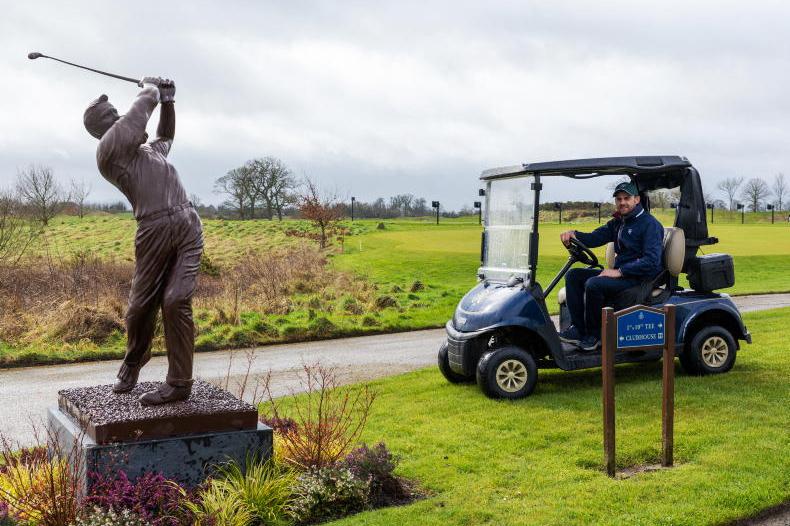
Having hosted the Amgen Irish Open in 2025, and preparing to host the KPMG Women’s Irish Open this August, a man who knows all about the detailed preparations that go into greenkeeping all year round is Jamie Robson, resort superintendent of The K Club. The five-star golf resort has two parkland golf courses, Palmer North and Palmer South in Co Kildare.
From a small farming region in rural northeast England, Jamie spent his teenage years helping his uncle, who worked on a golf course in the morning, before playing golf with his cousin in the afternoons during many summers.
“Living on a farm, we would kick around with a football all the time. There would be frustrations with the cattle destroying the field you’re playing in.
“I used to go out and fix divots and roll the ground, and cut the grass there. Without knowing it at the time, I really enjoyed greenkeeping from an early age,” he explains.
For Jamie, a lot of his education and knowledge came from hands-on learning, which he feels is the best way to hit the ground running.
“I first moved to a golf course in the UK which had two championship courses. Seeing that standard and that level really piqued my interest and drove me on to pursue a career in it.
“Mentorship from those around you within the industry is very important; it’s a lot of asking questions, but people are willing to give the knowledge,” says Jamie.
Having entered greenkeeping at the age of 18, Jamie now has over 25 years of experience working in the industry, 18 of these years in The K Club.
“I was working on a championship golf course in the UK and wanted to find something similar in Ireland. I landed at The K Club in 2007, just after the Ryder Cup and never looked back,” he recalls.
He started as a standard greenkeeper who went out cutting grass, not really thinking about what he was doing. Now, he manages 17 staff members and every blade of grass cut is his responsibility.
“Gerry Byrne was the resort superintendent here for 30 years before me. He is very well-known throughout the industry and has been a mentor and leader to me throughout my years. When it comes to my career, I owe everything to Gerry,” says Jamie.
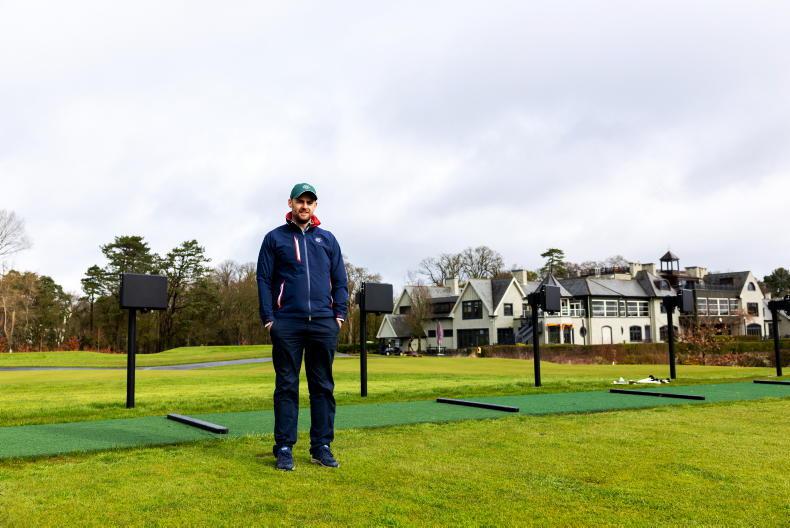
Jamie Robson, resort superintendent at The K Club, responsible for course preparation for the Women's Irish Open. \ Claire Nash
Continuous work
People might think that during the winter, as the grass stops growing, greenkeepers go into hibernation, but this couldn’t be further from the truth.
“The heavy lifting starts in the winter. We put a lot of focus on aeration and drainage works at this time of the year. “With the wet winter that we’ve had, and will continue to have, you have to move water away from the golf courses. A lot of focus was put into the management of that and getting machinery around the golf course. There is a critical, best-management programme that has to be put in place to allow us to do that successfully,” says Jamie.
That sets the course up for the season ahead. Once spring comes around and the grass starts growing, Jamie and the team start working on their nutrient management programmes, top dressing and mowing regimes, along with the general day-to-day greenkeeping.
“Healthy turf is what we need and what we have to have, especially with the volumes and numbers of golfers coming through. You’re always pushing the grass to its limits. To have that nutrient balance correct is a science, and that’s where the scientific background comes into it. Biology plays a big part in what we do in greenkeeping, and it’s critical for golf courses,” explains Jamie.
Technology advancements have jumped massively, with moisture meters and even drones going around to read the moisture of a golf course within 20 minutes.
“It feeds that information into a computer, which is connected to our irrigation system. The next night, that will automatically irrigate a dry spot that it’s picked up, that I’m still two days away from seeing with my own eyes,” says Jamie.
Robotic lawn mowers are also used for the upkeep of the hotel grounds.
“I’d say in five years, we will have robotic lawnmowers, cutting fairways and tees, the advancements are changing fast and with the labour shortages evident, they can help shorten that gap,” says Jamie.
Healthy turf is what we need and what we have to have, especially with the volumes and numbers of golfers coming through. You’re always pushing the grass to its limits
Preparing for tournaments
Preparation for the major golfing events start from the moment Jamie hears about them.
“It’s all about planning the nutrient package to ensure the turf is at its peak performance for that week. That is a science – we can’t peak it three weeks early and then have it fade away before the tournament. We also need volunteers and extra machinery to help with the maintenance, with extra fertiliser and sand. I was on the south course earlier, where we are going to have the Women’s Irish Open, and there is going to a lot more focus out there,” says Jamie.
Consistency is essential, he insists.
“We have to cut and raise bunkers every single day. The team are in at 4am in the morning to prepare the first tee time at 7.30am, then we come back again after they [the golfers] come off the course at 6pm until it gets dark,” says Jamie.
Ahead of the KPMG Women’s Irish Open from 27-30 August, the team have already begun preparations with the course including preparing the surfaces.
“Top dressing is one of the key things that will level out surfaces, but it’s also keeping them free-draining and firming up everything.
“To get the nutrient package right, we have a lot of rough grasses typically that we would leave as native, but we’re going to push and promote them. Female golfers are very accurate. So, we have had to narrow down some of our fairways for the event, which is simple enough to do,” he explains.
The single standout moment of Jamie’s career was last September on the first day of the 2025 Amgen Irish Open.
“We had done all the work we could do. The golf course was ready. The golfers were going out, and I turned on Sky Sports to look at what we achieved. The pride and the honour I felt then was incredible – and the relief as well because there are always moments of self-doubt and anticipation of what the course is going to play like,” says Jamie.
All greenkeepers are fascinated with lines and presentation, as that is 90% of what they are trying to achieve, but Jamie says it’s about practice and patience.
“There are opportunities for anyone interested in sportsturf and greenkeeping due to shortages over the last 15 years. These are in high-end golf courses. You have to have self-drive and a passion for it, but ask questions, gain experience and get your foot in the door,” Jamie emphasises.
With experience playing on the course himself and his inside knowledge, Jamie offers some tips for golfing enthusiasts and those competing in the upcoming tournaments at The K Club.
“Palmer South is unique in that it is very exposed to winds. When the weather is nice, it’s flat and calm, which is great for enjoying in the sun. When it’s blowing 30/40km, wrap up warm and look forward to the challenge you are going to have. We have a lot of water on that golf course, which is unique so another tip is to bring plenty of golf balls,” he says.
See kclub.ie
There are over 400 golf courses on the island of Ireland, and when you factor in the smaller 9-hole courses, that number climbs up to around the 500 mark.
Participation in Irish golf is experiencing a sustained boom. The affiliated membership of Golf Ireland reached 236,384 in October 2025, a 30% increase since 2020, driven by a 25% rise in junior members and a 20% jump among the female cohort.
The Golf Ireland Economic Impact report recently highlighted the €717m direct economic value of golf which supports 15,600 jobs.
Learning from experience
With a surge in those interested in the sport and a gap in labour across sportsturf management, it is becoming increasingly important to nurture talented greenkeepers. They are the people tackling the wet weather conditions to maintain and perfect golf courses across the country.
Having hosted the Amgen Irish Open in 2025, and preparing to host the KPMG Women’s Irish Open this August, a man who knows all about the detailed preparations that go into greenkeeping all year round is Jamie Robson, resort superintendent of The K Club. The five-star golf resort has two parkland golf courses, Palmer North and Palmer South in Co Kildare.
From a small farming region in rural northeast England, Jamie spent his teenage years helping his uncle, who worked on a golf course in the morning, before playing golf with his cousin in the afternoons during many summers.
“Living on a farm, we would kick around with a football all the time. There would be frustrations with the cattle destroying the field you’re playing in.
“I used to go out and fix divots and roll the ground, and cut the grass there. Without knowing it at the time, I really enjoyed greenkeeping from an early age,” he explains.
For Jamie, a lot of his education and knowledge came from hands-on learning, which he feels is the best way to hit the ground running.
“I first moved to a golf course in the UK which had two championship courses. Seeing that standard and that level really piqued my interest and drove me on to pursue a career in it.
“Mentorship from those around you within the industry is very important; it’s a lot of asking questions, but people are willing to give the knowledge,” says Jamie.
Having entered greenkeeping at the age of 18, Jamie now has over 25 years of experience working in the industry, 18 of these years in The K Club.
“I was working on a championship golf course in the UK and wanted to find something similar in Ireland. I landed at The K Club in 2007, just after the Ryder Cup and never looked back,” he recalls.
He started as a standard greenkeeper who went out cutting grass, not really thinking about what he was doing. Now, he manages 17 staff members and every blade of grass cut is his responsibility.
“Gerry Byrne was the resort superintendent here for 30 years before me. He is very well-known throughout the industry and has been a mentor and leader to me throughout my years. When it comes to my career, I owe everything to Gerry,” says Jamie.

Jamie Robson, resort superintendent at The K Club, responsible for course preparation for the Women's Irish Open. \ Claire Nash
Continuous work
People might think that during the winter, as the grass stops growing, greenkeepers go into hibernation, but this couldn’t be further from the truth.
“The heavy lifting starts in the winter. We put a lot of focus on aeration and drainage works at this time of the year. “With the wet winter that we’ve had, and will continue to have, you have to move water away from the golf courses. A lot of focus was put into the management of that and getting machinery around the golf course. There is a critical, best-management programme that has to be put in place to allow us to do that successfully,” says Jamie.
That sets the course up for the season ahead. Once spring comes around and the grass starts growing, Jamie and the team start working on their nutrient management programmes, top dressing and mowing regimes, along with the general day-to-day greenkeeping.
“Healthy turf is what we need and what we have to have, especially with the volumes and numbers of golfers coming through. You’re always pushing the grass to its limits. To have that nutrient balance correct is a science, and that’s where the scientific background comes into it. Biology plays a big part in what we do in greenkeeping, and it’s critical for golf courses,” explains Jamie.
Technology advancements have jumped massively, with moisture meters and even drones going around to read the moisture of a golf course within 20 minutes.
“It feeds that information into a computer, which is connected to our irrigation system. The next night, that will automatically irrigate a dry spot that it’s picked up, that I’m still two days away from seeing with my own eyes,” says Jamie.
Robotic lawn mowers are also used for the upkeep of the hotel grounds.
“I’d say in five years, we will have robotic lawnmowers, cutting fairways and tees, the advancements are changing fast and with the labour shortages evident, they can help shorten that gap,” says Jamie.
Healthy turf is what we need and what we have to have, especially with the volumes and numbers of golfers coming through. You’re always pushing the grass to its limits
Preparing for tournaments
Preparation for the major golfing events start from the moment Jamie hears about them.
“It’s all about planning the nutrient package to ensure the turf is at its peak performance for that week. That is a science – we can’t peak it three weeks early and then have it fade away before the tournament. We also need volunteers and extra machinery to help with the maintenance, with extra fertiliser and sand. I was on the south course earlier, where we are going to have the Women’s Irish Open, and there is going to a lot more focus out there,” says Jamie.
Consistency is essential, he insists.
“We have to cut and raise bunkers every single day. The team are in at 4am in the morning to prepare the first tee time at 7.30am, then we come back again after they [the golfers] come off the course at 6pm until it gets dark,” says Jamie.
Ahead of the KPMG Women’s Irish Open from 27-30 August, the team have already begun preparations with the course including preparing the surfaces.
“Top dressing is one of the key things that will level out surfaces, but it’s also keeping them free-draining and firming up everything.
“To get the nutrient package right, we have a lot of rough grasses typically that we would leave as native, but we’re going to push and promote them. Female golfers are very accurate. So, we have had to narrow down some of our fairways for the event, which is simple enough to do,” he explains.
The single standout moment of Jamie’s career was last September on the first day of the 2025 Amgen Irish Open.
“We had done all the work we could do. The golf course was ready. The golfers were going out, and I turned on Sky Sports to look at what we achieved. The pride and the honour I felt then was incredible – and the relief as well because there are always moments of self-doubt and anticipation of what the course is going to play like,” says Jamie.
All greenkeepers are fascinated with lines and presentation, as that is 90% of what they are trying to achieve, but Jamie says it’s about practice and patience.
“There are opportunities for anyone interested in sportsturf and greenkeeping due to shortages over the last 15 years. These are in high-end golf courses. You have to have self-drive and a passion for it, but ask questions, gain experience and get your foot in the door,” Jamie emphasises.
With experience playing on the course himself and his inside knowledge, Jamie offers some tips for golfing enthusiasts and those competing in the upcoming tournaments at The K Club.
“Palmer South is unique in that it is very exposed to winds. When the weather is nice, it’s flat and calm, which is great for enjoying in the sun. When it’s blowing 30/40km, wrap up warm and look forward to the challenge you are going to have. We have a lot of water on that golf course, which is unique so another tip is to bring plenty of golf balls,” he says.
See kclub.ie
SHARING OPTIONS