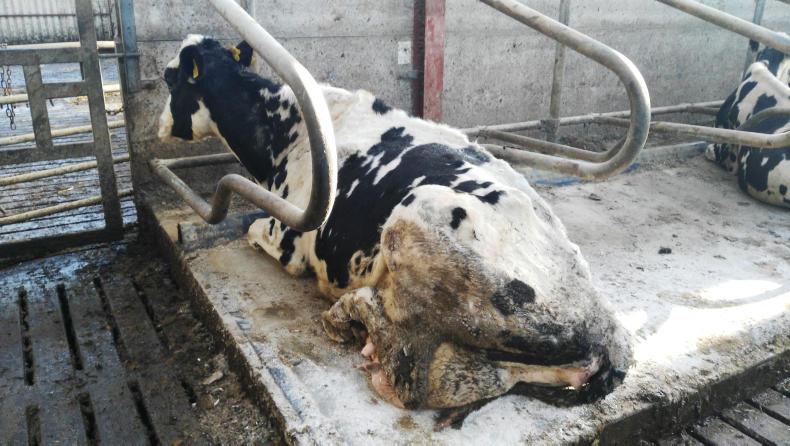
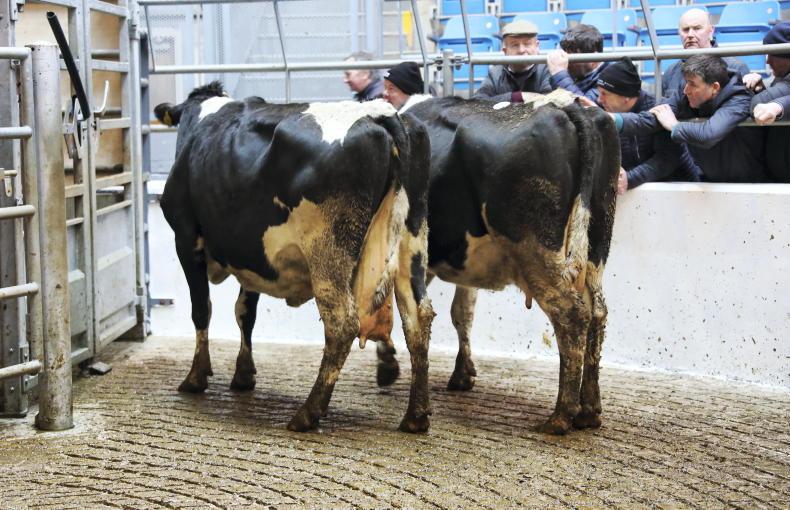
Clinical signs of ketosis include dullness, the cow going off her feed and a sudden drop in milk production.
ADVERTISEMENT
Cause
Ketosis happens when output exceeds input or when the cow is using more energy to produce milk than the amount of energy she is consuming. This may be due to cows being over-fat at calving, which reduces feed intake calving. Poor-quality silage or low meal feeding can predispose to the problem.
Symptoms
ADVERTISEMENT
Clinical ketosis (cows actually showing signs of ketosis) is reported to be less than 2% to 5% but vets often suggest that prevalence of subclinical ketosis (no sign of sickness) can suppress the immune system and open the door to other problems such as retained placentas, metritis and displaced abomasums. Cows that get subclinical ketosis are in negative energy balance and will be slower to come back in heat by up to 30 days. Clinical signs of ketosis include dullness, the cow going off her feed and a sudden drop in milk production. These will also be accompanied by a characteristic sweet smell from a cow’s breath, milk and urine. Sunken eyes and being slow to react to movement are other signs to look out for. There is also nervous form of the disease, where affected cows show nervous signs. This can be confused with milk fever or tetany. A high milk fat to milk protein ratio (over 1.5 ratio - so this means results such as a fat% of 4.5 and protein of 3%) is a strong signal of ketosis and should send an alarm signal that something is wrong.
Treatment
Vets recommend drenching the cows with propylene glycol to increase energy levels. The cow should be put into a pen on her own and fed on her own. The condition leads to inappetance which can make the problem worse. Clinical cases often also require intravenous injections of corticosteroids.
There is also a slow release bolus that can be given to cows to reduce the incidence of ketosis, it is especially useful for high risk cows.
Prevention and control
One of the most important issues in freshly calved cows is to keep feed intakes up after calving. This can be difficult with cows that calve down overfat so be careful feeding too much high-quality feed to late-March-calving cows. Fat cows reduce intakes before calving. Another simple thing you can do is to ensure dry cows have enough feed space because if you have limited feed space it can be the trigger for reducing intakes and hence lower energy. It is recommended to introduce low levels of concentrates to cows in the last three weeks of pregnancy, especially high-yielding cows, so that the transition to a higher concentrate diet is more gradual after they calve. Indicators of negative energy balance include high incidence of ketosis, retained placenta’s, displaced abomasums, high milk fat to milk protein ratio and low milk yield post calving.
Register for free to read this story and our free stories.
This content is available to digital subscribers and loyalty code users only. Sign in to your account, use the code or subscribe to get unlimited access.
The reader loyalty code gives you full access to the site from when you enter it until the following Wednesday at 9pm. Find your unique code on the back page of Irish Country Living every week.
CODE ACCEPTED
You have full access to the site until next Wednesday at 9pm.
CODE NOT VALID
Please try again or contact support.
Cause
Ketosis happens when output exceeds input or when the cow is using more energy to produce milk than the amount of energy she is consuming. This may be due to cows being over-fat at calving, which reduces feed intake calving. Poor-quality silage or low meal feeding can predispose to the problem.
Symptoms
Clinical ketosis (cows actually showing signs of ketosis) is reported to be less than 2% to 5% but vets often suggest that prevalence of subclinical ketosis (no sign of sickness) can suppress the immune system and open the door to other problems such as retained placentas, metritis and displaced abomasums. Cows that get subclinical ketosis are in negative energy balance and will be slower to come back in heat by up to 30 days. Clinical signs of ketosis include dullness, the cow going off her feed and a sudden drop in milk production. These will also be accompanied by a characteristic sweet smell from a cow’s breath, milk and urine. Sunken eyes and being slow to react to movement are other signs to look out for. There is also nervous form of the disease, where affected cows show nervous signs. This can be confused with milk fever or tetany. A high milk fat to milk protein ratio (over 1.5 ratio - so this means results such as a fat% of 4.5 and protein of 3%) is a strong signal of ketosis and should send an alarm signal that something is wrong.
Treatment
Vets recommend drenching the cows with propylene glycol to increase energy levels. The cow should be put into a pen on her own and fed on her own. The condition leads to inappetance which can make the problem worse. Clinical cases often also require intravenous injections of corticosteroids.
There is also a slow release bolus that can be given to cows to reduce the incidence of ketosis, it is especially useful for high risk cows.
Prevention and control
One of the most important issues in freshly calved cows is to keep feed intakes up after calving. This can be difficult with cows that calve down overfat so be careful feeding too much high-quality feed to late-March-calving cows. Fat cows reduce intakes before calving. Another simple thing you can do is to ensure dry cows have enough feed space because if you have limited feed space it can be the trigger for reducing intakes and hence lower energy. It is recommended to introduce low levels of concentrates to cows in the last three weeks of pregnancy, especially high-yielding cows, so that the transition to a higher concentrate diet is more gradual after they calve. Indicators of negative energy balance include high incidence of ketosis, retained placenta’s, displaced abomasums, high milk fat to milk protein ratio and low milk yield post calving.
If you would like to speak to a member of our team, please call us on 01-4199525.
Link sent to your email address
We have sent an email to your address. Please click on the link in this email to reset your password. If you can't find it in your inbox, please check your spam folder. If you can't find the email, please call us on 01-4199525.
ENTER YOUR LOYALTY CODE:
The reader loyalty code gives you full access to the site from when you enter it until the following Wednesday at 9pm. Find your unique code on the back page of Irish Country Living every week.






SHARING OPTIONS