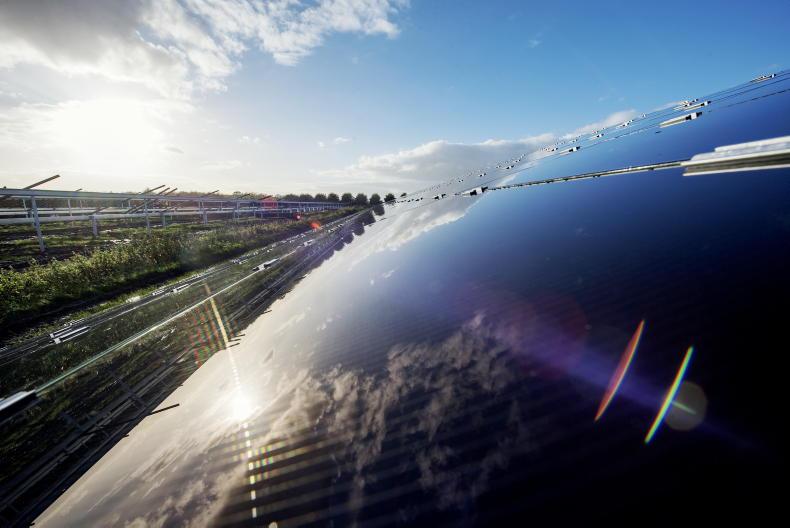
Last week, I referred to my solar plans being in disarray following the developer with whom I had signed a contract putting itself up for sale.
During the week, I went to the hugely well attended solar energy conference in Croke Park.
The place was packed with energy specialists from the banks and main legal and accountancy firms – though there was hardly a farmer in sight, even though any solar farms that will be developed will, in the main, be on farmers’ land.
However, I got a good overview of where the industry was and I came away not very encouraged.
Ireland, we were told, is the only EU country with no support scheme in place for solar energy production.
But more to the point, the man from the Department of Energy and Natural Resources told us that it had received 1,250 submissions when the deadline closed a few weeks ago.
These will all have to be gone through before a final Government decision on the sector is made but already it is clear that there are tensions.
On-shore wind
The preliminary Government policy talks of a “technology neutral” scheme for the renewable industry. This places on-shore wind at a very significant advantage.
Listening to the experts, there seems to be an acceptance that good on-shore wind costs about 6c/kw hour to produce, while solar, despite the huge falls in the price of solar panels, is closer to 9c/kw hour on good sites – still remarkably cheap compared to a few years ago.
While Government aspiration is to see renewable energy not needing any support by 2030, there is a need for some kind of action in the immediate future if we are to avoid heavy fines for not reducing our greenhouse gas emissions in line with our EU commitments.
At this stage, we are the worst performing country in Europe so some extra green energy policies are going to be needed.
Biofuels
While all this is going on, the case for biofuels is in danger of being lost by default.
The EU does not seem to have any stomach for diverting agricultural crops to energy production and the targets – unlike in the US – continue to be steadily reduced.
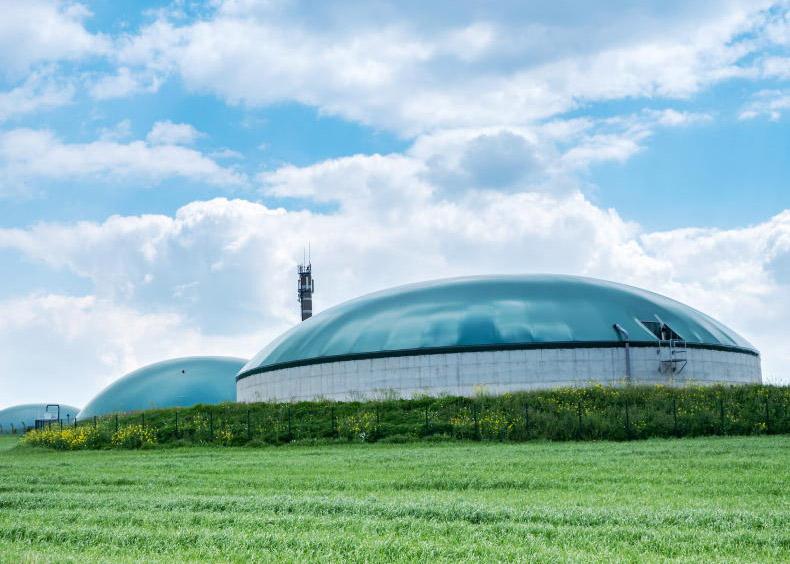
Biomass and slurry may well produce energy in the future but it seems this will be as a byproduct rather than as a deliberate energy policy.
Read more
Dempsey at Large: community focus needed for Irish banking
Dempsey at Large: of horses and plastics
Last week, I referred to my solar plans being in disarray following the developer with whom I had signed a contract putting itself up for sale.
During the week, I went to the hugely well attended solar energy conference in Croke Park.
The place was packed with energy specialists from the banks and main legal and accountancy firms – though there was hardly a farmer in sight, even though any solar farms that will be developed will, in the main, be on farmers’ land.
However, I got a good overview of where the industry was and I came away not very encouraged.
Ireland, we were told, is the only EU country with no support scheme in place for solar energy production.
But more to the point, the man from the Department of Energy and Natural Resources told us that it had received 1,250 submissions when the deadline closed a few weeks ago.
These will all have to be gone through before a final Government decision on the sector is made but already it is clear that there are tensions.
On-shore wind
The preliminary Government policy talks of a “technology neutral” scheme for the renewable industry. This places on-shore wind at a very significant advantage.
Listening to the experts, there seems to be an acceptance that good on-shore wind costs about 6c/kw hour to produce, while solar, despite the huge falls in the price of solar panels, is closer to 9c/kw hour on good sites – still remarkably cheap compared to a few years ago.
While Government aspiration is to see renewable energy not needing any support by 2030, there is a need for some kind of action in the immediate future if we are to avoid heavy fines for not reducing our greenhouse gas emissions in line with our EU commitments.
At this stage, we are the worst performing country in Europe so some extra green energy policies are going to be needed.
Biofuels
While all this is going on, the case for biofuels is in danger of being lost by default.
The EU does not seem to have any stomach for diverting agricultural crops to energy production and the targets – unlike in the US – continue to be steadily reduced.
Biomass and slurry may well produce energy in the future but it seems this will be as a byproduct rather than as a deliberate energy policy.
Read more
Dempsey at Large: community focus needed for Irish banking
Dempsey at Large: of horses and plastics






SHARING OPTIONS