



If you like to grow mat-forming plants, such as aubrieta, arabis, iberis and rock rose, you will greatly enjoy growing the alpine phloxes. These are true alpine plants, adapted to the harsh conditions of high mountains. They are from North America, mostly the western side from California to Oregon, but some come from the eastern side too.
Typically, they form a mossy mat of narrow evergreen leaves. In winter, they provide a little greenery, but can look a bit tired. In early spring, they start to grow new shoots and leaves and the flowers appear in May and June.
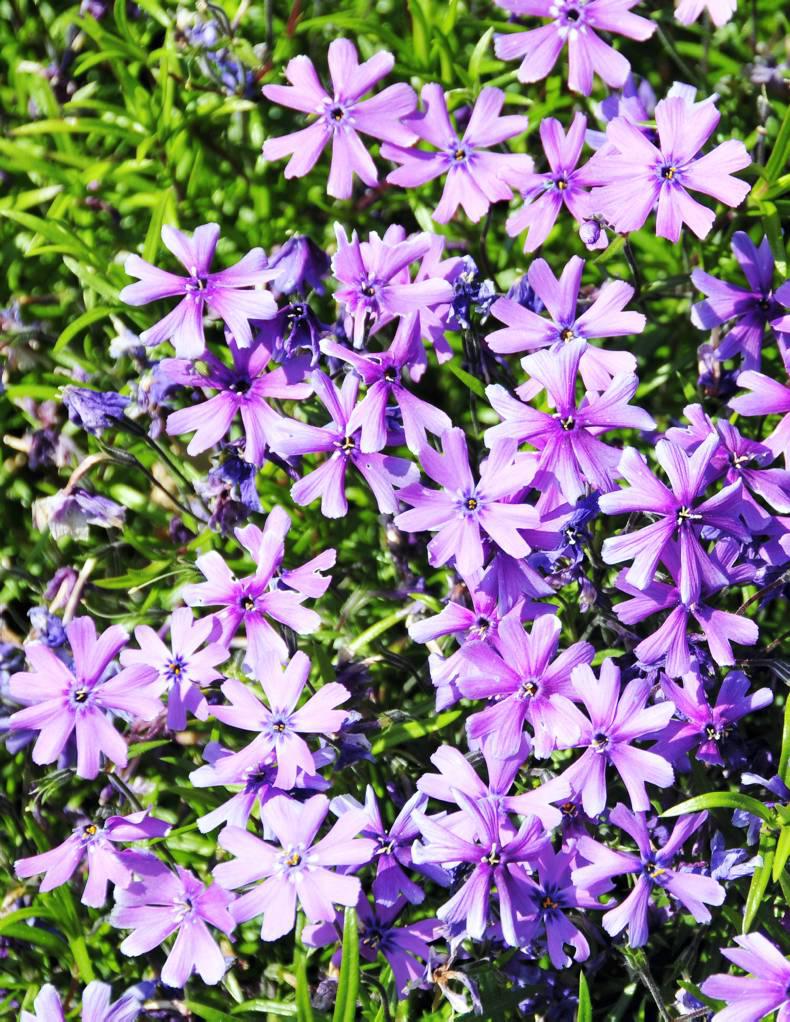
The rounded flowers are flat and wide open and carried in profusion, covering the surface of the plant but usually allowing some greenery to be seen as an ideal backdrop.
The colours are varied but mainly come in shades of pink, magenta and lilac. The flowers are carried in clusters on a short flower stem which holds them over the foliage. Alpine plants usually produce flowers that are much bigger than might be expected for the size of the plant and this is part of their appeal.
This flower power is an evolutionary response to the shortage of pollinators at high altitude and the need to attract them over considerable distances. Phlox flowers for several weeks as the flowers open in succession to cope with potentially inclement weather during flowering.
There are several separate species from different parts of the US. While they have small differences of flower shape and foliage, they are very similar in growth. Phlox douglasii comes from the West Coast and produces flowers with round-edged petals in white, pale lavender or pink. This natural variation has been used to select good colour forms.
Crackerjack is well-known, a compact grower with bright magenta-red flowers. Red Admiral is deep crimson-red, and Violet Queen is deep violet-purple. Phlox subulata, known as moss phlox, produces small clusters of rounded, flat flowers with five petals, notched at the end, which gives the whole plant an attractive starry look. McDaniels Cushion has pretty deep pink-red flowers and Emerald Cushion has pale violet-blue flowers. Marjorie is bright rich pink. There are lots of other varieties, but the ones mentioned above are those most often seen on sale.
Being mountain plants, these are perfect for a rock garden and they can be allowed to spread to make a mat to 60cm and more across, about 10cm or 15cm tall. Alpine phlox looks really well skirting the edges in a rock garden and it likes the cool conditions close to a rock.
Some kinds are more vigorous and spreading, while others are more compact. But it is by no means just for a specialised rock garden, because it can be a real eye-opener when grown as an edge plant close to a path and allowed to spread its mat of foliage and arresting flowers out onto the paving or gravel of the path.
It looks great edging out onto a paved area and if a few of the same kinds are planted around a patio, the effect of each playing off the other can be a delight. Phlox also looks great close to the edge of a low-retaining wall or bank, where it can grow its mat onto the wall surface and over the far side.
Being mountain plants, all of these want good drainage in reasonably good soil that is open and porous, not heavy and wet, in sunshine. Dig in some coarse sand if the soil is heavy. CL
Summer winds
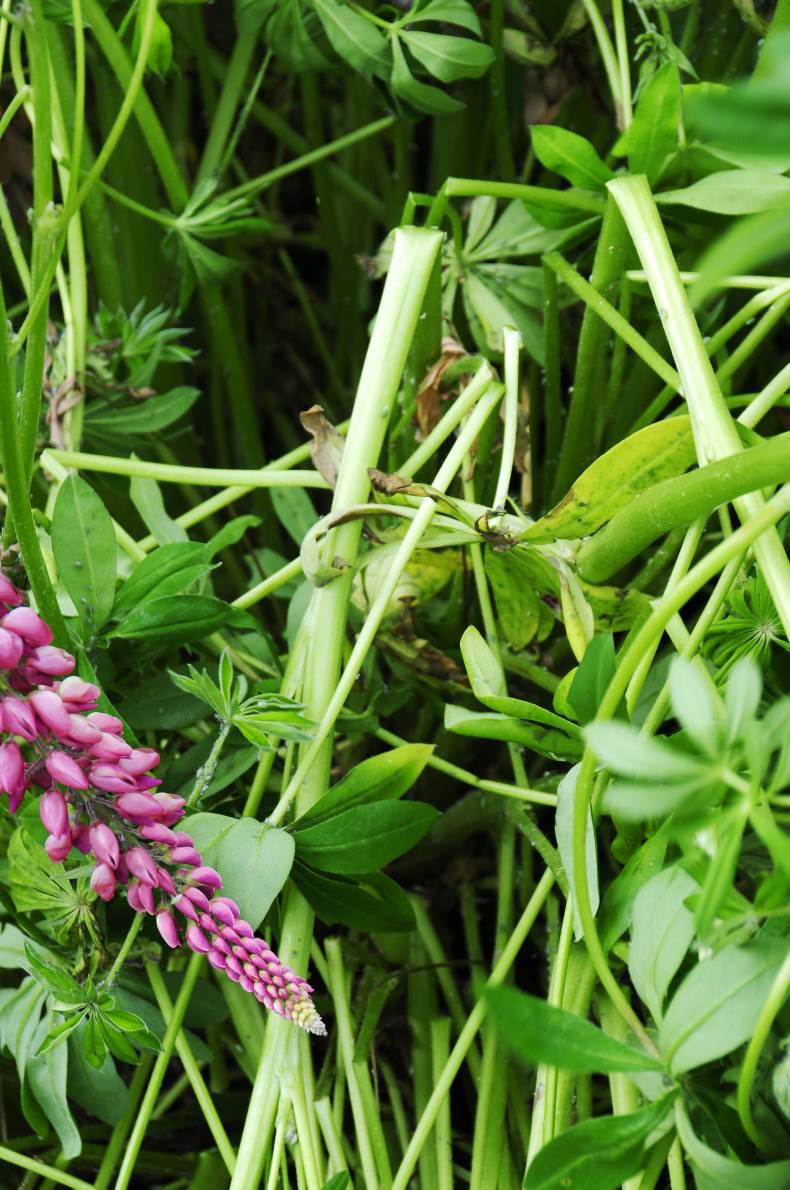
The severe gales that came on the first day of June, and a few other days, caused a fair deal of damage to some plants. Lots of leaves and twigs were blown out of trees onto the road, but the woody trees and shrubs can cope well with damage. Perennial flowers are more easily affected, especially the usual suspects, namely lupins, delphiniums, Oriental poppy and peonies. These are all lush growers, with tall watery stems that grow quickly in late spring and flower in early summer.
Compared with later-flowering, more robust plants, such as border phlox and monarda, they have little woodiness in their stems. Often the susceptible flowers are over-fed and grown too tall and soft. Staking in good time, before the wind damage is done, is the solution but not everybody wants the bother. Tying up fallen stems is hardly worthwhile and the flowers might as well be cut for the house.
Flowers
If not already done, plant up pots and containers and bedding in beds and borders. Be sure to control the first flush of weeds among bedding plants. The rain will have encouraged a flush of seedlings and these will give a lot of trouble if they are allowed to make growth. Watch for slugs and snails.
Fruit, veg & herbs
The weather has been unseasonably cold with a lot of north-easterly wind, and most garden plants are delayed, especially vegetables that were slow to germinate and grow. Thin out vegetables that have reached suitable size and control weeds. Plant out Savoy cabbage and other winter varieties.
Trees, shrubs & roses
Blackspot disease is likely on roses and scab on apple and pear trees, so continue to spray susceptible varieties, especially in the damper parts of the country. Tie in the new shoots of climbing roses so that they will be in the correct position later. Watch newly planted trees for drought.
Lawn
Lawns have come on well after a slow start. Keep up with mowing despite damp weather. If possible, put out some fertiliser for a good-quality lawn, the grass will benefit enormously during the next few weeks. Remove mowings in wet weather to prevent shading damage. Keep edges trimmed.
Greenhouse
& house plants
Keep greenhouse plants growing well in the coming weeks by generous watering and feeding. Ventilate well during damp weather and ease off watering when dull. Check for pest build-up on all greenhouse plants. Tidy up excessive growth of a grapevine.


SHARING OPTIONS