Having grown a little weary of the predictable summer displays of flamboyant begonias, trumpet-shaped petunias and trailing lobelias, this year, I found myself drawn back to a group of plants that quietly evokes another era.
In a fit of nostalgia, I planted a collection of scented-leaved pelargoniums in containers, curious to rediscover the charm that once made them indispensable summer plants. They reminded me that foliage, fragrance and elegant form can be every bit as captivating as a profusion of flowers.
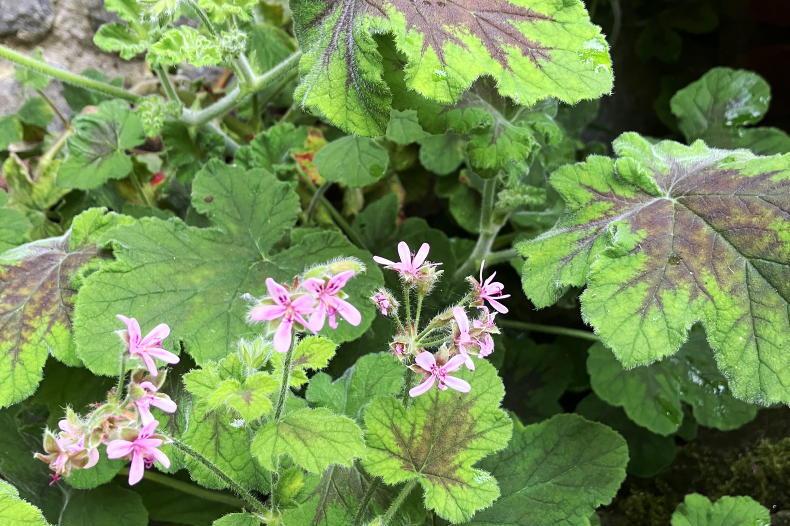
Often incorrectly referred to as geraniums, scented-leaved pelargoniums are grown primarily for their aromatic leaves rather than their blooms. The flowers, usually in delicate shades of white, pink or pale mauve, are attractive but secondary. It is the foliage that captivates, with its fragrance coming from essential oils contained within tiny glands on the leaves. A gentle brush of the hand, or the warmth of the afternoon sun, releases the scents – ranging from rose and lemon to peppermint, apple, orange, nutmeg, pine and even cola. Cherished since Victorian times, these timeless beauties occupied pride of place in conservatories, on sunny terraces and beside garden paths where their pleasing fragrances could be best appreciated. Today, they remain wonderfully versatile, adding both elegance and fragrance to patios, balconies, entrance doorways and outdoor seating areas.
A large terracotta pot suits them perfectly. The mellow tones of aged clay complement their old-world character, while its porous nature promotes good drainage. Use a quality compost enriched with horticultural grit or perlite to ensure excess water drains away freely. Pelargoniums dislike sitting in cold, wet compost and prefer conditions on the dry side. Position containers in full sun for the best growth and the strongest fragrance. Most scented pelargoniums tolerate light afternoon shade, but abundant sunshine encourages compact growth and intensifies the essential oils within the leaves. Once established, these plants cope well with warm, dry weather, making them ideal for increasingly hot summers.
Water thoroughly when the compost begins to dry, allowing excess water to drain away, and feed every fortnight during the growing season with a balanced liquid fertiliser. Regularly pinching out the growing tips encourages bushier, more compact plants and prevents them becoming leggy, while removing any damaged or excessively long stems helps to maintain a neat and shapely outline. Unlike many summer bedding plants that require constant deadheading, scented pelargoniums demand relatively little maintenance, rewarding minimal care with months of attractive foliage.
Although they combine beautifully with silver-leaved companions, such as lavender, cineraria or artemisia, I think scented pelargoniums look best grown as individual specimens. A single, mature plant in a well-proportioned container becomes a natural focal point, inviting people to touch the leaves and discover their hidden fragrance. Placed beside a doorway, along a path or close to outdoor seating, they provide an engaging sensory experience.
Winter accommodation
As autumn approaches, move plants under cover before the first frost. A bright, cool greenhouse, conservatory or frost-free porch provides ideal winter accommodation. Water sparingly during winter, keeping the compost only slightly moist until fresh growth resumes in spring.
Among my favourite scented-leaved varieties is the aptly named Pelargonium ‘Chocolate Peppermint’ featuring soft, velvety, gently scalloped leaves that carry a refreshing peppermint scent with subtle hints of chocolate. It forms an attractive, bushy plant and makes a striking specimen on its own. No collection would be complete without the classic rose-scented Pelargonium graveolens. Its deeply divided foliage has long been valued.
In an age when so many summer containers are designed for instant effect, scented-leaved pelargoniums offer something more enduring. Their attractive foliage, evocative fragrances and quiet elegance deserve renewed appreciation for contributing subtle beauty and longevity of interest throughout the summer months.
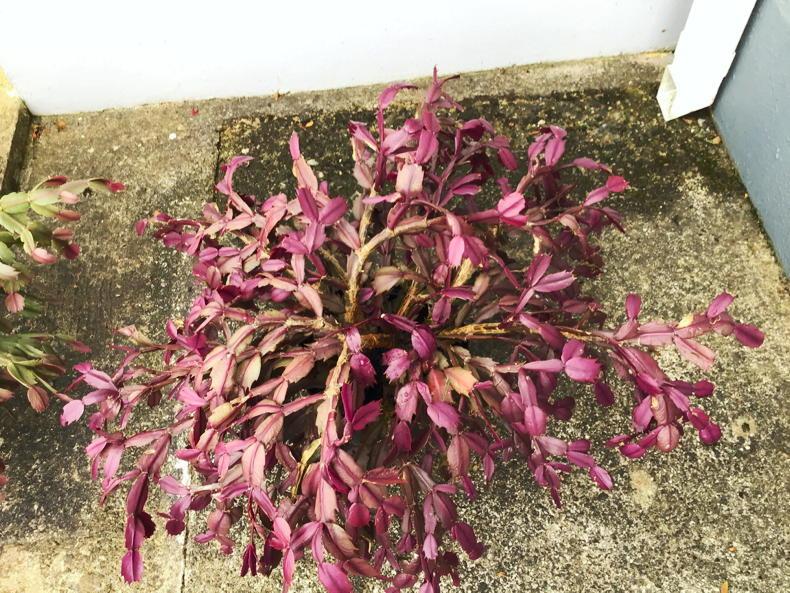
My Christmas cactus has lived for many years in the conservatory and now the foliage has turned red. Can it be brought back to its lovely green colour again?- Brigid Hannon
Christmas cactus (Schlumbergera) is a forest cactus – in the wild, it grows attached to trees in tropical rainforests and requires different growing conditions to a desert cactus. It prefers bright, indirect light and consistently moist compost. Red leaves are a sign of stress, usually caused by too much direct sun or the plant drying out. Move it to a bright spot out of direct sunlight and water regularly before the compost dries out completely. The foliage should regain its green colour within a few weeks. If the plant is rootbound or growing in exhausted compost, repot it and feed with a balanced liquid houseplant fertiliser once or twice during spring and summer.
Snip faded flowers off roses and cut back early-flowering perennials, like hardy geraniums, nepeta, lupins and delphiniums, to encourage a second flush of blooms.
Rejuvenate old and congested clumps of bearded irises by dividing them now.
Dig them up, discard the oldest rhizomes and replant the healthiest pieces.
Feed, water and deadhead summer bedding regularly, in pots, borders and hanging baskets to keep the colour going.
Raise the cutting height of the lawn mower blades during hot, dry spells when the grass is under stress to help keep it green without watering.
Mary Keenan and Ross Doyle run Gash Gardens, Co Laois. See gashgardens.ie