



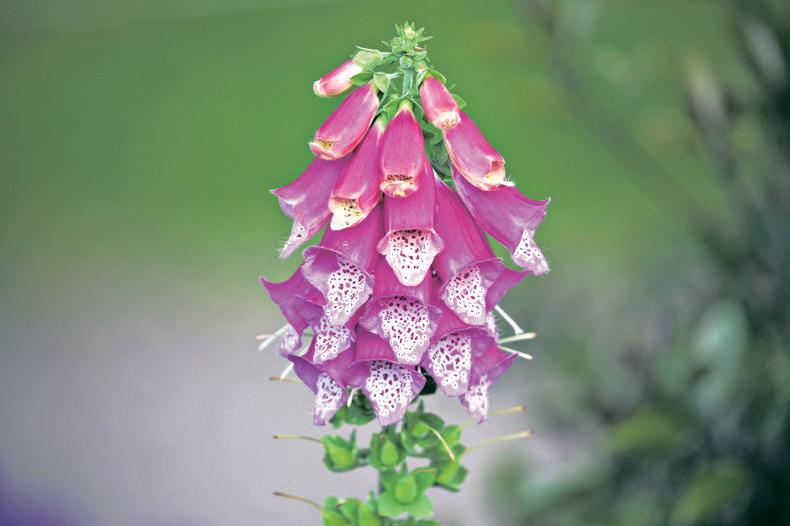
The common foxglove Digitalis purpurea is prevalent throughout the Irish countryside in early summer. It is a biennial plant which means it produces foliage one year and its flowers the next, however there are perennial types too and these are worth considering for our gardens.
I can recall a childhood game where we picked the flowers of the common foxglove and wore them on our fingers just for fun. In fact, part of the name comes from the shape of the flowers resembling the fingertips of a glove, however there is no record of how the name fox was attached to it. As to the plant itself, it is the source of many myths and legends, too numerous to detail here and it is medicinal, though care is needed as it is also toxic.
During summer as I viewed them, I was reminded of the many other species and cultivars of Digitalis that are available which will bring interest and charm to our gardens through late spring and well into summer.
Many of the wonderful perennial types can be sown from seed now and ready to plant next spring, although it may take another year to produce flowers.
D.purpurea ‘Heywoodii’ is a naturally occurring variant with pure white flowers and well worth having. Digitalis lutea is very different in its shape and size, its flowers are much smaller in pale yellow, with light brown spots inside the flower tube. It grows to 1m in size and flowers from the end of May until mid-August. Digitalis parviflora is a slender perennial growing to 60cm and has very distinct foliage forming a basal clump of lance shaped leaves. Its flowers are smaller too, brownish red on tall slender stems. It is striking and architectural.
Digitalis ferruginea also grows from a basal rosette of rich green leaves in its first year. In the second year it produces its wonderful flowers that can reach 1.5m in height. It is commonly called the Rusty Foxglove, with flowers that vary from pale creamy yellow to rusty brown on the interior.
The flower spike is narrow and upright, making a statement in the border. D. ferruginea ‘Gigantea’ is taller, achieving 1.8m, with denser flower spikes and richer coloured flowers, imposing and beautiful.
Digitalis lanata, commonly known as the Grecian Foxglove, is easily identified by its species name, which means woolly, and you will see that in its grey foliage and flowers that carry some woolly traces too. The flowers are held on tall spikes, pale cream with hints of pale brown. It is biennial or a short-lived perennial. Similar is D. lanata ‘Café Crème’, with flowers of light grey coffee colour. Both of these need to be planted in a group for best impact.
Digitalis grandiflora ‘Carillon’ with its butter yellow flowers that last throughout the summer season. It is useful, as it gives the opportunity to blend with other border colours.
Digitalis ‘Glory of Roundway’ is unusual, as it is a hybrid of three species of Digitalis. It is a perennial, producing masses of small, pink, tubular flowers, resembling those of Penstemon. It grows to a height of 70cm. D.‘Goldcrest’ is new to the market, with yellow flowers tinged with pink. It is smaller, growing to 50cm, and one of its great qualities is that it is a sterile hybrid that does not produce seed – so flowers for an extended period.
Digitalis viridiflora is commonly called the Green Foxglove and it is that, but the colour lends itself more to being described as greenish yellow. However, it is a wonderful plant to grow in a woodland, where it forms clumps of attractive flowers, growing to 1m.
Digitalis isabelliana is a true species, it is a half-hardy evergreen shrub, so only suitable for a garden where frost is minimal. It can be grown in pots for patios and balconies, where it can be afforded some shelter. It reaches to 1.2m in height, with spikes of rich orange flowers.
Growing Digitalis is trouble free as long as a few basics are observed.
They are essentially woodland plants and shade or partial shade for part of the day gets you results. As with all planting, ground preparation is key and in the case of Digitalis, digging good-quality compost helps them perform. They produce large amounts of seed and some will find that bothersome, insofar as some might consider them weedy. It is best to remove all flower spikes as they are finished flowering, unless you plan to save some seed.
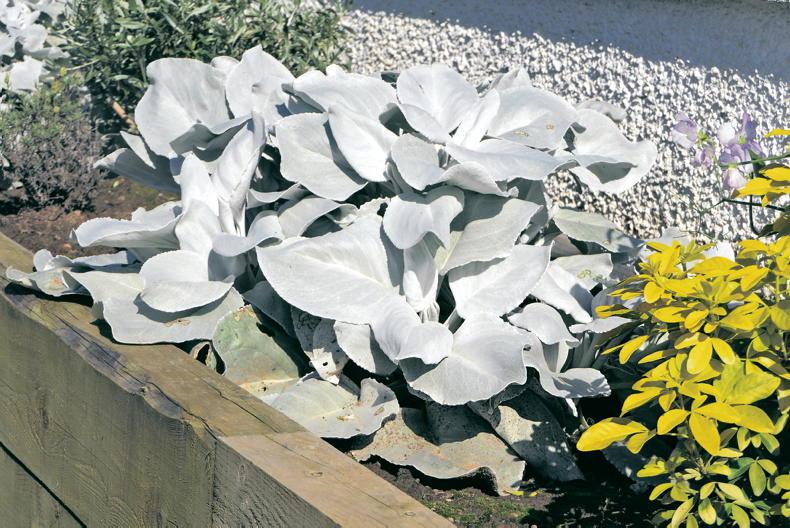
My Senecio ‘Angels Wings’ has become overgrown and leggy. How easy is it the propagate and when is the ideal time to start? - Kevin, Co Waterford.
Yes, Senecio ‘Angels Wings’ benefits from regular propagating to keep it looking its best and that’s easy to do. Take off some of the healthiest shoots and clean the stems, leaving four pairs of leaves at the top. Find where the leaf joint is and cut below that, making sure you have 10cm of clear stem.
Get some quality propagating medium and insert the cutting into a pot. Cover loosely with a plastic bag. It will take about five weeks to root for you.
Lawns: it is still important to mow at a height, as some patches of lawn will still be growing. Observe any perennial weeds appearing, they are easily removed now with a sharp tool. Resist the temptation to water.
Perennials: continue to monitor staking, it is also a good idea to prune out some tall stems from vigorous clumps, that way you help the plant make use of minimal water.
Bulbs: garden centres are now stocking up with spring bulbs, so make sure your lists are ready for purchase as these tend to sell out quickly.
Shrubs: Philadelphus and Deutzia should have this year’s flowering shoots pruned out, allowing new shoots to develop and produce next year’s flowers.
Do you have a gardening question? Email icl@farmersjournal.ie or post to Irish Country Living, Irish Farm Centre, Bluebell, Dublin 12.




SHARING OPTIONS