


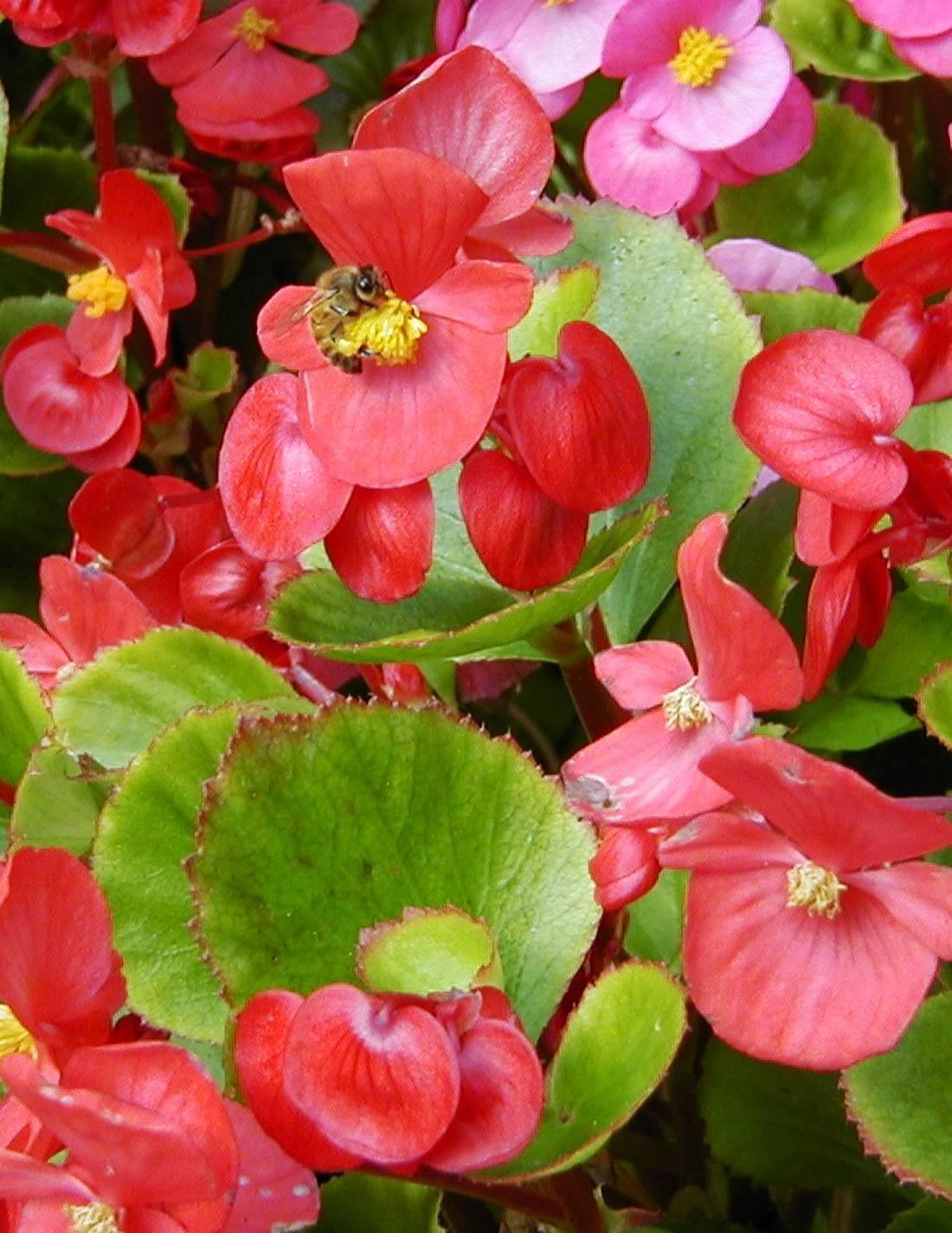

Bedding plants raised from seeds are used in flower beds, the front of mixed borders and in containers. These plants are summer flowers, most of them flowering from July to the end of autumn. They are raised from seeds and grown on as seedlings to make small plants for planting out from mid-May.
These flowers are all tender, or half-hardy, which means they cannot take any frost and so must be raised under cover and only planted out when the danger of frost is passed, which is early May in mild southern areas and the first week of June in colder areas inland and further north.
Lots of these bedding plants are raised by commercial growers for sale by garden centres. These plants are relatively cheap to buy and very convenient.
Growing your own plants will not save money when you take into account the cost of seed trays, compost and seeds, and that’s not putting any value on the time involved in establishing the new plants. But there is a lot of pleasure in raising young plants.
There is also a big advantage in being able to choose exactly which colour flowers or varieties you want to raise. For instance, you might want a particular shade of yellow petunia, but those might be impossible to find when you go to look for them, or they might not be available in sufficient numbers. If you wish to grow some bedding flowers, start getting organised now. Begin by choosing which bedding plants you want to grow. The choice can be made according to how they are going to be used. You do not want a trailing petunia variety for a flower bed, but you could use it for a basket or a window box.
Busy lizzies and begonias are good in the shade, dahlias and geraniums are not. Some kinds are versatile. Busy lizzies, bedding begonias and geraniums can be used in a variety of settings.
The same plants can be used to link the garden together and bring a sense of unity. Decide on colours, matching them for compatibility or contrast.
You may decide not to grow all your plant needs, but to grow one kind and then wait to buy other plants later. It is wise to start small-scale with a couple of packets of seeds, especially if you have no experience of sowing flower seeds or other seeds.
Some are easy, such as bedding dahlias and French marigolds – sown in March. Others are more tricky, having very tiny, dust-like seeds, such as begonias. Some need to be sown early, in February, such as bedding begonias, even January, for geraniums, but follow the packet guides.
These half-hardy annuals need the extra warmth of a small propagator or a heat mat to germinate. After germination they can get by with lower temperatures and they can be grown on in a greenhouse, a conservatory or a bright window, but they need frost protection heating in a greenhouse.
Early sowing is more risky, especially if you are inexperienced – there is more that can go wrong, such as too much water, too little water, or sun-scald on a sunny spring day. Sow the seeds into a pot or a small seed tray filled with seed compost. If the compost is coarse, sieve it with a riddle. Cover lightly with a layer of vermiculite, or do not cover if so advised on the packet.
Prick out the seeds carefully when the seed-leaves are fully expanded into small pots or cell trays. Grow on in good light and water carefully, just moisten.
Feed only if they start to look pale. Harden them off by placing them outdoors by day, for a week or so before planting.
Slippery algae
It is common to find patches of slippery algae on lawns and pathways over the coming weeks. These algae form a layer of gel-like growth on the soil surface, usually about one centimetre in depth. This gel is extremely slippery to walk on and can cause a fall. The algae dry out for most of the year and are not evident.
They grow on old lawns, especially those that are not fertilized and have a lot of dead thatch. The algal patches are also found on pathways with a mossy cover, which helps to hold moisture. There is no need to do anything, only to be aware. Sulphate of iron applied for moss control on a lawn can reduce algae, but be careful not to put sulphate of iron on concrete or stone paving as it causes a rusty stain.
Flowers
If you want to grow some of your own bedding flowers for summer, some of the best sorts, including geraniums, need to be sown now in a heated propagator. Overgrown herbaceous perennial flowers can be lifted, divided and replanted in a fine spell, if the soil is not sticky. Check on stored dahlias or gladioli.
Trees, shrubs and roses
Roses can be pruned now. Avoid late pruning as it removes early growth and delays roses flowering. Late-summer shrubs, such as buddleia and fuchsias, can be pruned, as well as late-summer clematis, but only if necessary. Plant all kinds of trees, shrubs and roses, especially bare-root or root-balled kinds.
Fruit, veg and herbs
Plant new fruit trees and bushes. Control weeds around the base of established fruit trees and bushes. Prune apple and pear trees and blackcurrant and gooseberry bushes now. Dig over vegetable ground, removing old crops not already taken out. Do not dig if the soil is sticky. Control weeds on the vegetable patches.
Lawn
Mow the lawn if a spell of dry weather of more than a few days comes along. One or two mowings during January or February will leave the grass neat until March. Mosskiller can be used now. It is more effective when used in autumn, but if the opportunity was missed good results can still be achieved.
Greenhouse and house plants
Keep the greenhouse relatively dry by watering only as much as required. A grape vine can be given more water in sunny weather to encourage early growth – the earlier the vine starts growing, the earlier it will ripen the fruit. Check plants for pests – greenflies, red spider mites or white flies.




SHARING OPTIONS