


Almost 27% of Irish mothers have their babies delivered by caesarean section – well above the World Health Organisation recommended figure of 10% to 15%, and 25% higher than 10 years ago.
Clinical reasons for having a caesarean section include failure to progress in the first stages of labour, foetal distress and breech presentation.
However, the on-the-ground situation in relation to who has a C-section and why, is not always so clear cut.
Questions abound. Are all caesareans medically necessary or are some being chosen for non-clinical reasons, for instance?
Irish and international research cites many factors for the increase in the number of caesareans.
They include an increase in the number of multiple births in this country (often due to assisted reproduction methods like IVF), women now being older having children, and because many expectant women are now obese.
Obesity is associated with bigger babies, late delivery, induction of labour, and a higher rate of C-section, particularly in first-time mothers.
Doctors fearing litigation if there is a negative outcome and some women choosing to have a caesarean rather than a vaginal birth, are believed to be factors influencing the decisions.
Private patients
A Health Research Board study published in May this year, added extra information. It found that in 2011, pregnant women who had private medical insurance were more likely to have a C-section than women who hadn’t.
It also found that women attending a consultant privately are 74% more likely to have a C-section than those receiving combined GP and public maternity hospital care.
||PIC2||
Of over 11,000 women studied, 26.7% had C-sections. Half of these were emergencies but 48.2% were elective (planned beforehand).
While the reasons for elective caesareans can include twin pregnancies and high maternal blood pressure, the authors of the study suggest that many women may be having unnecessary caesareans.
Dr Udo Reulbach, lead author of the research published in the Journal of Obstetrics and Gynaecology, was cautious about blaming obstetricians or about saying women were becoming ‘too posh to push’.
“While some women may have chosen private care in order to have a Caesarean,” he says, “the study did not support anecdotal claims of some women being ‘too posh to push’, as the trend toward elective C-sections didn’t vary across different levels of occupational household class.”
However, he said that the study does show that the increase in C-sections often occurs in the absence of obstetrical or serious maternal complications. In other words, they didn’t seem to be done only in emergency situations.
The increase in the C-section rate is a complex subject, according to Professor Michael Turner of the Coombe Hospital and UCD.
He was involved in other new research this year that was carried out by UCD and the Economic and Social Research Institute(ESRI) and UCD and was published in August.
It found that the rate of emergency caesarean sections in Irish mothers is nearly twice that of Eastern European women who have babies in Ireland.
It also found that Irish women were more likely to be obese, to smoke and to have induced births.
The authors of the study of 2,800 women point out that obese women were more likely to have obstetric interventions such as inductions and Caesareans.
In relation to higher Caesarean rates, Professor Turner says that ‘there is no easy explanation, scientifically, for the rising C-section rate worldwide.’
Krysia Lynch of AIMS, the Association for Improvements in Maternity services, told Irish Country Living that the model of maternity care we have in this country may be conducive to rising caesarean rates.
“In 1991, Ireland’s caesarean section rate was 11%. It was almost 27% in 2010 and the projected rate is now 30%. That’s a huge increase in a short time. We (AIMS) would argue that the procedure should be used appropriately, within evidence-based guidelines.”
Krysia acknowledges that the many factors mentioned above are affecting the rate increase, but these factors shouldn’t account for a rate that is almost double what it should be, she believes.
“Part of the issue is that births in Ireland tend to be very accelerated and managed these days.
Many of the community maternity hospitals have been lost and we now have these big super units. Women have to move along through the system at a reasonable pace and often women can’t do that so they may be induced (given drugs to speed up labour), making C-sections more likely.”
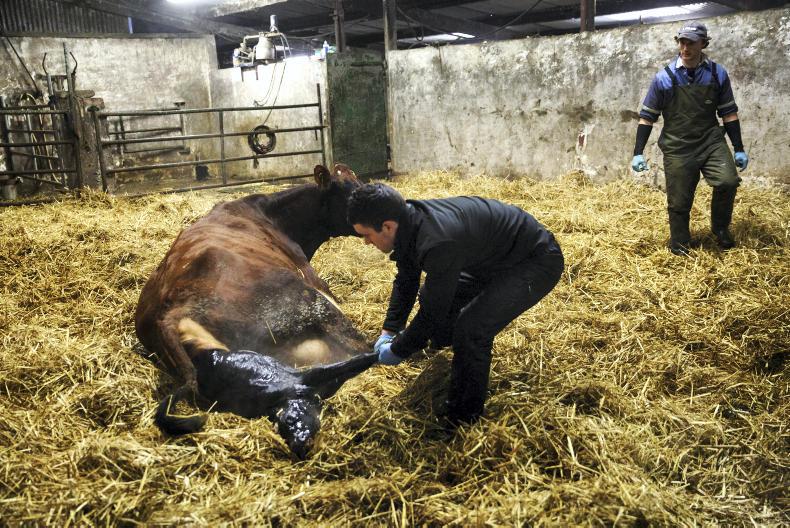
Farmers would be familiar with lambing or calving, she adds. “They would know that you don’t go and interrupt the mammalian species in the middle of their birthing, because the more you interrupt or interfere, the more likely you’re going to end up with problems.
"Yet we do that all the time with women. We interrupt and make them go faster. Trying to make women birth quickly puts more stress on both mum and baby, which can lead to more intervention down the line, so it’s a self-perpetuating kind of thing.”
The worrying aspect, she believes, is that when the rates of first-time mothers having caesareans are high, that the ‘statistics are scuppered from there on’.
“In this country, having a C-section on a first baby means that mothers are less likely to have a vaginal birth when having a second child.
In some hospitals, the chances of having a vaginal birth if you’ve had a C-section previously are only 50-50. In others, it’s as low as 10%, so clinical practices from hospital to hospital vary.”
Krysia believes that the Irish maternity care model should focus more on midwife-led care.
“85% of women are going to have a normal pregnancy and won’t need a lot of medical management,” she says, “but 100% of women go through this high-risk model of care that assumes that something is wrong with you from the beginning. The system is then always looking for something to be wrong.
A midwife-led medical model of care would look at the fact that birth is going to be physiologically natural for most women. However, our health system doesn’t seem to recognise that,” she says.
“To have a C-section rate decrease over time you need to have an acknowledgment at a high-policy level that it’s too high. We don’t seem to be having that at the moment.”
She acknowledges, of course, that 15% of women who have birthing complications will need high-tech obstetric service.
• Note: In 2012, the HSE set a target of 20% for C-sections in public maternity hospitals. CL
INFO
•For more on AIMS’ public information campaign for women giving birth in Ireland see: www.42weeks.ie and www.aimsireland.com.
•For information on the audio programmes mentioned by Sara Slattery, see www.gentlebirth.ie
•For details of HSE Maternity Care Services, see www.hse.ie/eng/services/list/3/maternity/
PROFILE
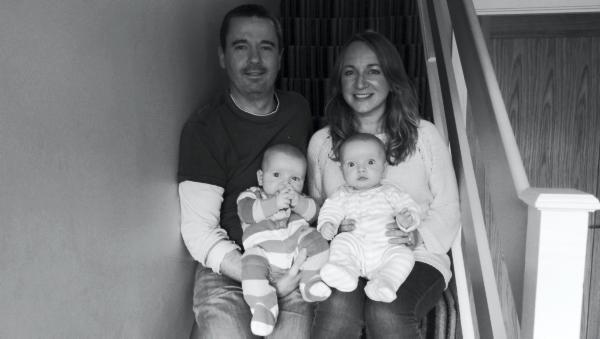
Education welfare officer Sara Slattery and her husband Tadgh Kavanagh became proud parents of twin sons, Seamus and Malachi, on 5 July this year.
Sara tells us what her experience of pregnancy and birth was like:
“I knew at eight weeks that we were having twins. My husband and I walked around in a bit of a daze for two days afterwards with the shock. While my grandmother was a twin, it never dawned on me that we’d have twins. When I told my parents, the look on their faces was just hilarious.
“The pregnancy went okay, but from early on doctors would say: ‘It’s high risk, you may need a C-section.’ I felt it was a bit of fear-mongering and that I had to battle all the time with that kind of talk.
“I originally wanted to go with the community midwife scheme because you can go to the clinics locally and see the midwife, but because I was having twins I had to go back into the hospital system.
Overall, I tried to keep positive and it turned out that it was a completely positive pregnancy with very few issues.
As a public patient though, I saw 12 different consultants during my pregnancy, all of whom often had different opinions. One of the things I felt strongly about was wanting to go full-term. I didn’t want to be brought in at 35 weeks just because I was having twins. I didn’t want our babies to be in intensive care. My rationale was that if they were full-term, they would be strong. One consultant would say: ‘Yes, you can go to full-term,’ and the next would say that I could be putting my babies at risk if I didn’t have them delivered early.
“From 35 weeks onwards I was really feeling the pressure to have them delivered. Twin number one ended up breech in the last few weeks. I was hoping he’d turn and that I could deliver naturally but he didn’t, so at 39 weeks I knew it was the right decision to go for the Caesarean section.
I had to prepare myself mentally for it though, as it was a big deal for me. Needles are a big issue as I’d faint at the sight of blood and the thought of being awake in the middle of an operation was terrifying.
I found listening to Gentle Birth programme audio tapes very good for calming myself in that week, as well as during pregnancy, and I was blessed with a great midwife on the day as well. Having a Caesarean is a very rapid process – you walk into the theatre, have the injections, and within half an hour you have your babies in your arms.
I was only in hospital for four days and I availed of the early transfer scheme because there was a community midwife in our area and, after finding the lack of post-natal care in the hospital a big shock, I loved that.
I could barely get out of bed after what is major abdominal surgery and there I was trying to breastfeed two babies – not easy when there weren’t always enough staff to help.
However, the C-section was nowhere near as bad as I had made out in my head.
Overall, in relation to childbirth, I would have preferred midwife care. I don’t think consultants should be involved at all unless there is a problem, and if there is then they’re essential at that point.”





SHARING OPTIONS