




Many readers grew up in big Irish families, where bedrooms were shared, clothes came as hand-me-downs – as did schoolbooks – and you had to fight to be heard at the kitchen table.
However, times have changed and the birth rate in Ireland has nosedived over the past decade. With the fertility rate in Ireland measured at 1.5 children per mother last year, the sighting of a gaggle of siblings is a rare one. You are far more likely instead to see people chaperoning one or two children – or maybe none at all.
In 2025, notions of the ‘big Irish family’ sit alongside a mosaic of smaller, but also more varied, family structures, including same-sex, single-parent and childfree families. Similarly, not everyone sees themselves reflected in the sacrosanct figure of ‘the Irish Mammy’, with many women happily passing on motherhood and leading very fulfilled lives.
Women are choosing not to have children for all kinds of social, cultural and economic reasons. The cost of living has increased by about 20% since January 2020, according to research from this year’s annual Minimum Essential Standard of Living (MESL) report published by the Society of Saint Vincent de Paul. This means some people weigh up the decision to have a baby as a long-term fiscal decision, especially bearing in mind that the cost of a raising child will vary at different stages of childhood.
The figures show the cost of the needs of a child aged 12 and over remains the highest among any other age group of children, coming in at €158 per week. The cost of the needs of a primary school age child is €98, while the needs of a preschool age child is €72 per week.
‘Child penalty’
Some countries have tried to plan for the impact of falling birth rates on future population change and have implemented child-friendly policies like better childcare and parental leave. This year, Hungary announced a colossal tax cut: any mother with three or more children will be exempt from income tax for life from October. This will be gradually expanded to cover mothers with two kids starting in January of 2026.
By contrast, in Ireland, working women contend with what is referred to by economists as a “child penalty”. The penalty, simply put, is the pay cut that having a child involves as well as the potential career set-back of women missing out on employment. “Child penalty” is quite blunt language, and it may be at odds with the way that some women see rearing children. It is the reality for others.
Donal Swan, women’s economic equality co-ordinator at the National Women’s Council, says that there are several national issues, such as inadequate access to housing and childcare, affecting a woman’s decision whether or not to have children.
“The housing and homeless crisis is having such a huge impact on so many people across the country,” says Donal. “I think certain groups of women are particularly impacted.
“The private rental sector is less secure and, of course when you’re looking to have kids, security is a really important part of that decision.”
More young people are also living at home well into their 30s, which is delaying or deterring women from having children. Most want to move out of their family home before starting a family.
Women in a rural context face particular challenges when it comes to deciding whether or not to have children, including limited access to childcare and transport, Donal adds. This is compounded by the fact that, post-Covid, more and more companies in Ireland are mandating their employees to go into the office five days a week. Inflexible working arrangements have a further knock-on impact on family life.
Cost is one of the reasons most frequently cited to explain why women choose not to have children. The pursuit of third level education or climbing the career ladder are others. There is a preconceived idea that if women are voluntarily childfree, well, there must be some lofty reason why. Often it is much simpler: they just don’t want to.
Sisterhood
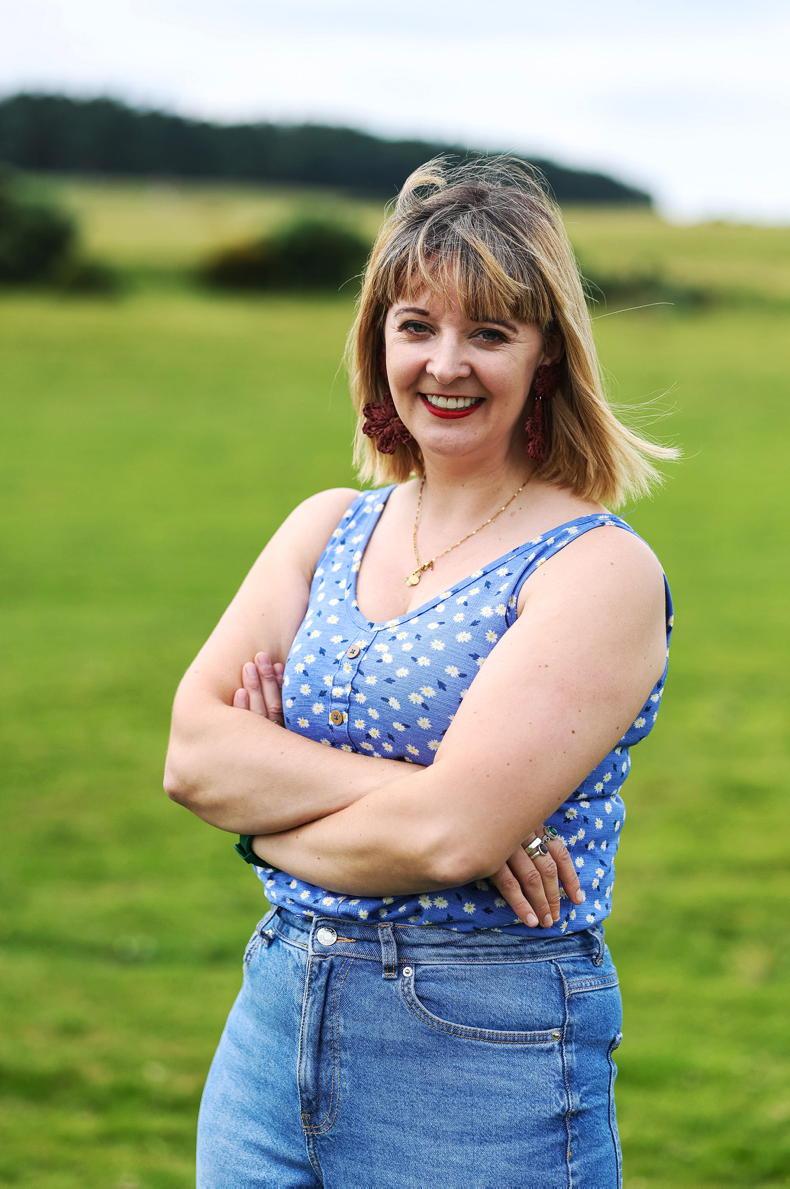
The experiences of childfree women are complex and varied. Niamh Madden, who set up Sisterhood, the largest childfree community in Ireland, knows this well. She says that the 1,500 members of Sisterhood, who are childfree by choice, come from different perspectives. “It’s a really good bunch of people who recognise that life can sometimes have other plans for people,” says Niamh. “Some women may end up having a child and others changed their mind.”
Niamh, who is from Tullamore, Co Offaly but now lives in Dublin, set up the group in January 2020 to get to know other women in the same boat. “At that time I would have been in my mid-30s. All my friends were married with kids and were in a very strong community with other parents. I really felt that I was struggling. I went online and tried to find some childfree groups in Ireland, and I couldn’t find anything.”
Niamh registered the group on meetup.com and the first meeting involved a coffee date with four other women in Dublin. Within 30 days, the group had 100 members. Now it has amassed 1,500 members countrywide, most of whom are in their 30s and 40s.
“It really started as a way of me wanting to get to know people, and now it’s all about wanting other people to connect with each other and feel that they’re not alone. I’m so proud of all the women in the group.
“They’re all getting to know each other. It takes a lot of courage for people to show up to a branch where they only know maybe one person, or they don’t know anyone.”
“There is a big childfree movement on Facebook and Instagram,” Niamh says, “but what’s really unique about Sisterhood is we all focus on that real connection, that genuine person-to-person, authentic connection.”
“We meet up multiple times in a month, and there’s amazing organisers in the group who stepped up and have decided to lead different events. There could be a brunch, a monthly book club, but it’s very much focused on in-person meetings and getting to know each other.”
The meetups happen across the country, with the biggest concentration of members in Dublin, the midlands and west of Ireland. “I get contacted all the time from people saying: ‘hey, can you set something up in Cork? Can you set something up in Galway?’ I’d love to have some active members who would like to set up their own thing in those locations.”
There was no “particular stage or time or place” when Niamh had decided that childfree living was for her. “It was an evolving thing,” she says. The same can be said for some of the women in Sisterhood, while others always knew they didn’t want children from the get-go. The group is not at all ‘anti-motherhood’ and Niamh is quick to stress that the group members are allies of all women.
“We really believe in the power of bringing women together and supporting each other. It’s not about being against people who have kids.” Niamh points out that many of the members love children and advocate and care for them in different capacities – as aunties, godmothers or in the workplace. “We have lots of teachers in the group and social workers who work with kids all day long.
The point being: you can be a woman and have plenty of children in your life without them having to be your own.
When asked whether there has been a cultural or tonal shift in the conversation around childfree living in the past five years that Sisterhood has been around, Niamh replies,“Definitely.”
“When I started the group, I felt like I was the only one in the world – obviously I wasn’t,” she adds. “I think it’s really after taking off with the hashtag online.
“I was driving somewhere and I heard an ad on the radio talking about some adults-only holiday, and it said: supporting all things childfree. I just thought, wow, that’s the first time I’ve heard an ad on the radio about it.”
The conversation about childfree living and lower birthrates is one which is very much alive, with a growing number of podcasts and articles dedicated to the subject. It raises material questions for governments planning for population change and is also a conversation that should be approached with respect and empathy – in the same way we discuss every personal decision affecting our lives and futures.
Ireland’s population is changing. There were 54,483 babies born in 2022, down 10.1% from 2021.
2022 figures published last week from Births and Deaths at Local Electoral Areas (LEAs) revealed areas in Ireland with the highest and lowest birth rates.
For the first time ever, the CSO observed an increase in the number of LEAs recording more deaths than births in 2022. In 166 of Ireland’s LEAs, 15 recorded more deaths than births, including in rural areas like Kenmare and Ballinamore.
The national birth rate stood at 10.2 per 1,000 of population in 2022. Glenties, Co Donegal had the lowest birth rate in 2022 and the highest birth rate was in Tallaght South in Dublin.
See meetup.com/sisterhood-childfree-females-by-choice


SHARING OPTIONS