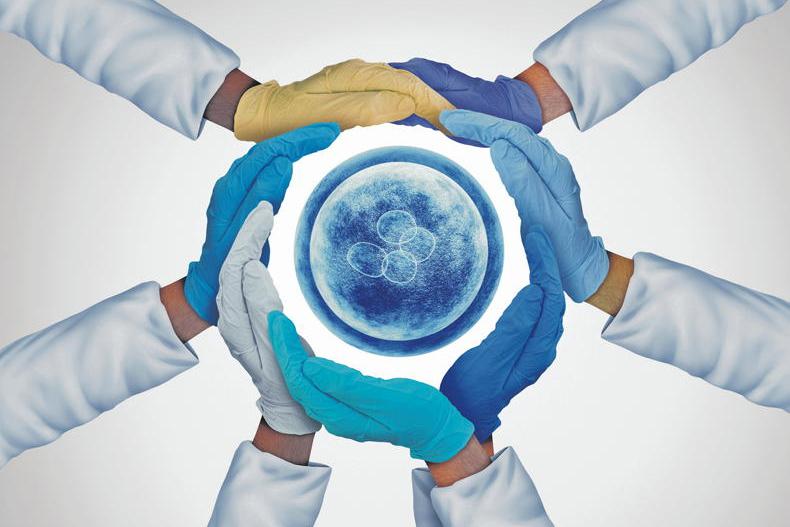
Caroline Creagh was in her early 30s when she first properly considered freezing her eggs. “I was in a club and I bumped into a girl I knew. We were in the queue for the toilet, and some conversation started around the fact that we were in our 30s and single. She said something like ‘we’ll have to freeze our eggs’ or there was some joke about freezing eggs, and it planted a seed in my head.”
Although Caroline “always imagined that I might have fertility issues because I’m an only child”, this encounter brought the topic of egg freezing to the fore. Until then, she says it had existed “at the back of my mind”.
Caroline decided to investigate further, and booked a consultation in a fertility clinic in Dublin close to where she was living. She was told her egg reserve was “really, really low” and one consultant advised, “I don’t even know if you’re a candidate for egg freezing”. The news left Caroline devastated, but a conversation with a colleague motivated her to try a different consultant in the clinic, who encouraged her to give egg freezing a go.
Caroline is one of many women in Ireland who decide to freeze their eggs because they know they want a family down the line, but are not in the position to have one at the time. Egg freezing has become more common in Ireland, although it “does not guarantee a baby”, says Dr Bart Kuczera, deputy medical director at Beacon CARE Fertility.
The process can take roughly four to six weeks from the initial consultation to freezing your eggs. The first step in the process is a blood test called AMH (Anti Mullerian Hormone) to assess your ovarian reserve followed by an ultrasound scan of your ovaries and uterus to tell you how many follicles (which contain eggs) you have in your ovaries.

“These pieces of information allow us to determine the dose of medications that you’ll be on for stimulation treatment,” explains Dr Kuczera. The stimulation treatment consists of hormone injections to stimulate eggs to develop in your ovaries. These eggs would otherwise not be used and would die off.
Dr Kuczera compares the stimulation process to a diabetic using an insulin injecting device. Patients inject themselves for roughly two weeks, and your response to the medication is assessed every few days via an ultrasound and sometimes blood tests.
Then, it is egg collection time. “The egg collection is essentially a half a day in the clinic. It’s done under sedation, so it’s a minimal form of anaesthesia to provide comfort throughout the egg collection. The egg collection is done in the form of a vaginal scan, where the needle is passed to the ovaries, and the follicles are aspirated [hoovered] in the ovaries one after another, and eggs should be coming up with them.”
They did another round of egg collection. They take the fresh eggs, they defrost the frozen eggs, and they put them all with the sperm, and they see what happens
The average person has 10 to 12 eggs at an egg collection, but it depends on their age as an older woman may have less.
The eggs are then investigated and inspected for their appearance by an embryologist, “and only those that look healthy and ripe are frozen,” says Dr Kuczera.
It’s not freezing as we imagine a home freezer. “It’s a specific, highly demanding process called vitrification. It’s freezing them to a glass.”
Depending on how many eggs are frozen and stored, you may be recommended a subsequent cycle to store more. Caroline’s first round of egg freezing was cancelled, but the consultant advised her to go for a second round in which she got four eggs.
“It wasn’t great, but it wasn’t awful,” she says. “Then they give you statistics as to what are the chances of your four eggs making it to a pregnancy. You’re 30% or something at that stage, so then I was thinking I’ve got four eggs, do I go again? I can’t afford to go again.
“At that point, my parents stepped in. They helped me out financially with the third round, and my follicles looked better than the second round. But when it came to the harvesting, they only got two eggs. I remember coming around afterwards and hearing the nurse speak to the girl next to me, saying ‘that’s amazing, you got 24 eggs’, and I was sitting there with my two eggs, and it was really frustrating.”
With six eggs in total, Caroline “couldn’t really afford to do another one”, and “that was how it was left”.
Cost of freezing your eggs
Egg freezing costs somewhere in the range of €3,500 for the first attempt, including additional blood tests and scans. The second or third round costs a bit less, around €3,000. Elective egg freezing is not covered by the HSE, but there is a publicly-funded, privately-provided fertility preservation care pathway for both men and women whose cancer treatment is likely to affect their fertility.
France was the first country to offer egg freezing through the public health system in 2021 to women between the ages of 29 and 37 years. According to 2025 research exploring motivations about the procedure in France, nearly two-thirds of these women stated that they would not have considered elective egg freezing if it had not been covered by the national healthcare system. The main reason for applying for elective egg freezing was the absence of a suitable partner.
Women also have to pay a storage fee on their eggs every year, usually around €400. “Just bear in mind the eggs are frozen and are kept in liquid nitrogen, so there is a maintenance fee to keep these eggs in good condition.”

It is also not recommended to freeze your eggs above the age of 37, and the ideal candidate is in their early 30s. Some women are younger though, Dr Kuczera recalls “an 18-year-old girl who came to freeze her eggs”, adding that it did not proceed.
You can freeze your eggs unfertilised, but you can also freeze embryos. “The difference is that once they are fertilised, you cannot change the sperm,” says Dr Kuczera. It is an important consideration as he says, “With the embryos, let’s say you split with the partner, you cannot change the sperm.”
According to Dr Kuczera, embryo freezing was “dominant” before COVID-19, with women using donor sperm in many instances. “Since then, the use of donor sperm by single women has dropped threefold. COVID-19 has impacted on how people behave socially.”
It was six years ago when Caroline was completing her third round of egg freezing, and she met her current partner around the same time too. The conversation around children came up two years later, “I had been very honest with him from the beginning that I had frozen eggs, and that was something that I really wanted,” she comments. “We were together a couple of years, and the conversation around babies came up, and then we started trying, unsuccessfully.”
Caroline and her partner headed back to the same clinic and met with the same consultant six years later – but this time as a pair. The consultant recommended that they keep trying for another six months. But when nothing changed, they tried IUI [when a sample of prepared sperm from a partner is injected into the woman’s uterine cavity around the time of ovulation] and eventually IVF.
“They did another round of egg collection. They take the fresh eggs, they defrost the frozen eggs, and they put them all with the sperm, and they see what happens.” Caroline had the six frozen eggs to work with, and two more from a fresh round, “so we had eight eggs that they tried to make into embryos.”
I think there’s so much around fertility that still isn’t talked about. For some people it can be a deeply private thing
Caroline became pregnant, and she was extra delighted that it was with one of the eggs that she had frozen before she met her partner. “That was kind of nice to hear that. It’s never really an insurance policy, because you never know, but it kind of paid off.”
Looking back, she estimates that she spent €17,000 to €20,000 on fertility treatments, including IVF and egg freezing. “We’re hoping to go for a mortgage this year, but we’re kind of on the backfoot,” she remarks, “and that’s a big reason.”
She has “always been really open about the egg freezing, and about the fact that my little boy, was IVF”, adding “it’s still not fully talked about.”
“I think there’s so much around fertility that still isn’t talked about. For some people it can be a deeply private thing. But another really nice part of our story, is that when I went into the labour ward to have my son, and I mentioned to the two midwives that were looking after me that he was an IVF baby, one of the midwives was an IVF baby. It was a nice full circle.”
Although many people who freeze their eggs will never need to use them, or might be unable to use them, Caroline holds, “I always told myself that no matter what happens, I did all I could. I’ll never say I wish I’d frozen my eggs.
“You never know what’s going to happen in life,” she continues, “people put these things on the long finger. Or they think like I did when I was a child, that I was going to meet someone at 22 and get engaged at 24 and get married at 26 and have my first baby. We have these very fairytale ideas about the way our lives are going to go.”
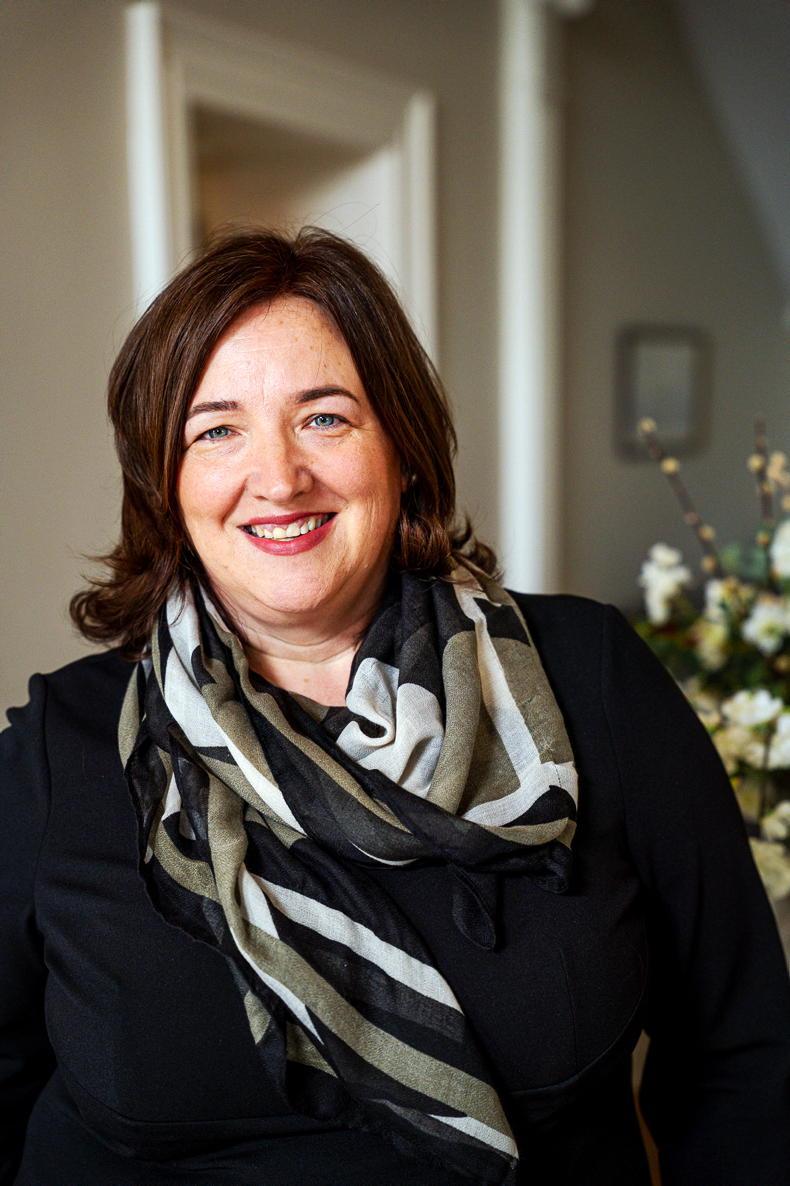
Mary McAuliffe, COO, Head of Clinical Services at the Waterstone Clinic, advises that if you are curious about your fertility, egg freezing or embryo banking, the first step is an ovarian scan at a fertility unit.
“Sometimes we can have ideas of what we actually want to do, but then when we get assessed fully, it might actually give us tangible options in relation to what are our chances of success here.” That initial assessment is so important, Mary says.
“For some women, one cycle of egg freezing may be all that’s required to bank enough eggs to have some reasonable chance of having a baby from those eggs into the future.
“For other women, depending on how active their ovaries are, they might need to do a number of cycles. All of our ovaries are different.”