



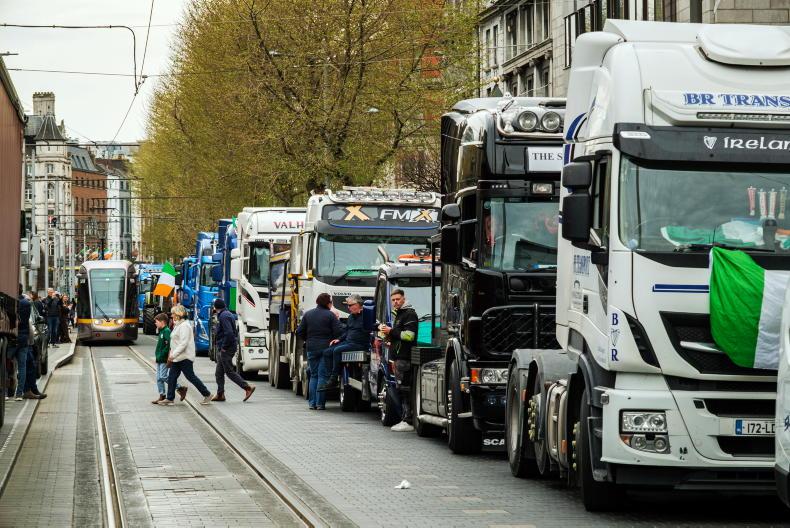
Minister for Justice Jim O'Callaghan has warned fuel protesters that if any vehicles blocking critical infrastructure are not moved by the end of the morning, it could be the army that moves them.
“The blocking of critical national infrastructure will not be permitted to continue and the assistance of the defence forces has been requested,” the justice minister said on Thursday.
“Large vehicles blocking critical infrastructure will be removed. Owners of those vehicles should remove them immediately this morning and should not complain later about any damage caused to those vehicles during removal.”
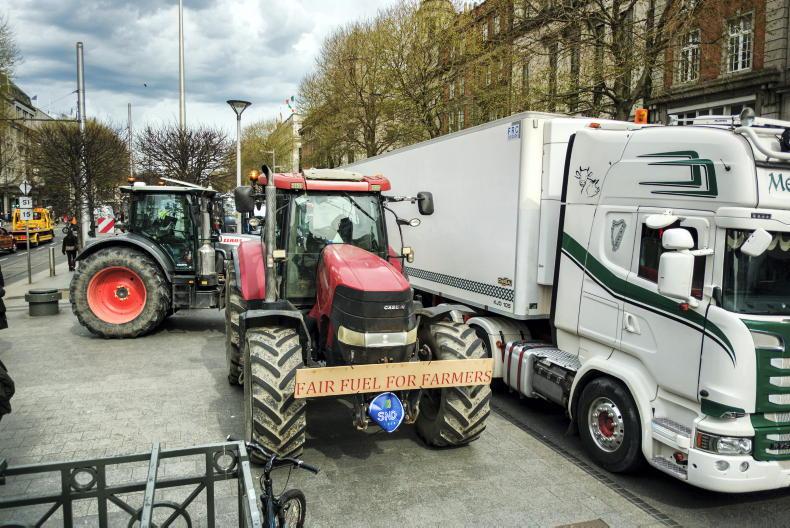
The warning comes into day three of the fuel protests that slowed or brought to a standstill traffic on motorways and roads around ports.
Ports at Foynes, Galway, Cork city and Dublin are among those that have reportedly faced disruption over recent days, including in the transit of imported fuel.
Minister O’Callaghan said that it is “well established in law” that the defence forces may assist An Garda Síochána “in aid to the civil power, when requested and when required”.
The basis for An Garda Síochána seeking this assistance from the defence forces is the filling out of a C70 form, which the minister said it had.
“Denying people access to fuel and clean water is an unacceptable interference in the most basic of human rights,” Minister O’Callaghan stated.
The defence forces confirmed to the Irish Farmers Journal it had received a request for assistance in heavy vehicle recovery from An Garda Siochána.
“As this operation is ongoing, we will not provide further comment until it is concluded,” a spokesperson said.
However, the defence forces added that it was aware of images circulating online of MOWAG armoured personnel carriers moving along public roadways in convoy.
“We can confirm that these are the personnel of the 128th Infantry Battalion conducting mission readiness exercises ahead of deployment to UNIFIL next month.”



SHARING OPTIONS