The battle for success in the electric tractor world is heating up, with the arrival of two significant players from the motor industry. This happens at a time when one of the leading innovators in the electric tractor market, Monarch, based in the US, went out of business. Since then, two Volkswagen-linked ventures have entered the market, as well as a third German-based start-up company.
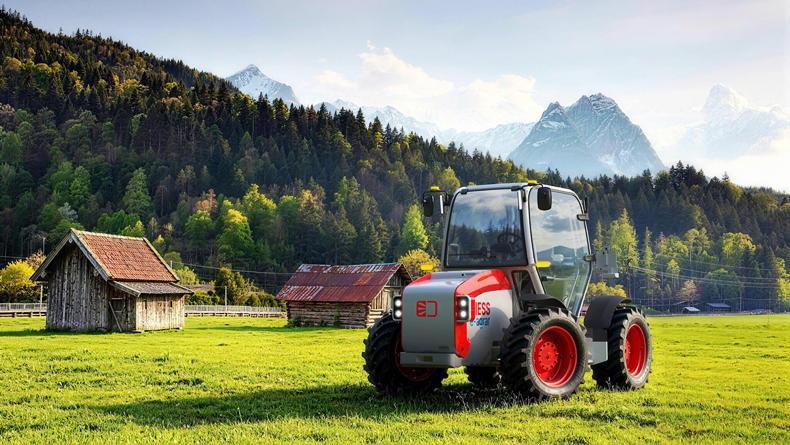
Former Volkswagen CEO Herbert Diess announced some time ago that he was entering the electric tractor manufacturing business, with what he claims will be a mid-range electric tractor for farmers and the landscape market. His design uses a interchangeable battery system that claims to enable 24/7 operation.
His company is called DIESS E-Agrartechnik and is based in Munich, Germany. The business was set up to develop and supply systems including tractors, battery swap stations, solar charging stations, electric attachments, and, in the future, autonomous agricultural machines.
Diess claims that the new electric tractor design will have two driving directions and will be compatible with all standard tractor attachments, including, mowers, loaders, etc. He claims that he is fully on schedule with product development and that the tractor will be the most versatile machine on the market.
Diess aims to have the tractor ready for delivery to European farmers in 2027 and at a price that will be competitive with comparable diesel vehicles, while reducing operating costs by around 50%. Diess has emphasised that the development it’s not just about the tractor itself, but about a complete ecosystem.
It is reported that Diess’s passion for agriculture runs deep. He revealed in an interview that during his childhood that he spent almost all his holidays on his grandparents’ farm and that it was driving the tractor that gave him the greatest joy at that time.
Diess’s company is reported to be working with an established agricultural machinery company and suppliers in Germany, Austria and Switzerland, but the partner firm names have not been disclosed.
VW Group
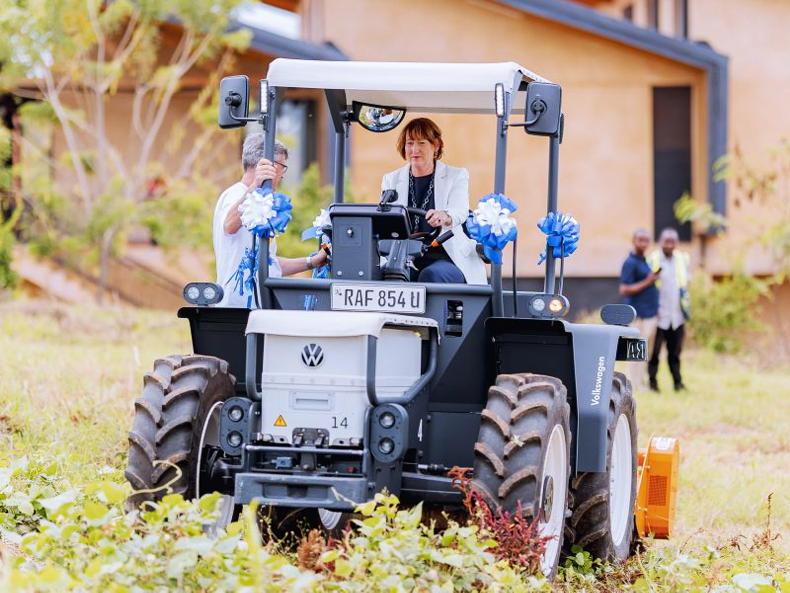
What is particularly significant is that the Volkswagen (VW) Group, which Herbert Diess led as CEO between 2018 and 2022, is also already working on similar electric agricultural technology. In 2025, VW presented the Mk1, a battery-electric tractor for smaller farms in developing markets. VW’s Gen. Farm project aims to make the work of farmers in emerging countries easier. The VW Group claims to be developing electric tractors that are tailored to the requirements of small and medium-sized farms. The VW MK1 uses an efficient battery changing system to minimise downtime.
The interchangeable batteries can be swapped at central stations within minutes. Volkswagen’s developments were centred in Rwanda and the charging stations in African countries are intended to be powered by solar energy which, in addition to charging the tractor, will also provide service and energy supply for rural areas.
This compact size tractor runs entirely on electricity, is about the size of a Volkswagen Transporter van, and claims to offer the simplicity of a Volkswagen Beetle. The MK1 electric tractor was developed for regions where agriculture is currently largely unmechanised.
Volkswagen’s first MK1 tractor claims to deliver around 40 hp. One electric motor each provides the power for the drive (30 kW) and auxiliary consumers (20 kW) such as hydraulics and power take-off. Weighing around 2.5 tonnes, the electric tractor is not intended for large farms, but rather for rural areas and smaller farms. A special feature is the reverse drive system.
ONOX
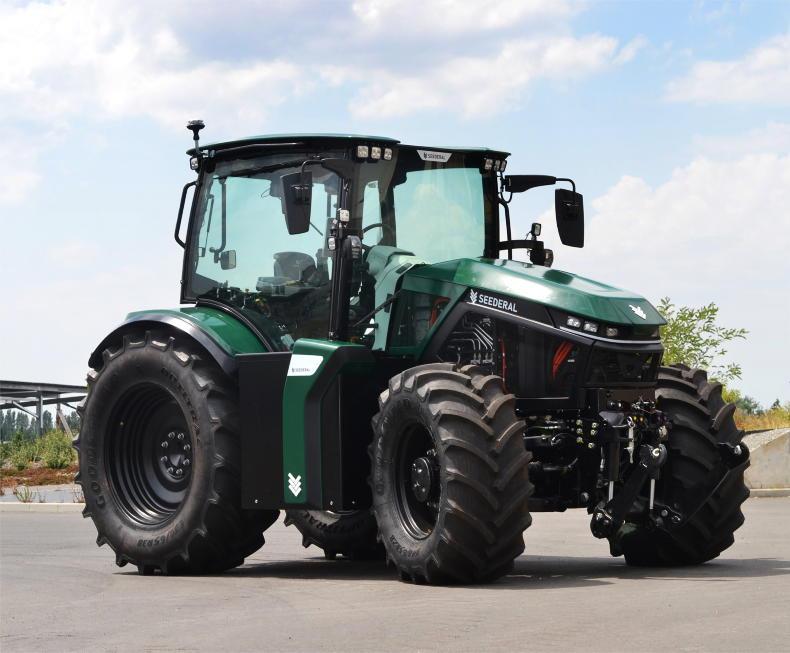
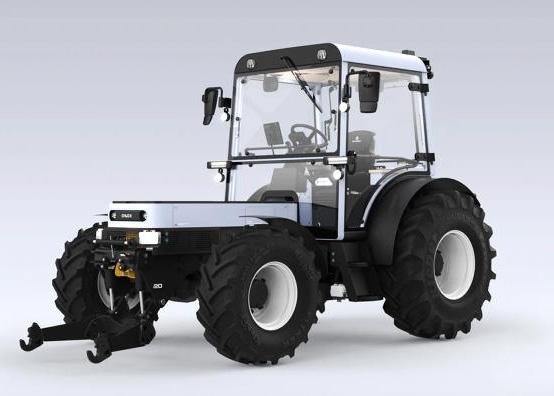
A third German competitor, which is established since before 2023, is the ONOX tractor company, that also uses a swappable 48-volt battery system in up to five modules and which claims to have developed the swappable battery concept some time ago.
With low-positioned batteries and no bonnet, the tractor claims to be well-suited to loader work on farms.
The ONOX uses a fixed 20 kWh battery in the vehicle, as well as removable 30 kWh batteries. The batteries can be mounted at the front, rear, and be mid-mounted. Swapping them is claimed to take less than five minutes.
The ONOX electric tractor doesn’t rely on high charging capacity, as it uses interchangeable battery modules that do not require a high grid connection capacity.
This is because in many rural areas of Germany,electricity supply isn’t the problem, as about 40% of farms in Germany produce their own electricity, primarily through photovoltaics or solar panels.
The ONOX team claim that their tractor saves farmers around €7,000 annually in operation, based on approximately 600 operating hours, while simultaneously reducing diesel consumption by about 4,200 litres per year.
It is clear that the competition for the electric tractor market is now heating up. Mainstream tractor companies such as Fendt, John Deere and New Holland have been active.
Now the concept has gained some additional momentum with the arrival of Herbert Diess and his plans to build a global sales network, and separately, the arrival of the Volkswagen Group, to the sector.