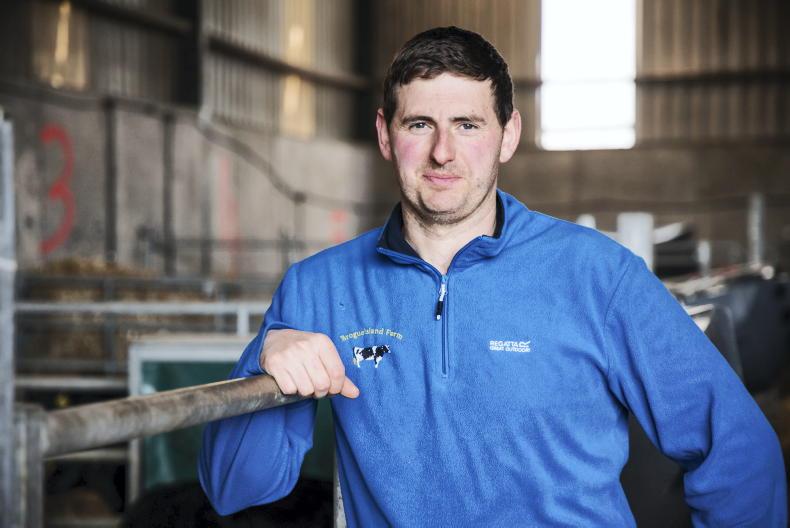
Older buildings with restricted access and narrow passageways often deter farmers from going down the diet feeder route. Based outside the town of Castlemaine in Co Kerry, James O’Connor milks 50 cows and didn’t go for a diet feeder for many years due to this very reason.
Feeding all bale silage, James wanted to come up with a winter-feeding solution that would chop and distribute the silage. A diet feeder was always in the back of his mind, but all he could find in the used market was large machines.
Eight years ago, James came across a used Teagle drum feeder. These are a mounted unit, where a bale is placed inside the rotating drum and then distributed to one side. These machines don’t have a gearbox, but instead the drive to the rotor is directly from the tractor, while a hydraulic motor is used to rotate the drum.
This was a one-owner unit which James said was in good nick and wasn’t too expensive at the time. He went down this route and subsequently ran the machine for three seasons.
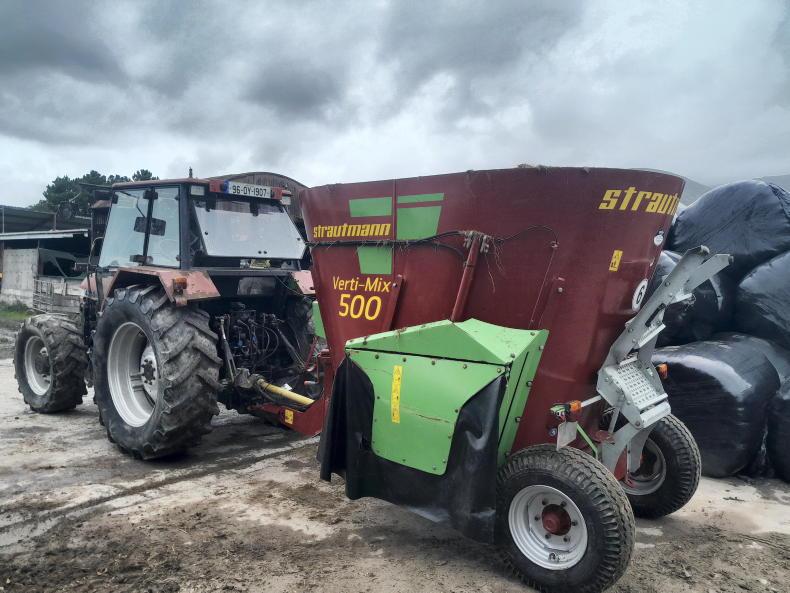
"We have a few sheds with very low rafters, but the feeder works well in tight areas, it’s compact and manoeuvrable”.
Feeding over 500 bales a year, James noted that the unit was beginning to wear out, and he felt that it was then time to upgrade the drum feeder.
He went to look at and price several machines, including both Teagle and McHale straw blowers/silage feeders, but then stumbled across the small trailed Strautmann tub feeder at the Ploughing Championships.
“I liked the Teagle drum feeder, and it done what I wanted it to do. However, as it was a mounted machine, it needed that bit more weight and horsepower in a tractor to comfortably work it around the yard. I still had it in my head to try and go for a machine that would give me the flexibility of mixing feeds. I came across the Strautmann VM50 small trailed tub feeder at the Ploughing Championships, and was impressed with it. It seemed to be exactly what I was looking for. We went to see one working on a farm in Kilkenny and decided to take the plunge,” explained James.
James took delivery of the Verti-Mix 500 (VM 500) in December 2019, just before Christmas. This model is one of a three-model range built by the German machinery manufacturer.

The single auger machine is also the smallest capacity range the firm build.
The single auger machine is also the smallest capacity range the firm build. To put it into perspective, this feeder is 3.62m (11ft 10in) long, 1.88m (6ft 2in) wide and 2.18m (7ft 2in) high. Up to this year, it was being driven on the farm with a 62hp David Brown 995.
“I was really impressed with how easy it was to drive the VM 500. With our previous mounted drum feeder, we worked it on a 95hp Case, and it needed all its weight and power to operate the machine, especially when handling wet bales. Due to the nature of the trailed diet feeder, it’s much easier to drive, the David Brown handles it no bother”.
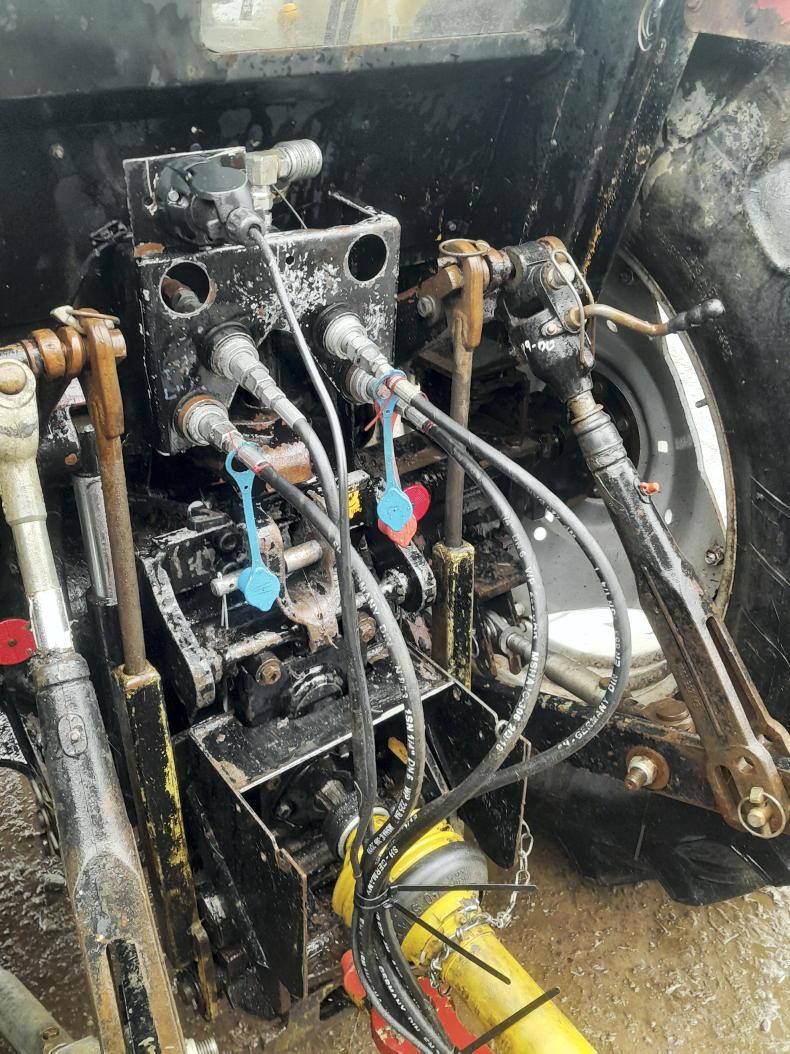
The machine has no electrics, and only uses two sets of double acting spool valves, one to control each discharge door
“We use the machine to feed bales of silage, straw and hay. I generally feed any rations and minerals through the parlour, even in the dry period as I find it a great job to train in the heifers.
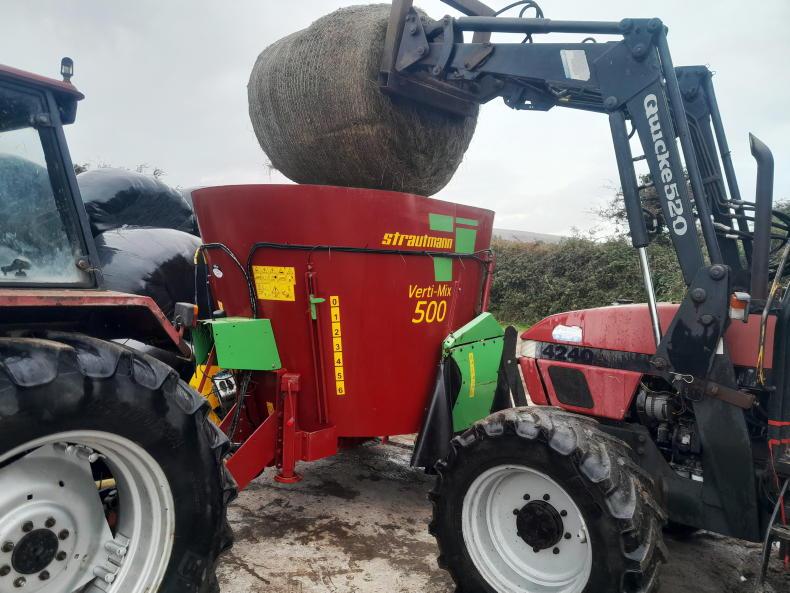
“Filled to capacity, the VM 500 holds two bales of silage. I find that if the forage is very dry, it could even spill out a small bit of the forage. We make our own silage, and thus the bales aren’t chopped. Typically speaking, it takes 15 minutes for the feeder to mix two non-chopped bales”.

“When ordering the machine from new, the only optional extra we went with was a second discharge door".
“When ordering the machine from new, the only optional extra we went with was a second discharge door. This means we have the scope to feed out from either side of the machine. If I was going buying a
new feeder again, I’d spec a conveyer on one side.
We didn’t go for any fancy control box; we kept things simple. The machine has no electrics, and only uses two sets of double acting spool valves, one to control each discharge door,” explained James.
Older buildings with restricted access and narrow passageways often deter farmers from going down the diet feeder route. Based outside the town of Castlemaine in Co Kerry, James O’Connor milks 50 cows and didn’t go for a diet feeder for many years due to this very reason.
Feeding all bale silage, James wanted to come up with a winter-feeding solution that would chop and distribute the silage. A diet feeder was always in the back of his mind, but all he could find in the used market was large machines.
Eight years ago, James came across a used Teagle drum feeder. These are a mounted unit, where a bale is placed inside the rotating drum and then distributed to one side. These machines don’t have a gearbox, but instead the drive to the rotor is directly from the tractor, while a hydraulic motor is used to rotate the drum.
This was a one-owner unit which James said was in good nick and wasn’t too expensive at the time. He went down this route and subsequently ran the machine for three seasons.
"We have a few sheds with very low rafters, but the feeder works well in tight areas, it’s compact and manoeuvrable”.
Feeding over 500 bales a year, James noted that the unit was beginning to wear out, and he felt that it was then time to upgrade the drum feeder.
He went to look at and price several machines, including both Teagle and McHale straw blowers/silage feeders, but then stumbled across the small trailed Strautmann tub feeder at the Ploughing Championships.
“I liked the Teagle drum feeder, and it done what I wanted it to do. However, as it was a mounted machine, it needed that bit more weight and horsepower in a tractor to comfortably work it around the yard. I still had it in my head to try and go for a machine that would give me the flexibility of mixing feeds. I came across the Strautmann VM50 small trailed tub feeder at the Ploughing Championships, and was impressed with it. It seemed to be exactly what I was looking for. We went to see one working on a farm in Kilkenny and decided to take the plunge,” explained James.
James took delivery of the Verti-Mix 500 (VM 500) in December 2019, just before Christmas. This model is one of a three-model range built by the German machinery manufacturer.
The single auger machine is also the smallest capacity range the firm build.
The single auger machine is also the smallest capacity range the firm build. To put it into perspective, this feeder is 3.62m (11ft 10in) long, 1.88m (6ft 2in) wide and 2.18m (7ft 2in) high. Up to this year, it was being driven on the farm with a 62hp David Brown 995.
“I was really impressed with how easy it was to drive the VM 500. With our previous mounted drum feeder, we worked it on a 95hp Case, and it needed all its weight and power to operate the machine, especially when handling wet bales. Due to the nature of the trailed diet feeder, it’s much easier to drive, the David Brown handles it no bother”.
The machine has no electrics, and only uses two sets of double acting spool valves, one to control each discharge door
“We use the machine to feed bales of silage, straw and hay. I generally feed any rations and minerals through the parlour, even in the dry period as I find it a great job to train in the heifers.
“Filled to capacity, the VM 500 holds two bales of silage. I find that if the forage is very dry, it could even spill out a small bit of the forage. We make our own silage, and thus the bales aren’t chopped. Typically speaking, it takes 15 minutes for the feeder to mix two non-chopped bales”.
“When ordering the machine from new, the only optional extra we went with was a second discharge door".
“When ordering the machine from new, the only optional extra we went with was a second discharge door. This means we have the scope to feed out from either side of the machine. If I was going buying a
new feeder again, I’d spec a conveyer on one side.
We didn’t go for any fancy control box; we kept things simple. The machine has no electrics, and only uses two sets of double acting spool valves, one to control each discharge door,” explained James.






SHARING OPTIONS