The Association of Farm & Forestry Contractors in Ireland (FCI) says that inflationary cost increases, minimum wages increases and new mandatory pension funding for employees are the main factors behind a 4% rise in contractor charges for the 2026 season.
The FCI says the contracting sector is facing significant structural change.
This is happening as farm numbers continue to decline (down by 4.6%) while farm scale is increasing (up by 6.8%) as reported by the Department of Agriculture, Food and the Marine and Teagasc.
New situation
The FCI explains that what is emerging is a new situation where some agricultural and forestry contracting businesses are now operating across numerous counties as operators learn to cope with new increased cost challenges brought on by wider scale.
“Contractors have additional costs in 2026, with the combination of the minimum wage increase impact along with the new legal requirements around the provision of pension funding for employees,” Norman Egar, the FCI national chair, said.
“These are additional increased costs, as well as managing the new extra costs due to structural changes in Irish farming, must be factored by all agricultural and forestry contractors into their 2026 operational costs.
“For 2026, our sector remains committed to providing our farmer clients with cost-effective and sustainable machinery services provided by skilled operators.
“Our FCI Contractor Charges Guide 2026 provides a guide to the modest increases that our members must achieve in order to deliver on that commitment,” Egar added.
Spend per farm
The FCI says the Irish agricultural contractor sector now accounts for annual farmer spending on mechanisation services valued at over €975m, a 73% increase between 2015 and 2024.
In 2024, the cost of contracting services to Irish farmers was 14.48% of all farm’s direct costs. During 2024, the average spend among Irish farmers on agricultural contractor services was €7,228.
Irish dairy farmers spent an average of €18,275, compared with €17,391 the year previous, on agricultural contracting services, an increase of 5% compared with 2023.
Contractor charges on Irish mixed drystock farms increased by 12% on average to €10,543 compared with €9,332, while on tillage farms expenditure on agricultural contractor services at €13,600 which was up 3.5% year-on-year.
The 2024 data also shows that contractor charges across all Irish farms accounted for 14.48% of total direct costs, while machinery overhead costs were running almost at three times that level at 36.58% of total farm overhead costs.
Guide charges
In publishing the contracting charges guide for 2026, the FCI says it is satisfied that this averaged price guide continues to provide reasonable guidance for farm and forestry contractors and their clients.
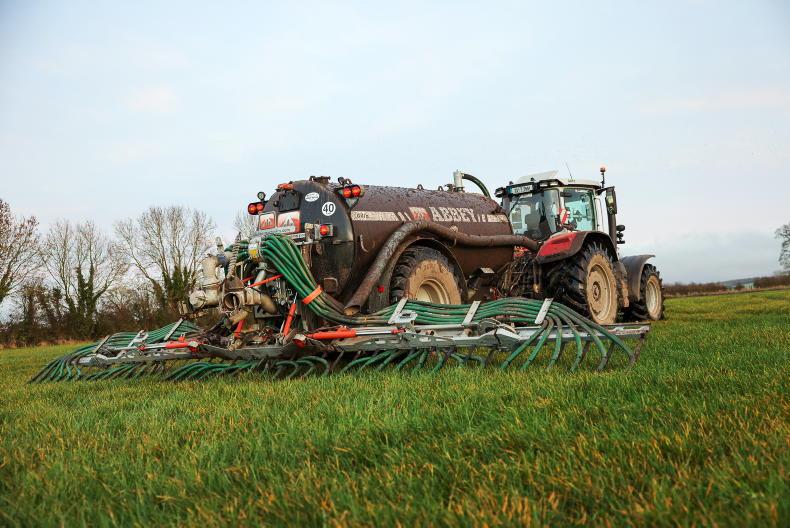
FCI says the Irish agricultural contractor sector now accounts for annual farmer spending on mechanisation services valued at over €975 million. \ Odhran Ducie
The FCI says it must be emphasised that this is only an information guide. The FCI produces these guide figures by collating an average figure for each operation from a panel of FCI contractor members and further supported by a member survey across all of the association’s membership, during October 2025.
It is accepted that due to local and sectoral circumstances, the actual guide charge will vary between regions, across soil types, distance travelled, size of contract undertaken, size and type of equipment used as well as the scale of the work done.
It is for these reasons there are bands in each segment of the guide.
Limited companies
The guide prices listed include VAT.
The FCI says an increasing number of farmers are moving towards VAT registration, especially those that have moved to limited company status.
The FCI says it has been reported that the agricultural sector saw a 38% increase in company formations during 2025 and many of these are the result of farm partnership that have moved to a limited company status with VAT registration.
The Association of Farm & Forestry Contractors in Ireland (FCI) says that inflationary cost increases, minimum wages increases and new mandatory pension funding for employees are the main factors behind a 4% rise in contractor charges for the 2026 season.
The FCI says the contracting sector is facing significant structural change.
This is happening as farm numbers continue to decline (down by 4.6%) while farm scale is increasing (up by 6.8%) as reported by the Department of Agriculture, Food and the Marine and Teagasc.
New situation
The FCI explains that what is emerging is a new situation where some agricultural and forestry contracting businesses are now operating across numerous counties as operators learn to cope with new increased cost challenges brought on by wider scale.
“Contractors have additional costs in 2026, with the combination of the minimum wage increase impact along with the new legal requirements around the provision of pension funding for employees,” Norman Egar, the FCI national chair, said.
“These are additional increased costs, as well as managing the new extra costs due to structural changes in Irish farming, must be factored by all agricultural and forestry contractors into their 2026 operational costs.
“For 2026, our sector remains committed to providing our farmer clients with cost-effective and sustainable machinery services provided by skilled operators.
“Our FCI Contractor Charges Guide 2026 provides a guide to the modest increases that our members must achieve in order to deliver on that commitment,” Egar added.
Spend per farm
The FCI says the Irish agricultural contractor sector now accounts for annual farmer spending on mechanisation services valued at over €975m, a 73% increase between 2015 and 2024.
In 2024, the cost of contracting services to Irish farmers was 14.48% of all farm’s direct costs. During 2024, the average spend among Irish farmers on agricultural contractor services was €7,228.
Irish dairy farmers spent an average of €18,275, compared with €17,391 the year previous, on agricultural contracting services, an increase of 5% compared with 2023.
Contractor charges on Irish mixed drystock farms increased by 12% on average to €10,543 compared with €9,332, while on tillage farms expenditure on agricultural contractor services at €13,600 which was up 3.5% year-on-year.
The 2024 data also shows that contractor charges across all Irish farms accounted for 14.48% of total direct costs, while machinery overhead costs were running almost at three times that level at 36.58% of total farm overhead costs.
Guide charges
In publishing the contracting charges guide for 2026, the FCI says it is satisfied that this averaged price guide continues to provide reasonable guidance for farm and forestry contractors and their clients.
FCI says the Irish agricultural contractor sector now accounts for annual farmer spending on mechanisation services valued at over €975 million. \ Odhran Ducie
The FCI says it must be emphasised that this is only an information guide. The FCI produces these guide figures by collating an average figure for each operation from a panel of FCI contractor members and further supported by a member survey across all of the association’s membership, during October 2025.
It is accepted that due to local and sectoral circumstances, the actual guide charge will vary between regions, across soil types, distance travelled, size of contract undertaken, size and type of equipment used as well as the scale of the work done.
It is for these reasons there are bands in each segment of the guide.
Limited companies
The guide prices listed include VAT.
The FCI says an increasing number of farmers are moving towards VAT registration, especially those that have moved to limited company status.
The FCI says it has been reported that the agricultural sector saw a 38% increase in company formations during 2025 and many of these are the result of farm partnership that have moved to a limited company status with VAT registration.







SHARING OPTIONS