



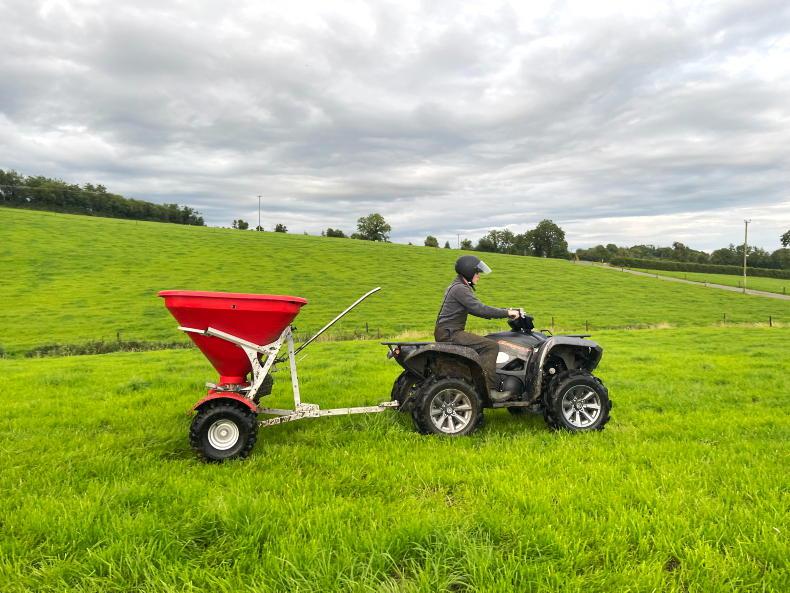
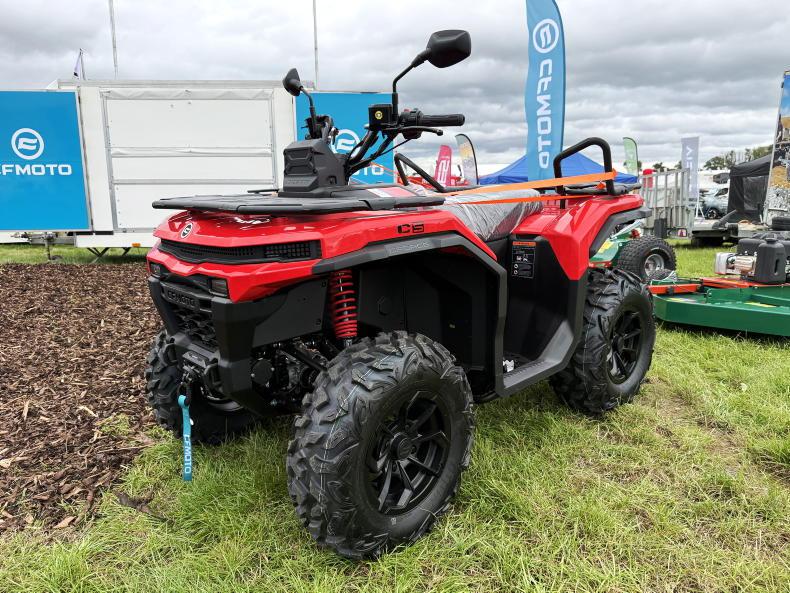
A farm quad is one of the most used vehicles on many farms, and a best friend of many farmers. However, in a split second, a quad can quickly become an extremely dangerous tool and cause lasting consequences if in the wrong hands.
Sadly, many of us know someone who has suffered life-changing injuries or worse, lost their life as result quad accident.
By July 2025, the Health and Safety Authority (HSA) had recorded 12 farming fatalities, matching the total for the full 12-month period of 2024 in just seven months.
During April and May 2025 alone, three out of four fatal farm incidents involved quads. Unfortunately, since then that number has only increased, not to mention the many more that have suffered severe injuries as result of quad accidents.
Most quad accidents are caused by one or more of the following:
HSA statistics show that half of all farm fatalities involve people over the age of 65. Limited mobility is a serious issue when it comes to accidents involving older riders. Common causes of accidents within this age bracket are often the result of sitting side saddle and an inability to transfer body weight in accordance to riding conditions.
All quad users should be 16 years of age or older and fully understand the risks involved.
Training course
Regulations governing the safe use of quads in all workplaces (SI 619/2021) came into effect in November 2023. These regulations have two essential requirements of note: firstly, training is to be undertaken with a registered training provider to a QQI standard or equivalent and secondly, a helmet (to a prescribed standard) must be worn. As part of an on-farm inspection where a quad is present, a valid ATV training certificate may need to be shown.
Generally, for experienced riders, these courses are one day in duration and cover many different practical aspects, including the following:
Basic quad knowledge and PPE
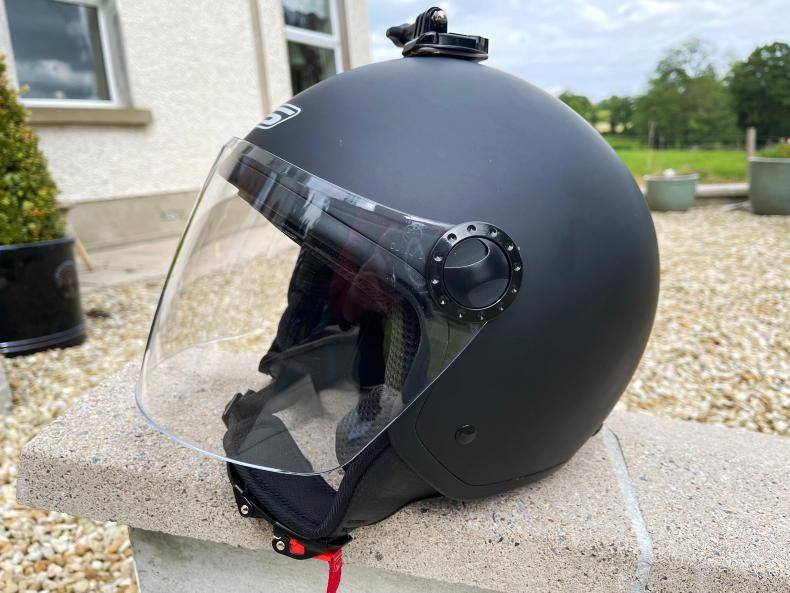
A helmet is vital and must be worn before taking control of a quad. By wearing a helmet, the risk of a serious head injury in the event of an accident will be seriously reduced.
The helmet must be of an approved type and not the likes of a bicycle helmet. Invest in a helmet that is comfortable and secure, otherwise the likelihood is that it won’t be worn.
Pre-start checks
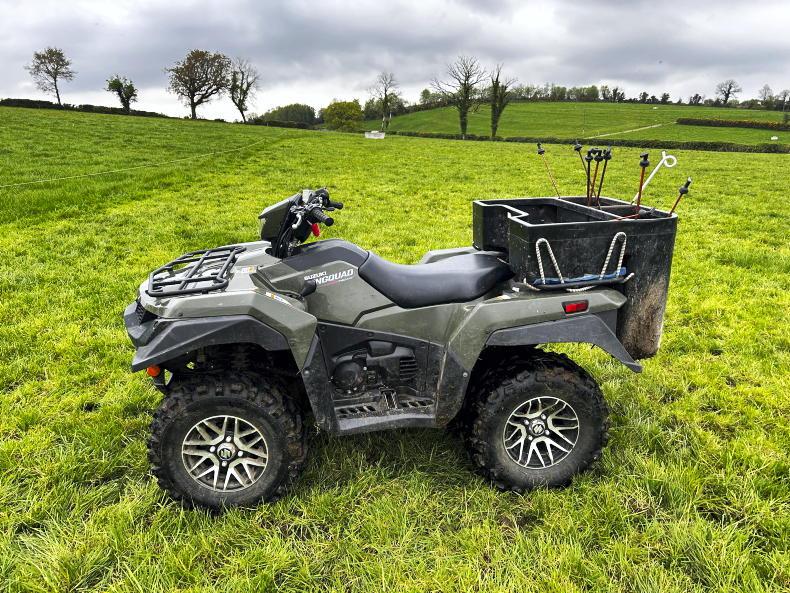
Like any machine, the operator or rider should understand its capabilities before use. This includes controls and their functions as well as a basic mechanical knowledge of key components and capacities.
Before use, there are a number of pre-start checks that should be considered. These include, tyre condition, tyre pressures, engine oil level, brakes, and that the engine and transmission are functioning correctly.
Rider movement and balance
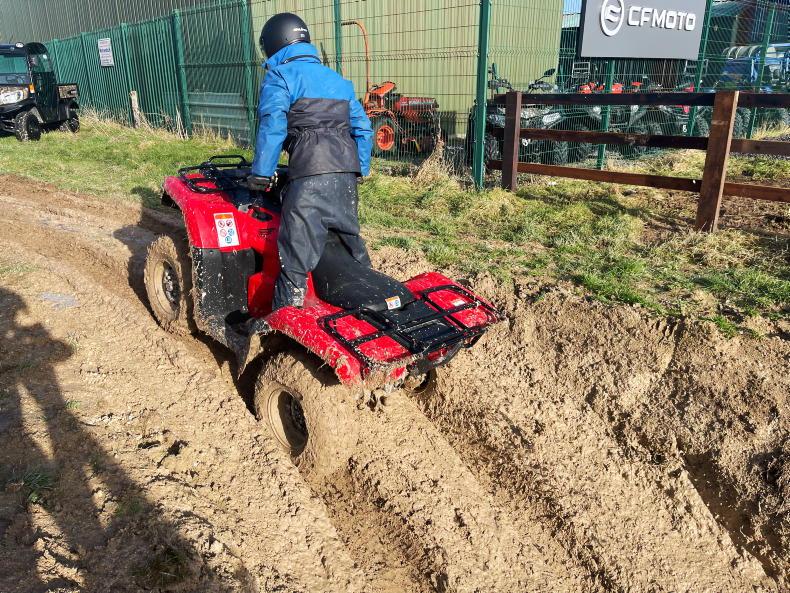
All quads are designed to perform on rough terrain, but like every machine they have their limits. Once used beyond these limits, they can quickly become unstable.
It may seem as if riding a quad is as simple as sitting upright and just driving. But, this is not the case if a quad is to be ridden properly and safely. Firstly, there should never be a passenger present on the quad in addition to the rider.
Although the seat may look as if it could carry a passenger, it is not designed to do so. The reason for the long seat is so that the rider can move their body weight and influence the quads stability.
Assuming a typical farm quad weighs 380kg, and an average rider weighs 90kg, how one moves their weight while riding a quad will greatly influence its balance and centre of gravity.
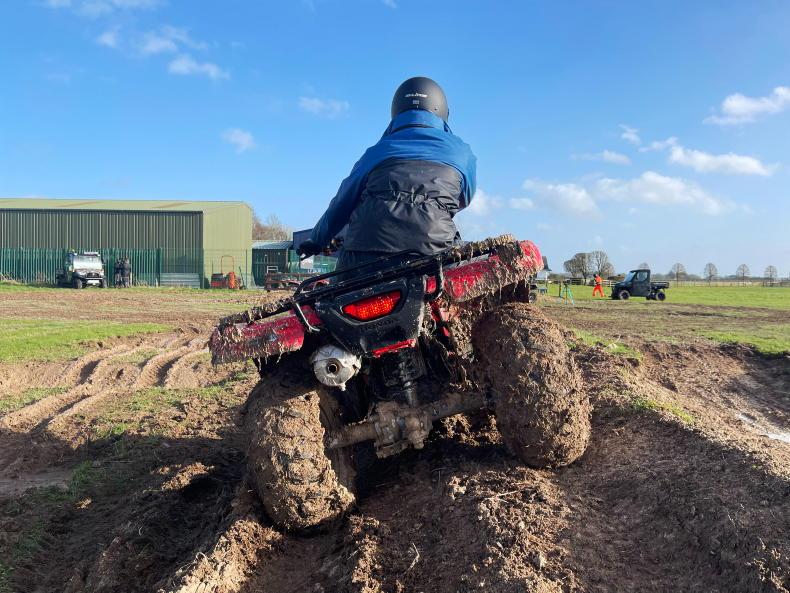
As a rider, you must have the ability to counteract the momentum of the quad. In simple terms, lean backward while travelling down a steep slope, lean forward climbing a slope and lean upward while navigating side slope.
Load limits and towing
The rider must understand and never exceed the load capacities of both front and rear cargo racks. The same applies for towing capacity. These limits are usually printed on stickers on the quad’s panels.
Remember, while a quad will likely carry or pull over and above its rated towing capacity, it is factors like braking and handling that will be hugely affected by doing so.
For example, a 100l weed sprayer, which is quite common, exceeds the rear capacities of most quads. Handling will be extremely poor and leave the quad more susceptible to overturning due to being unbalanced.
As well as that, the moving liquid inside the tank will have a huge effect when cornering and on slopes and hills. Where possible, it is advised to distribute the load being carried between the front and rear racks and remain within the rated capacities.
Route planning
Route planning is another topic covered as part of the training course. While it sounds obvious, it’s an area often overlooked.
Travelling on hills and side slopes should always be avoided where possible and the crossing of ruts, banks or bumps should only be done at low speed, and only after checking the route.
If there is a safer route then you should take it to avoid the risk of accidents.
Video series
In the fourth week of our Health & Wellbeing series, Gary Abbott details safe quad use. Click here to see the video.


SHARING OPTIONS