


When I was younger, I wondered why my father always took so long to check the cattle. I would have thought all that was required was a quick look around, get the number, and that would do until the next day.
My father, on the other hand, would spend up to an hour watching them and he would make sure they all got up if they were lying. He would have done this at least twice per day, every day.
This was to watch out for the dreaded redwater. He wanted to see cattle doing a good stretch or chewing their cud. Then, if there was any doubt, he would wait to see them urinating to check if it was red. Even if it was clear you could not be sure that it hadn’t the disease.
While my father had become quite an expert at catching them early, he would still have lost the occasional one or two. Experience also taught him to be very careful who he bought store cattle from, because cattle from different areas were more prone to redwater than others.
Greenmount
When I went as a student to Greenmount I asked our lecturer about redwater to see if I could be of some help to my father. I was told that it was only found on inferior quality, badly managed land. I wasn’t going to go home and tell my father that.
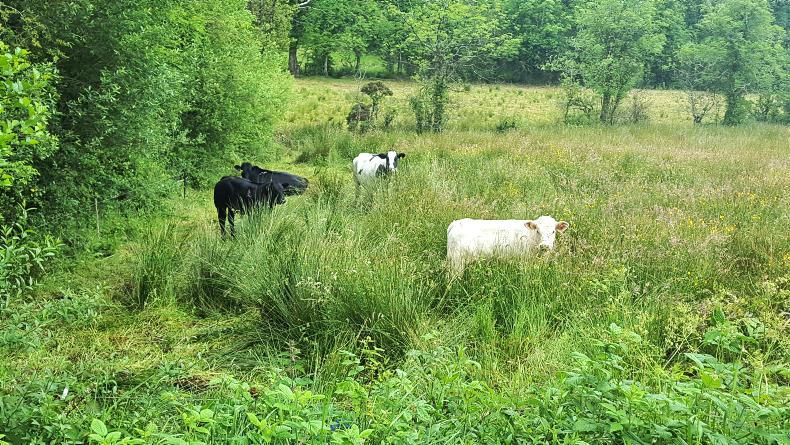
I researched a bit more into it and found that the disease was transmitted by ticks which thrived in wet conditions and on under-grazed, marginal land. I could see this when I went home. The land was wet with rushes and lots of long seedy grass.
The best advice to reduce the cases of redwater was to get rid of the tick and its habitat.
The first thing I did when I came home to farm was to buy some sheep. At that time, there was compulsory dipping twice a year which probably wiped out a lot of the ticks. The sheep also helped to keep grazing under better control.
Then we set about a programme of drainage and reseeding and general improvement in grassland management. We also stopped buying in cattle and only kept home-bred animals.
Something must have worked as I haven’t had a case of redwater for upwards of 30 years (I hope I don’t jinx myself). In fact, I don’t think I would be any good at spotting an early case now – too many cattle and not enough time to stand about.
To be honest, I had forgotten about the problems and hassle that can be caused by redwater until recently, when I was talking to some farmers.
One had four cattle in a field and he caught two of them with redwater. After bringing them into the house to be treated, he realised the other two had it as well. These were year-old heifers which had been reared on the farm.
Then I was talking to another farmer who had bought a cow during the winter and got her in-calf, but shortly after letting her out she took redwater and died.
When I look at some of their land, I can see how difficult it is for them to get rid of the habitat that allows the tick to thrive. You would certainly call it an area of natural constraint (ANC).
The point worth making is that these sorts of problems and limitations highlight why ANC farmers need a little extra support. Not money just given to everyone who owns ANC land. It should be targeted at those farmers who are actively trying to make improvements to both their land and livestock.





SHARING OPTIONS