Question: We have a fresh produce preparation business. Over the past 20+ years, our costs have kept going up no matter what new equipment we buy. We keep being told it is more efficient and will save on electricity, etc.
We are about to do a lot of work to the building and our engineer is telling us that we need to consider solar, to move away from gas heating and change our lighting system, etc. We don’t want to spend all this money if we don’t benefit in some way. Is it worth doing?
Answer: This is a question I hear regularly. You invest in new equipment that promises efficiency, lower electricity use and time savings, yet your overall costs keep creeping upwards.
Unfortunately, despite the savings, rising electricity, heating and employment costs often cancel them out. It may also be that your business is producing far more now than it was 10 years ago.
So when an engineer recommends solar panels, moving away from gas heating, and upgrading lighting, it’s natural to be sceptical. These are big-ticket items, and no business wants to spend money without seeing a clear return. However, your engineer has raised a good point.
Solar costs
Historically, businesses accepted that energy costs were something you simply had to endure. Today, with the potential to generate electricity and heat on-site, that’s no longer the case.
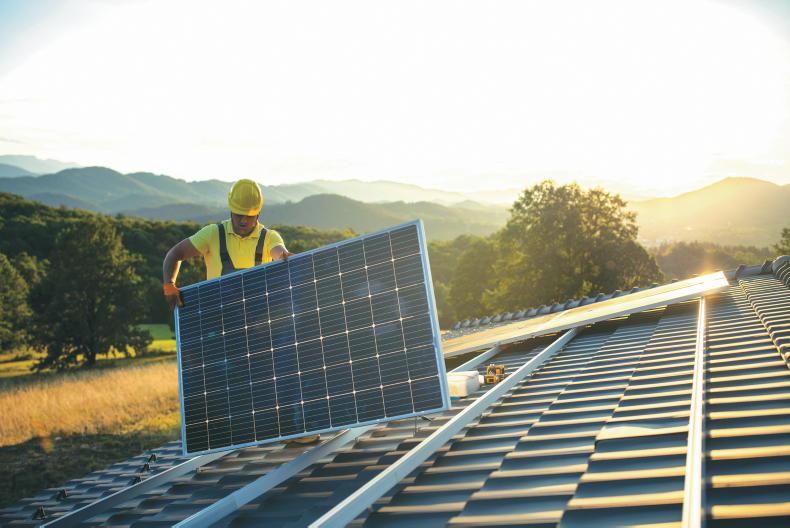
Solar, heat pumps and modern lighting allow you to produce some of your own energy and reduce exposure to rising energy prices. It also helps to lock in lower running costs for 25+ years potentially
If we consider that the average electricity unit rate in 2016 was 17c and it is now 27c+ per unit, that represents a circa 59% increase.
If we apply this to the next 10 years, it is possible that the rate per unit could be over 40c per unit. For every 10,000 units of electricity generated on site, it could be a potential saving of €2,700-€4,000 for your business and suddenly the payback period of your solar investment becomes quite acceptable.
Moving away from gas: switching from gas heating to alternatives such as heat pumps is a bigger decision and needs careful thought. This is not always about immediate savings.
Gas systems are familiar, often cheaper to install initially and well understood. However, gas prices are volatile and likely to remain so. Heat pumps and other renewable heat systems offer:
• More stable long-term running costs.
• Lower carbon exposure.
• Eligibility for grant support.
The key question isn’t “will this save money next year?”, it’s “what will my heating costs look like in 10-15 years if I stay with gas?” Just like electricity, it is not beyond reasonable to expect that gas prices could be over 50% higher in 10 years’ time.
With a solar panel system and heat pump system, you would be heavily mitigating your exposure to these rising costs.
Lighting upgrades: lighting upgrades don’t get much attention, but they’re often one of the lowest-risk improvements.There are modern LED systems below to consider:
• Use significantly less electricity.
• Reduce maintenance and bulb
replacement.
• Improve light quality in food preparation areas.
They rarely transform a business on their own, but when combined with solar, they reduce load and improve payback.
The biggest mistake I see is evaluating each item in isolation. LED lighting reduces electricity consumption, allowing your solar panels to do more for your business.
The heat pump, alongside this, will irradicate your exposure to high gas prices. When planned together, the whole package often makes sense even if individual elements look marginal on their own.
Decision time
Ask yourself four questions below before you decide.
1. How much electricity and heat do we use during the day?
2. How long do we plan to stay in this building?
3. What would energy price increases do to our margins over the next 10 years?
4. What grant support is available right now?
For many food businesses, the real benefit is not dramatic savings in year one – it’s about taking control of your electricity and heating costs in the future. Your investment will most likely pay back in three to seven years, depending on grants availed of.
Having the reassurance that you will not be exposed to large electricity and gas bills in the future is what makes this investment worthwhile. Doing your part for the planet is always a bonus too.
Solar panels: SEAI grants of up to €162,600, depending on system size.
100kWp system: grant of €22,600.
300kWp system: grant of €57,600. Covers around 25% of total cost.
Heat pumps: up to 40% grant support when upgrading from gas.
Heat recovery and ventilation: additional supports available.
Lighting upgrades: LED lighting, sensors and timers may qualify for LEO grants.

Andrew Brolly, Senior Accountant with ifac.
Andrew Brolly is fractional cfo with ifac, which is the professional services firm for farming, food and agribusiness.
Question: We have a fresh produce preparation business. Over the past 20+ years, our costs have kept going up no matter what new equipment we buy. We keep being told it is more efficient and will save on electricity, etc.
We are about to do a lot of work to the building and our engineer is telling us that we need to consider solar, to move away from gas heating and change our lighting system, etc. We don’t want to spend all this money if we don’t benefit in some way. Is it worth doing?
Answer: This is a question I hear regularly. You invest in new equipment that promises efficiency, lower electricity use and time savings, yet your overall costs keep creeping upwards.
Unfortunately, despite the savings, rising electricity, heating and employment costs often cancel them out. It may also be that your business is producing far more now than it was 10 years ago.
So when an engineer recommends solar panels, moving away from gas heating, and upgrading lighting, it’s natural to be sceptical. These are big-ticket items, and no business wants to spend money without seeing a clear return. However, your engineer has raised a good point.
Solar costs
Historically, businesses accepted that energy costs were something you simply had to endure. Today, with the potential to generate electricity and heat on-site, that’s no longer the case.
Solar, heat pumps and modern lighting allow you to produce some of your own energy and reduce exposure to rising energy prices. It also helps to lock in lower running costs for 25+ years potentially
If we consider that the average electricity unit rate in 2016 was 17c and it is now 27c+ per unit, that represents a circa 59% increase.
If we apply this to the next 10 years, it is possible that the rate per unit could be over 40c per unit. For every 10,000 units of electricity generated on site, it could be a potential saving of €2,700-€4,000 for your business and suddenly the payback period of your solar investment becomes quite acceptable.
Moving away from gas: switching from gas heating to alternatives such as heat pumps is a bigger decision and needs careful thought. This is not always about immediate savings.
Gas systems are familiar, often cheaper to install initially and well understood. However, gas prices are volatile and likely to remain so. Heat pumps and other renewable heat systems offer:
• More stable long-term running costs.
• Lower carbon exposure.
• Eligibility for grant support.
The key question isn’t “will this save money next year?”, it’s “what will my heating costs look like in 10-15 years if I stay with gas?” Just like electricity, it is not beyond reasonable to expect that gas prices could be over 50% higher in 10 years’ time.
With a solar panel system and heat pump system, you would be heavily mitigating your exposure to these rising costs.
Lighting upgrades: lighting upgrades don’t get much attention, but they’re often one of the lowest-risk improvements.There are modern LED systems below to consider:
• Use significantly less electricity.
• Reduce maintenance and bulb
replacement.
• Improve light quality in food preparation areas.
They rarely transform a business on their own, but when combined with solar, they reduce load and improve payback.
The biggest mistake I see is evaluating each item in isolation. LED lighting reduces electricity consumption, allowing your solar panels to do more for your business.
The heat pump, alongside this, will irradicate your exposure to high gas prices. When planned together, the whole package often makes sense even if individual elements look marginal on their own.
Decision time
Ask yourself four questions below before you decide.
1. How much electricity and heat do we use during the day?
2. How long do we plan to stay in this building?
3. What would energy price increases do to our margins over the next 10 years?
4. What grant support is available right now?
For many food businesses, the real benefit is not dramatic savings in year one – it’s about taking control of your electricity and heating costs in the future. Your investment will most likely pay back in three to seven years, depending on grants availed of.
Having the reassurance that you will not be exposed to large electricity and gas bills in the future is what makes this investment worthwhile. Doing your part for the planet is always a bonus too.
Solar panels: SEAI grants of up to €162,600, depending on system size.
100kWp system: grant of €22,600.
300kWp system: grant of €57,600. Covers around 25% of total cost.
Heat pumps: up to 40% grant support when upgrading from gas.
Heat recovery and ventilation: additional supports available.
Lighting upgrades: LED lighting, sensors and timers may qualify for LEO grants.

Andrew Brolly, Senior Accountant with ifac.
Andrew Brolly is fractional cfo with ifac, which is the professional services firm for farming, food and agribusiness.
SHARING OPTIONS