


Inspections are being carried out by local authority staff. A householder who is selected for a visit will have been notified in advance.
The checklist has been drawn up by the EPA and spells out what an inspector must look for on the ground and what questions he must ask.
The answers written into the checklist will determine whether or not the septic tank is deemed compliant with standards — or in breach.
The checklist is detailed and does not leave a great deal of flexibility of interpretation for the inspector.
On most matters, it asks a detailed question to which the inspector must indicate ‘Yes’ or ‘No’.
Section 1
The checklist is in three sections. Section one is administrative and is divided into two boxes. The first identifies the exact position of the septic tank or treatment centre by townland, grid references and the local Water Services Authority.
The inspector will identify how waste water is disposed of and give a brief description of the site. Disposal could, for example, be by septic tank, soak hole or pipe to open ditch. The site could be a garden or a grass field.
The inspector is also asked to describe what risk of pollution, if any, is present. The key areas of risk which the inspections target are pathogens (which can cause disease to humans or animals), nitrates or ground water pollution.
In the second box, the inspector will identify the property owner and ask whether or not the septic tank is registered with the local authority. The checklist asks if the house is a holiday home — a holiday may be occupied for only part of the year. It asks about any other high impact activities — for example, the house could be run as a B&B and, therefore, exert a high loading on the treatment centre/septic tank. The inspector will calculate and enter the total number of people using the tank.
He will also identify the drinking water source, e.g. mains water, a well, spring, etc. This is because a faulty septic tank can be a threat to water supply.
Section 2
The inspection now moves from general identification to initial examination of the site and the septic tank or treatment system. This section is again divided into two boxes with the first looking at your site, the second at the design of your septic tank.
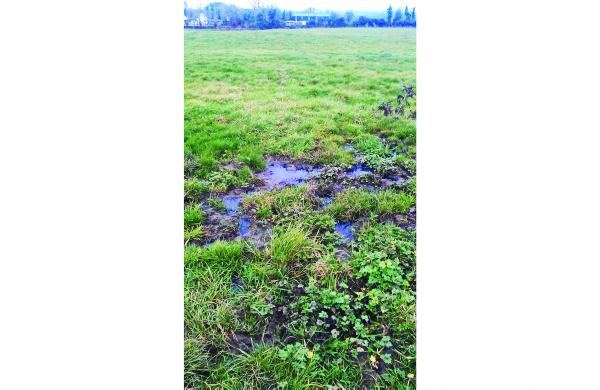
In the first box, the inspector will note when the last significant rain fell. This is relevant if there is ponding around the tank or the ground is waterlogged.
Rain falling earlier that day could have contributed. He will note the percolation conditions, i.e. where soil in the area is free or slow draining.
Next, the inspector is asked if there are indicators of problems. Are there adverse vegetation indicators? The inspector must indicate ‘Yes’/‘No’ if there is lush grass, ponding, rough land or rushes. Lush grass would often indicate enrichment of the soil.
Rutting of ground by wheels of a vacuum tanker or by animals could indicate waterlogging. The inspector must look for adverse vegetation indicators in any nearby drainage ditch, e.g. lush vegetation indicating that effluent is piped directly into the open drain.
The checklist asks if there are other ‘Adverse Indicators’, including excessive flies or other insects or vermin. It asks if there is rock outcrop or karst stone features — either could indicate a shallow soil which would limit the size or effectiveness of a infiltration area. It asks if there is physical interference with a system by cattle paths, garden decking, parking of vehicles, poaching, roadway or trees. Any of these could reduce the effectiveness of a tank or system.
It asks if there are any wells ‘down-gradient’ and within 60m. Any such well could be at risk of being polluted if the septic tank is faulty.
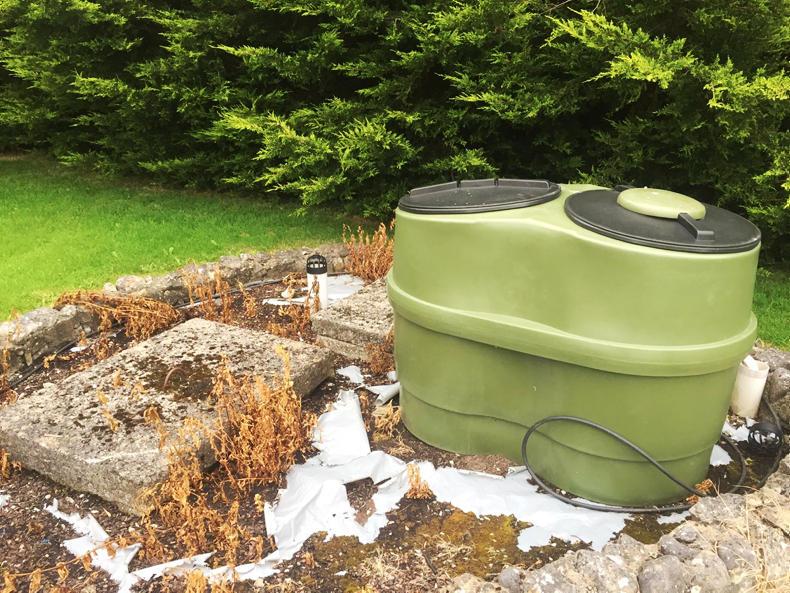
The second box asks about the system. Is it a septic tank? Has it additional secondary or tertiary treatment? Is it none of these — just a soakaway? The inspector must note when it was installed (if you know), its capacity and will ask how often you desludge it.
He must look at the tank or system and note how many chambers it has (one or more), if there is a distribution box present and — with a modern system — if there is electrical power supply and the system is operating. He looks to see if there is a maintenance contract in place — this is not obligatory — and if the system appears to have been inspected/maintained in the previous two years.
The inspector is asked to identify the infiltration type. It can be soakaway, a percolation area, a raised percolation area, a polishing filter, a pipe to surface water, etc.
Section 3
This is the biggest and most important section in the checklist.
It focuses more closely on whether the septic tank is operating to standard, specifically is it complying with the Domestic Waste Water Treatment Systems Regulations 2012.
Again, the inspector must answer ‘Yes’ or ‘No’ to some very specific questions. Are there:
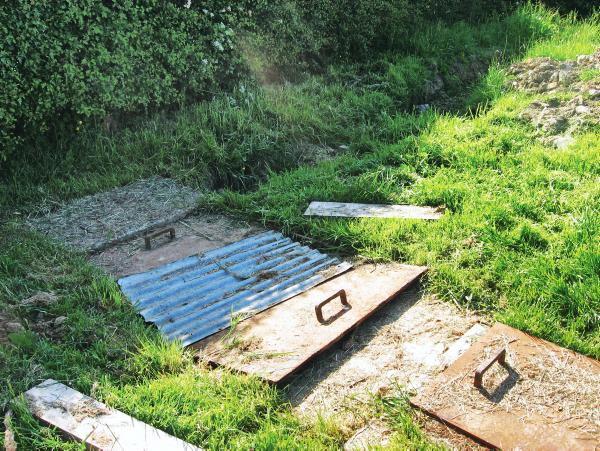
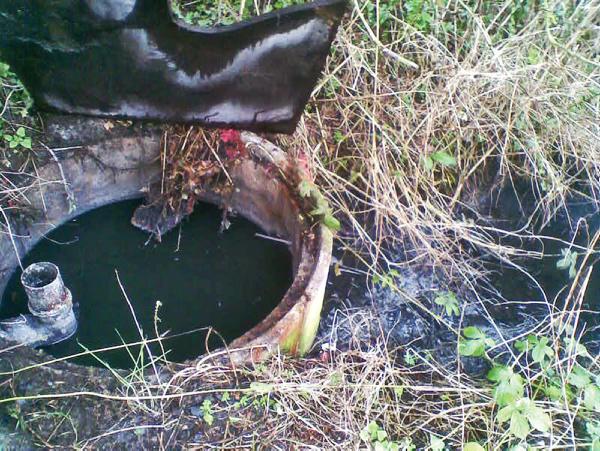
Unintended leaks from the system including from the tank, inlet and outlet pipes, distribution box or manholes or manhole covers.
Unlicensed or untreated discharge (i.e. seepage or flow) of effluent or greywater to surface waters or ground water. Discharge could be direct to surface water, via an underground pipe or an overground pipe.
Wet areas or ponding or erosion of the infiltration area — these would also indicate improper discharge.
Clean water from roofs, etc, entering the septic tank. Clean water can overload a system and cause dirty effluent to flood out.
The checklist then moves on to mechanical maintenance. It asks if there is:
Lack of maintenance as indicated by nuisance smell or noise. Nuisance noise could arise where a modern system that is fitted with pumps and an alarm is not maintained and faults develop.
Components not operating properly. This includes a tank or secondary system, pipes, distribution box, manholes and covers.
Components of secondary systems — where present — not operating properly including air pipes, pumps, float switches, filter media and alarms.
Next, the checklist looks at desludging (emptying), asking:
Is there evidence that the tank or unit has not been desludged,
If it needs desludging,
Who has carried out desludging — owner or third party?
If desludging was carried out by a third party, it asks for name and contact details, for a receipt and whether or not the contractor was authorised.
Where the tank was emptied by the owner, i.e. the farmer, it asks if there is evidence the sludge was not used for agriculture and spread in a way that contravenes regulations.
Finally, the checklist asks, as a summary, if there is evidence that the system constitutes a risk to human health or to the environment. As would be expected, this includes a risk to water, air, soil, plants and animals. But it also includes a noise or odour nuisance. And in what appears to be a catchall it can be a risk ‘by affecting the countryside or places of special interest’.



SHARING OPTIONS