Recently, the Irish Farmers Journal visited John Purcell’s farm in Ross, Golden, Co Tipperary. John runs the largest organic enterprise in the country and finishes up to 700 cattle per year on his farm.
The rules surrounding housing for organic enterprises are different to those of conventional farming. According to the organic food and farming standards in Ireland, housing on organic enterprises must ensure that “the developmental, physiological and ethological needs of animals are met”. The livestock sheds on John’s farm provide excellent examples of the type of housing organic farmers should have in place if overwintering organic cattle.
Of course, the scale of the housing is far larger on John’s farm than the average organic farmer, but lessons can be learned from the way he houses his stock. Stocking density poses the greatest challenge for organic farmers when housing cattle. Table 1 shows the minimum stocking density requirement for animals being housed, dependent on the size and sex. The density must ensure the animals’ welfare is catered for by providing them with sufficient space to stand naturally, lie down easily and make all natural movements. All of John’s buildings allow for these density requirements.
Pictures one, two,
three and four
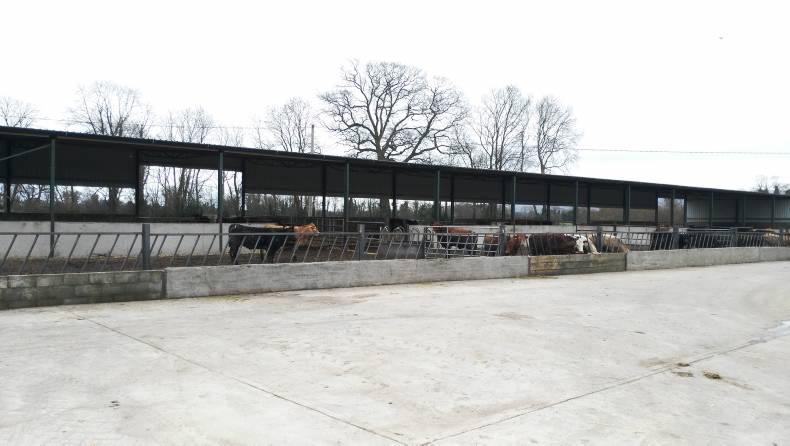
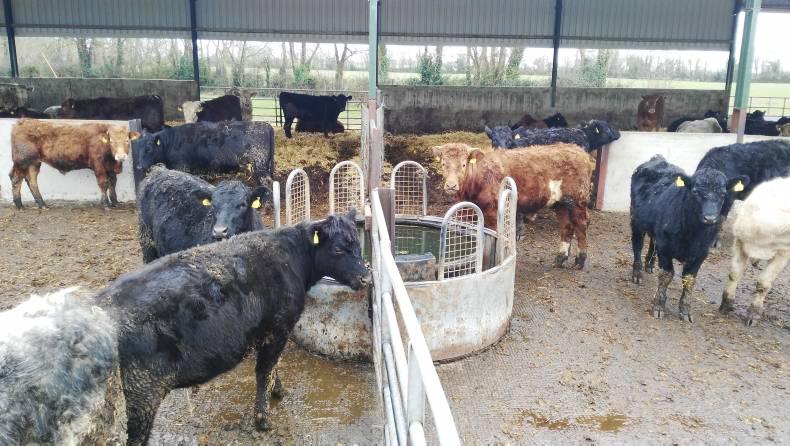
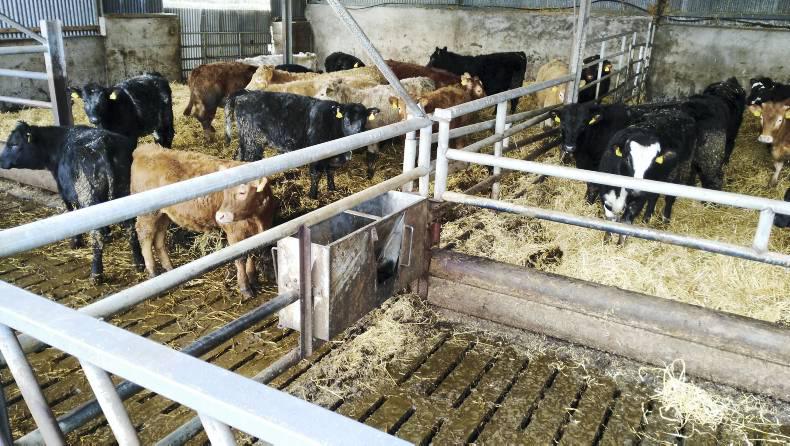
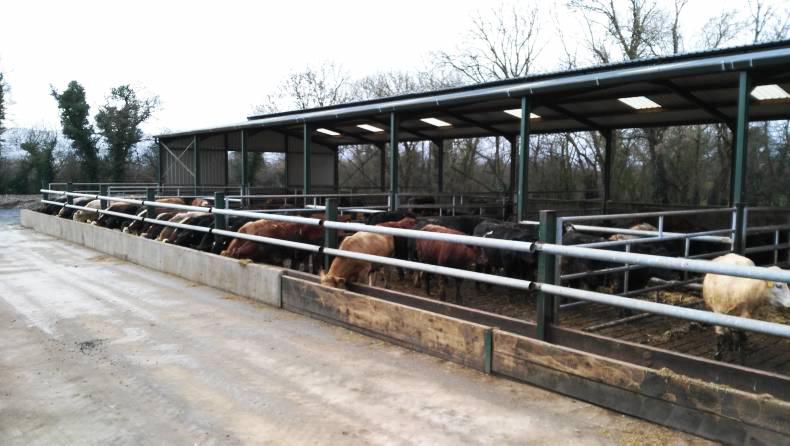
This is one livestock housing area that dominates John’s yard, occupying 1,368m2 of space. It is 12 spans long and divided into four separate pens that hold approximately 30 yearling cattle each.
One side of the livestock area comprises a large, open shed where cattle are on straw. To the front of this area, there is a solid floor area and feeding area.
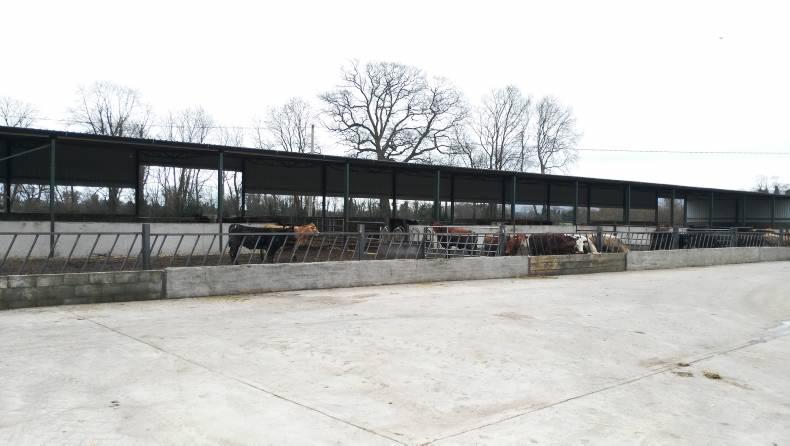
Having the shed high and open allows plenty of air movement, which helps to reduce the chance of respiratory diseases entering the herd. The shed is straw-bedded from the start of housing and is topped up as the season progresses.
A straw blower is used to blow two bales every two days over the wall and into the shed. Usually, it is cleaned out twice during the winter.
Permanent concrete troughs are located along the feed barrier and these are filled daily with a red clover-based silage using a forage wagon. Any waste silage is cleaned out manually.
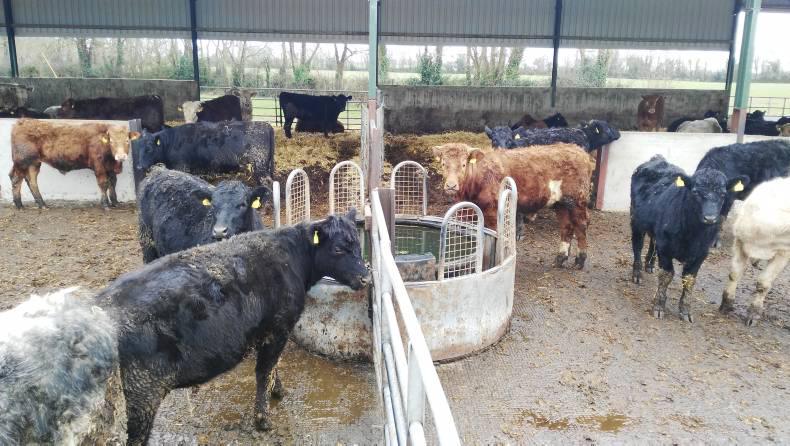
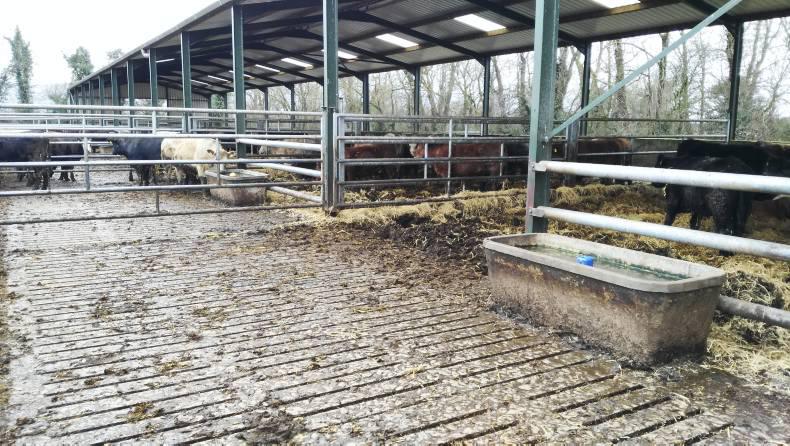
There are large plastic water troughs located between pens in the outdoor area. Round, steel silage feeders protect these troughs from damage but still allow cattle to drink.
This idea might be useful in fields as well as sheds for any type of farmer.
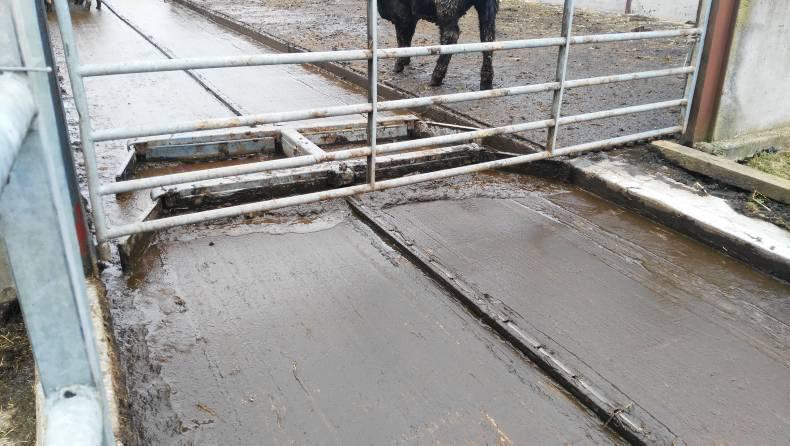
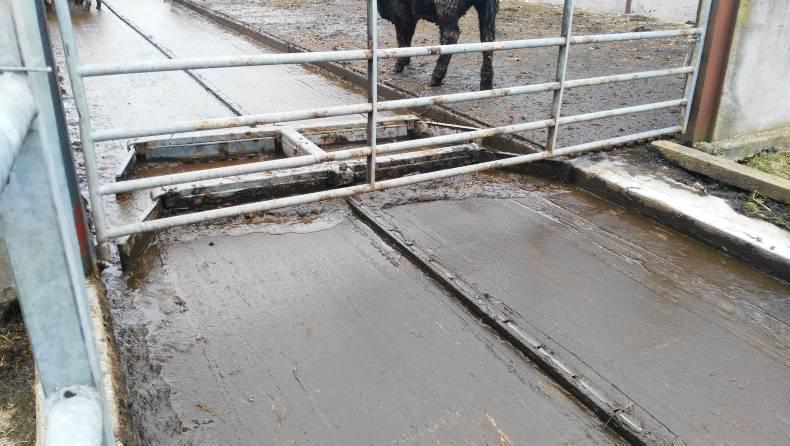
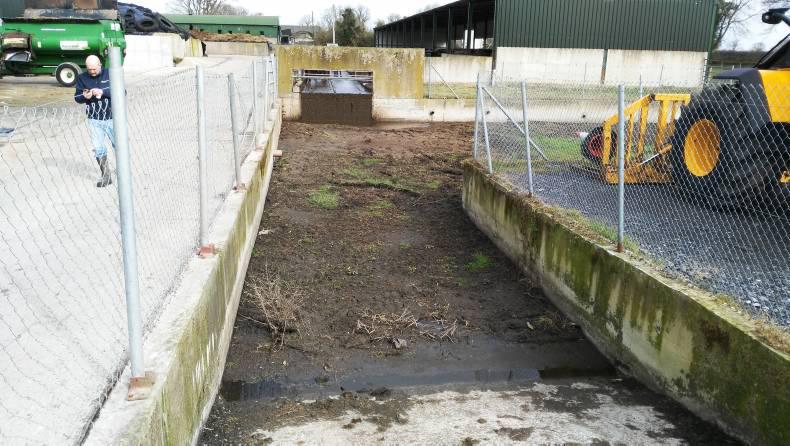
The feeding area to the front is automatically scraped and the slurry is deposited to an outdoor lagoon (picture three). This saves on the inclusion of a slatted area and may be an option for some farmers to save money.
Part of the concrete area is not scraped and has a rubber mat. This is manually scraped every two days towards the automatic scrapers.
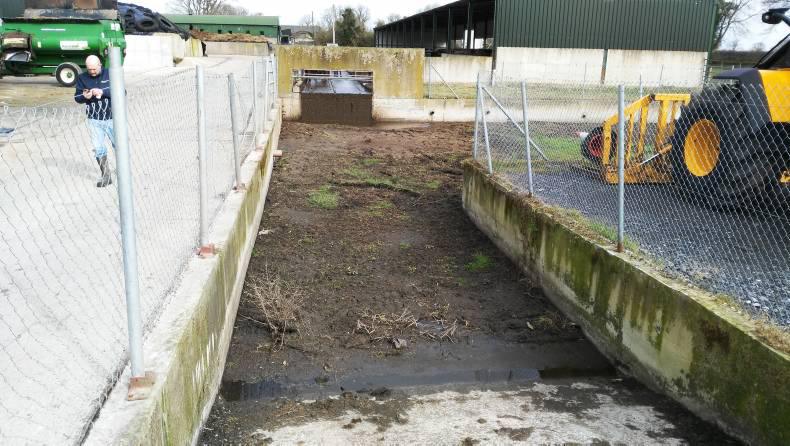
The lagoon is 6ft foot deep with a safety fence surround measuring approximately 100ft x 60ft.
Any solid slurry that is not easily agitated and removed with a vacuum tanker can be removed with a tractor and front loader using the ramp access point.
Pictures five and six
This was an old hayshed used on John’s farm. A slurry tank was built in front of the shed to increase the slurry storage and housing area for stock.
Many farmers changing from conventional farming may be able to do something similar with TAMS II grant aid.
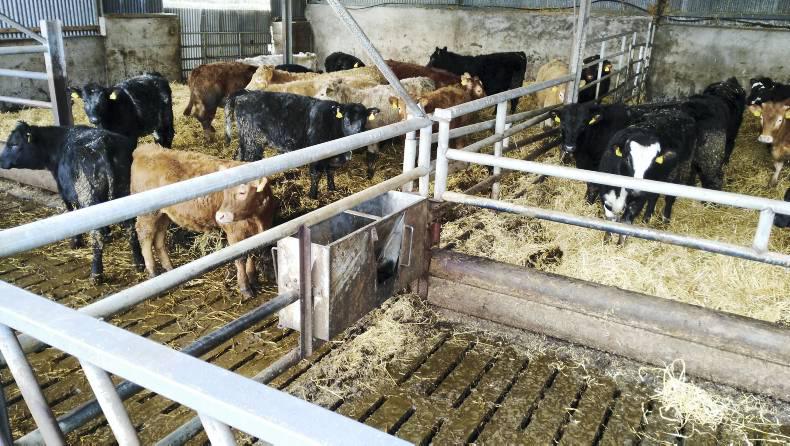
A greater roof area was added to cover the slatted area. The water troughs in this shed are designed to limit the chances of cattle dunging inside them. The back of the shed is straw-bedded, which provides plenty of comfort for animals. This shed usually houses the young stock as they arrive in the yard.
There are 2,000 bales of straw used annually on the farm for all the sheds in total.
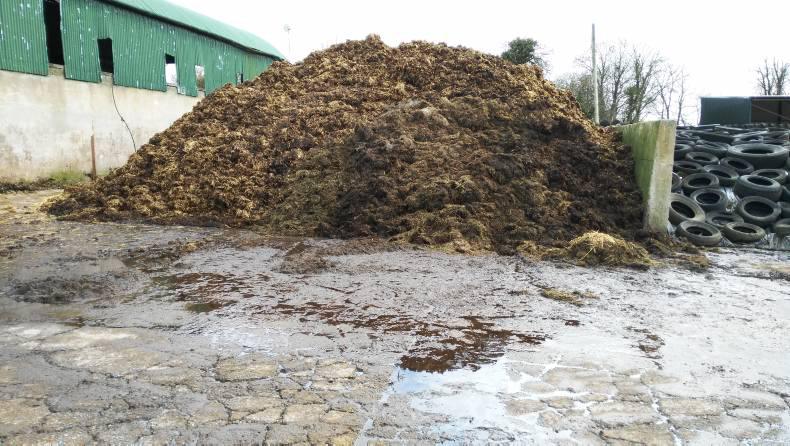
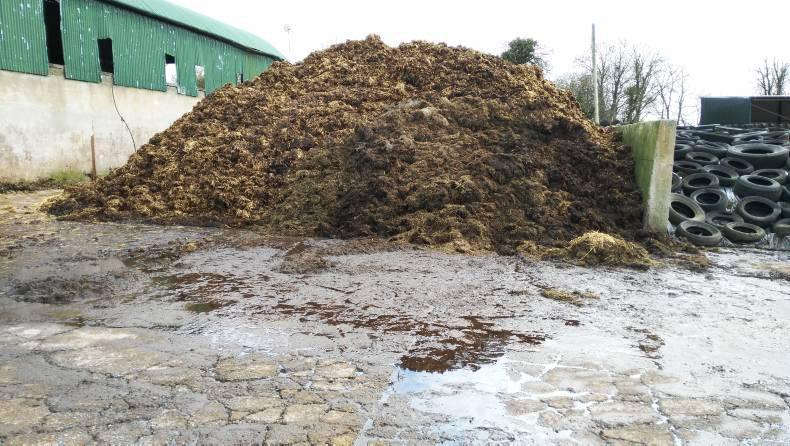
Farmyard manure storage is critical on this farm during the winter. When sheds are cleaned out, the manure is stored on a concrete flag and any dirty water is collected and piped back to a slurry tank.
Pictures seven and eight
The wintering facilities in the newest yard hold 20 finishing cattle per pen. They comprise two 12-span long (15ft 9in per span) slatted and dry-bedded areas and each side takes up 990m2. The slatted area at the front has 12ft 6in slats, with an 8ft deep tank.
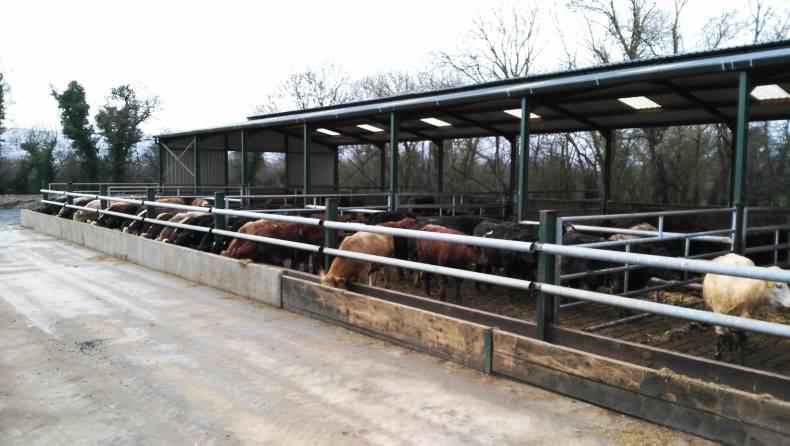
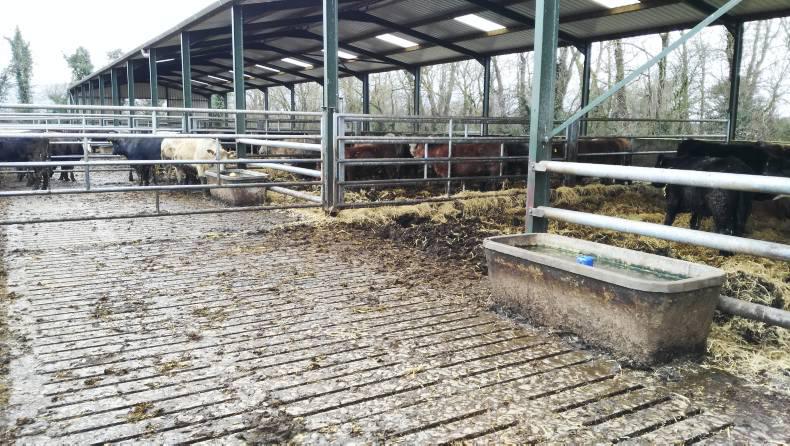
There is an indoor straw-bedded layback area also. This particular section at the back is 6in below the slat level, which allows a buildup of straw. It also reduces the chances of big quantities of straw being dragged on to the slats.
The 43ft-wide layback area has a roof and is open at the sides, again to allow plenty of air flow into the shed. Drainage piping allows dirty water from the layback area to drain into the slatted area, which helps to extend the lasting time of the straw-bedding.
If converting from conventional to organic – adjustments to meet organic housing standards may be necessary.Housing is not compulsory and is farm situation dependent.Livestock must have a smooth but non-slippery floor and must be provided with a comfortable, clean and dry lying area. At least 50% of the total floor areas must be solid, that is not of slatted or grid construction.Straw, rushes or untreated wood shavings are acceptable bedding materials and these need not be organic.All animal housing is subject to inspection and approval by the Organic Certification Body.
Recently, the Irish Farmers Journal visited John Purcell’s farm in Ross, Golden, Co Tipperary. John runs the largest organic enterprise in the country and finishes up to 700 cattle per year on his farm.
The rules surrounding housing for organic enterprises are different to those of conventional farming. According to the organic food and farming standards in Ireland, housing on organic enterprises must ensure that “the developmental, physiological and ethological needs of animals are met”. The livestock sheds on John’s farm provide excellent examples of the type of housing organic farmers should have in place if overwintering organic cattle.
Of course, the scale of the housing is far larger on John’s farm than the average organic farmer, but lessons can be learned from the way he houses his stock. Stocking density poses the greatest challenge for organic farmers when housing cattle. Table 1 shows the minimum stocking density requirement for animals being housed, dependent on the size and sex. The density must ensure the animals’ welfare is catered for by providing them with sufficient space to stand naturally, lie down easily and make all natural movements. All of John’s buildings allow for these density requirements.
Pictures one, two,
three and four
This is one livestock housing area that dominates John’s yard, occupying 1,368m2 of space. It is 12 spans long and divided into four separate pens that hold approximately 30 yearling cattle each.
One side of the livestock area comprises a large, open shed where cattle are on straw. To the front of this area, there is a solid floor area and feeding area.
Having the shed high and open allows plenty of air movement, which helps to reduce the chance of respiratory diseases entering the herd. The shed is straw-bedded from the start of housing and is topped up as the season progresses.
A straw blower is used to blow two bales every two days over the wall and into the shed. Usually, it is cleaned out twice during the winter.
Permanent concrete troughs are located along the feed barrier and these are filled daily with a red clover-based silage using a forage wagon. Any waste silage is cleaned out manually.
There are large plastic water troughs located between pens in the outdoor area. Round, steel silage feeders protect these troughs from damage but still allow cattle to drink.
This idea might be useful in fields as well as sheds for any type of farmer.
The feeding area to the front is automatically scraped and the slurry is deposited to an outdoor lagoon (picture three). This saves on the inclusion of a slatted area and may be an option for some farmers to save money.
Part of the concrete area is not scraped and has a rubber mat. This is manually scraped every two days towards the automatic scrapers.
The lagoon is 6ft foot deep with a safety fence surround measuring approximately 100ft x 60ft.
Any solid slurry that is not easily agitated and removed with a vacuum tanker can be removed with a tractor and front loader using the ramp access point.
Pictures five and six
This was an old hayshed used on John’s farm. A slurry tank was built in front of the shed to increase the slurry storage and housing area for stock.
Many farmers changing from conventional farming may be able to do something similar with TAMS II grant aid.
A greater roof area was added to cover the slatted area. The water troughs in this shed are designed to limit the chances of cattle dunging inside them. The back of the shed is straw-bedded, which provides plenty of comfort for animals. This shed usually houses the young stock as they arrive in the yard.
There are 2,000 bales of straw used annually on the farm for all the sheds in total.
Farmyard manure storage is critical on this farm during the winter. When sheds are cleaned out, the manure is stored on a concrete flag and any dirty water is collected and piped back to a slurry tank.
Pictures seven and eight
The wintering facilities in the newest yard hold 20 finishing cattle per pen. They comprise two 12-span long (15ft 9in per span) slatted and dry-bedded areas and each side takes up 990m2. The slatted area at the front has 12ft 6in slats, with an 8ft deep tank.
There is an indoor straw-bedded layback area also. This particular section at the back is 6in below the slat level, which allows a buildup of straw. It also reduces the chances of big quantities of straw being dragged on to the slats.
The 43ft-wide layback area has a roof and is open at the sides, again to allow plenty of air flow into the shed. Drainage piping allows dirty water from the layback area to drain into the slatted area, which helps to extend the lasting time of the straw-bedding.
If converting from conventional to organic – adjustments to meet organic housing standards may be necessary.Housing is not compulsory and is farm situation dependent.Livestock must have a smooth but non-slippery floor and must be provided with a comfortable, clean and dry lying area. At least 50% of the total floor areas must be solid, that is not of slatted or grid construction.Straw, rushes or untreated wood shavings are acceptable bedding materials and these need not be organic.All animal housing is subject to inspection and approval by the Organic Certification Body. 




SHARING OPTIONS