Last winter saw a large number of buildings damaged on Irish farms due to storms, with many roofs of older buildings destroyed in the high winds requiring serious repair.
While a certain proportion of this was/will be carried out by professional contractors, many farmers will feel that they have the necessary skills to complete these repairs themselves.
However, falls from heights and being hit with falling objects account for approximately 17% of farm fatalities and countless injuries, so extreme caution needs to be exercised when completing this type of work.
Before carrying out any work at height around the farm involving minor repairs on sheds, on buildings or on silos, you must ask yourself: are you competent and have you the right equipment to carry out the work safely? Following some of the simple steps listed below will help mitigate risks when working at heights on your farm:
1. Complete a risk assessment
All the hazards, including the presence of fragile roofing materials, should be identified and the controls established that will be put in place to reduce risks.
The principal risk when working at height is falls from ladders, through fragile roofing materials or from unprotected edges of roofs or other structures. In many cases, simple straightforward physical protection measures can prevent falls.
Most importantly, if you do not feel confident after completing the risk assessment that you can complete the task in a safe manner, changes will have to be made to improve the site safety and/or a professional agricultural building contractor employed to carry out the work.
2. Roofing materials
Many agricultural building roofs, particularly aged ones, are fragile and not weight bearing. A roof is considered fragile if it cannot support the weight of a person or where part or all of the roof can easily be broken or shattered. Most agricultural roofs are made either entirely or partly from fragile materials making carrying out any work at height on them a significant risk. Fragile roofing materials include:
Galvanised sheeting Unreinforced asbestos/cement fibre sheeting Roof lights such as Perspex sheeting Roof lights and perspex sheeting are a particular risk because they can be very hard to identify due to weathering or as they may have been painted over. Identify them and cordon off before working on a roof structure.
If you are replacing older roof lights, consider installing a safety cage underneath them for future works. This consists of rebar steel installed under the area of the roof light which will prevent a person falling through if they were to unknowingly stand on the roof lights. TAMS III aid is available for this retrofit work.
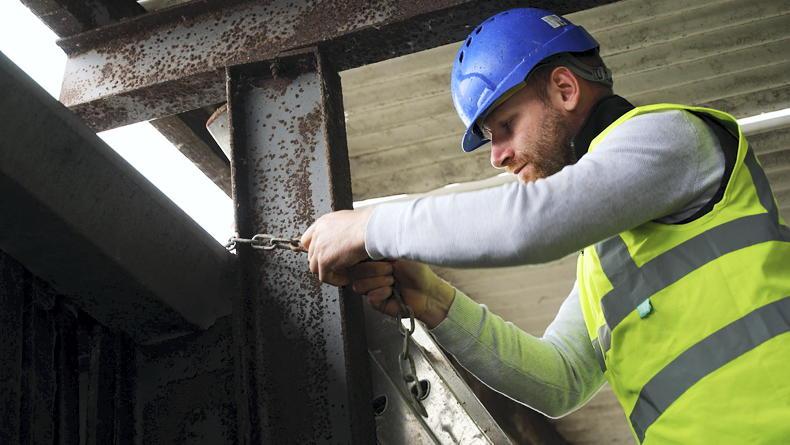
Ensure ladders are tied or footed correctly and only use for a short duration or in areas inaccessible to mechanical equipment.
3. Correct equipment
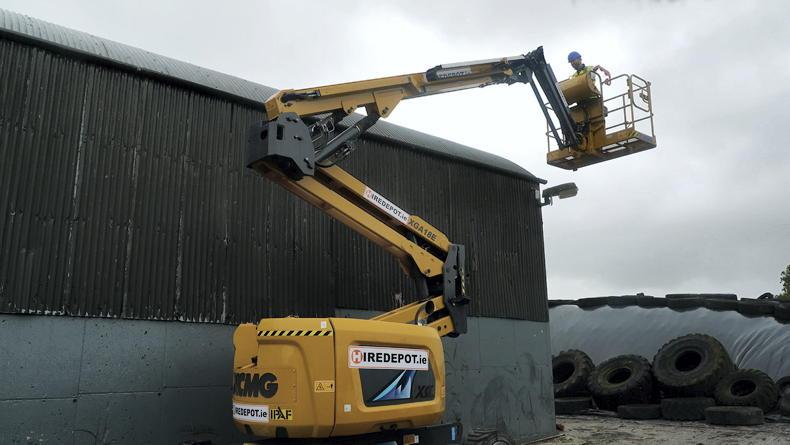
Using the correct equipment is essential. Pallets or buckets on a front loader are not safe for working from heights. A mobile elevating work platform (MEWP), commonly known as a cherry picker, in which the person completing the work has full control of the machine should be used, coupled with an appropriate safety harness and head protection. Be sure that you are competent in using a cherry picker before completing any work from heights.
The use of scaffolding may also be an appropriate choice in areas that are inaccessible with a MEWP, but this must be supplied and installed by a certified company. When using scaffolding, kicker boards should be fitted throughout.
Complete as much work as possible from the safety of the work platform, and when working on the roof surface itself, use crawl boards to help spread your weight across a larger area.
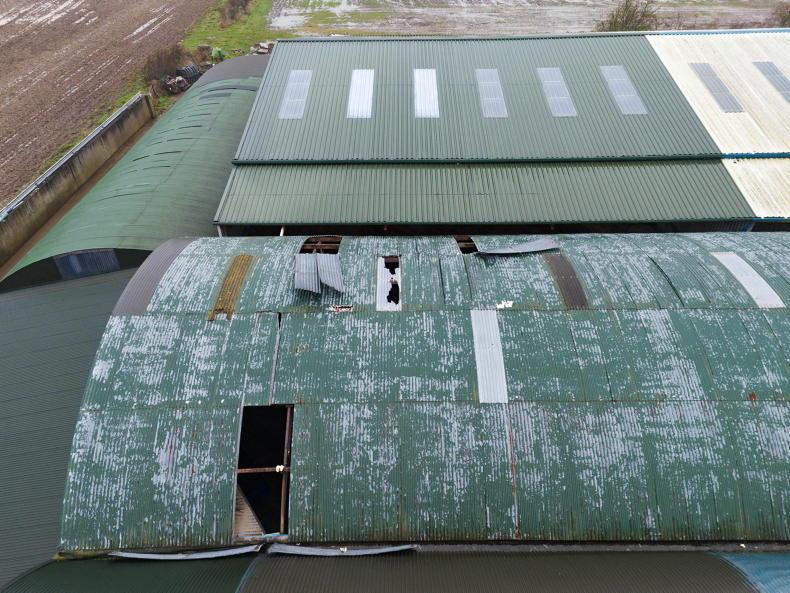
Storm damage in early 2025 caused significant damage to farm building roofs, but extreme caution needs to be exercised when completing repairs on these fragile roofs. \ Clive Wasson
4. Ladders
Deaths and serious injuries can be caused from ladders slipping sideways or kicking out at the base or someone simply falling from the ladder.
Ladders should only be used as a means of access or for work of very short duration when there is no other safer way of doing a job. When using ladders, ensure they are tied or footed to prevent slipping, always keep three points of contact with the ladder and avoid working from or stretching from the ladder.
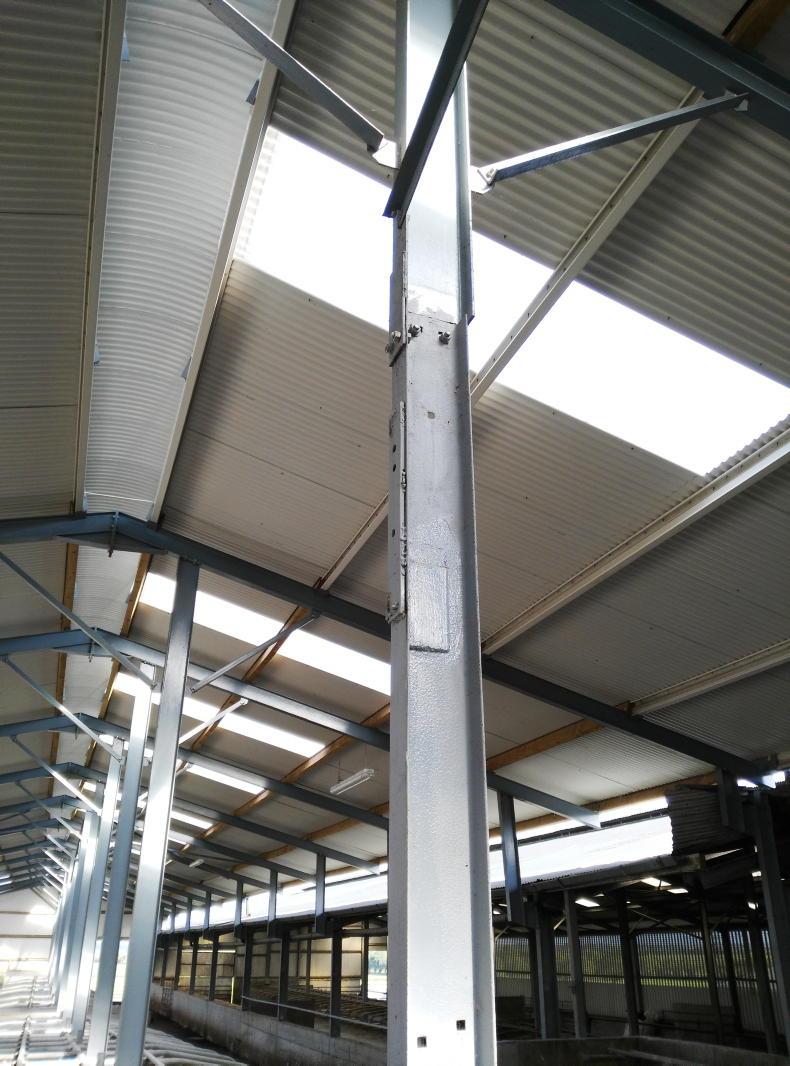
Grant aid is available to retrofit safety cages under skylights for improved safety, which is something many farmers should look at doing when repairing roofs.
Last winter saw a large number of buildings damaged on Irish farms due to storms, with many roofs of older buildings destroyed in the high winds requiring serious repair.
While a certain proportion of this was/will be carried out by professional contractors, many farmers will feel that they have the necessary skills to complete these repairs themselves.
However, falls from heights and being hit with falling objects account for approximately 17% of farm fatalities and countless injuries, so extreme caution needs to be exercised when completing this type of work.
Before carrying out any work at height around the farm involving minor repairs on sheds, on buildings or on silos, you must ask yourself: are you competent and have you the right equipment to carry out the work safely? Following some of the simple steps listed below will help mitigate risks when working at heights on your farm:
1. Complete a risk assessment
All the hazards, including the presence of fragile roofing materials, should be identified and the controls established that will be put in place to reduce risks.
The principal risk when working at height is falls from ladders, through fragile roofing materials or from unprotected edges of roofs or other structures. In many cases, simple straightforward physical protection measures can prevent falls.
Most importantly, if you do not feel confident after completing the risk assessment that you can complete the task in a safe manner, changes will have to be made to improve the site safety and/or a professional agricultural building contractor employed to carry out the work.
2. Roofing materials
Many agricultural building roofs, particularly aged ones, are fragile and not weight bearing. A roof is considered fragile if it cannot support the weight of a person or where part or all of the roof can easily be broken or shattered. Most agricultural roofs are made either entirely or partly from fragile materials making carrying out any work at height on them a significant risk. Fragile roofing materials include:
Galvanised sheeting Unreinforced asbestos/cement fibre sheeting Roof lights such as Perspex sheeting Roof lights and perspex sheeting are a particular risk because they can be very hard to identify due to weathering or as they may have been painted over. Identify them and cordon off before working on a roof structure.
If you are replacing older roof lights, consider installing a safety cage underneath them for future works. This consists of rebar steel installed under the area of the roof light which will prevent a person falling through if they were to unknowingly stand on the roof lights. TAMS III aid is available for this retrofit work.

Ensure ladders are tied or footed correctly and only use for a short duration or in areas inaccessible to mechanical equipment.
3. Correct equipment
Using the correct equipment is essential. Pallets or buckets on a front loader are not safe for working from heights. A mobile elevating work platform (MEWP), commonly known as a cherry picker, in which the person completing the work has full control of the machine should be used, coupled with an appropriate safety harness and head protection. Be sure that you are competent in using a cherry picker before completing any work from heights.
The use of scaffolding may also be an appropriate choice in areas that are inaccessible with a MEWP, but this must be supplied and installed by a certified company. When using scaffolding, kicker boards should be fitted throughout.
Complete as much work as possible from the safety of the work platform, and when working on the roof surface itself, use crawl boards to help spread your weight across a larger area.

Storm damage in early 2025 caused significant damage to farm building roofs, but extreme caution needs to be exercised when completing repairs on these fragile roofs. \ Clive Wasson
4. Ladders
Deaths and serious injuries can be caused from ladders slipping sideways or kicking out at the base or someone simply falling from the ladder.
Ladders should only be used as a means of access or for work of very short duration when there is no other safer way of doing a job. When using ladders, ensure they are tied or footed to prevent slipping, always keep three points of contact with the ladder and avoid working from or stretching from the ladder.
Grant aid is available to retrofit safety cages under skylights for improved safety, which is something many farmers should look at doing when repairing roofs.
SHARING OPTIONS