




For many who get in to milking, a parlour is usually the first thing that is thought of when it comes to milking; few people rule them out entirely. But for Robert Hennessy, the topography of his Kilkenny farm, with hills rising to 700ft above sea level (second highest peak in Kilkenny), a parlour simply wouldn’t work.
“We decided in 2021 that there wasn’t a future on this farm for sheep and cattle anymore; we just weren’t making a profit. None of our kids were going to stay here [at it]. We met with Declan [Dempsey] and drew up a business plan of where we were going,” stated host farmer Robert.
“We knew from the farm that we had that we couldn’t farm this land with a milking parlour, we knew we had to come up with some other system, so we decided to go with a robot.”
After meeting with Michael O’Grady of Lely at the Ploughing Championships in 2022, they surveyed the Hennessy farm as well as visiting some other hilly farms that were currently operating with robots. The decision was then taken to convert to dairying with the use of a automatic milking system (robot).
“They [Lely] came on board with us then, held our hands most of the way, drew up a plan for us on the land (roads) and our stocking rate and grazing plan.”
All of this work was completed in 2022, with the robot going into place in late 2023 ahead of calving in January 2024. ‘‘Heifers went through the system very quickly and, all of a sudden, you’re a milk farmer,” remarked Robert.
The system
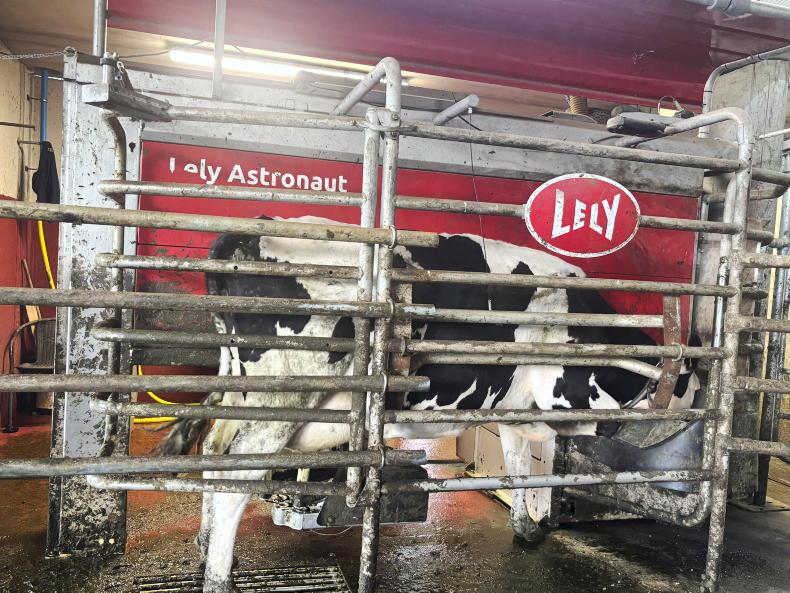
The Hennessy family are now in their second year of milking, with 72 cows passing through the Lely Astronaut A5 this year.
The herd was mainly a heifer herd in its first year, with a handful of cows purchased from neighbouring farmers.
“Heifers take on average nine visits to the robot to be trained, while cows will take approximately 13,” explained Michael O’Grady.
The herd is made up of cows of a robust enough size, with them being approximately 70% Holstein and 30% British Friesian.
Calving begins in early January, with 83% calving in the first six weeks, and cows can basically go to grass straight away, as the farm is extremely dry in nature, with a shale bedrock underneath the top soil.
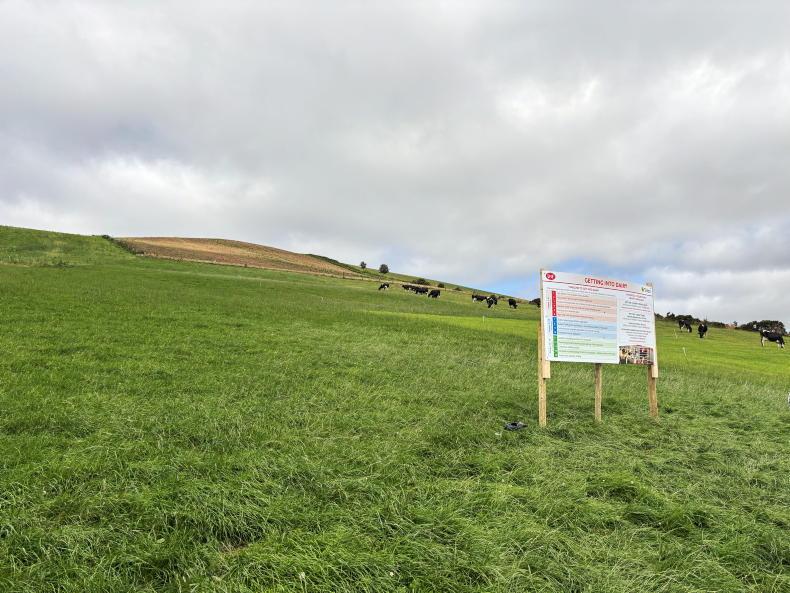
The herd in its first year achieved 404kg of milk solids with 1.1 tonne fed on average, with the feed to yield system rewarding the highest producing cows.
The herd is expected to achieve 450kg of solids this year at 1.4 tonne concentrates/cow, which will put them well above the Tirlán average with a herd that is yet to mature.
Converting
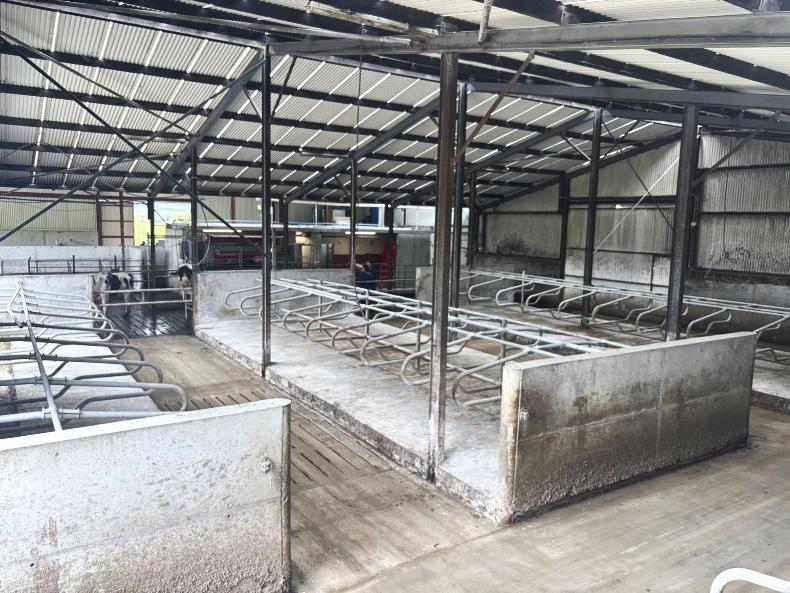
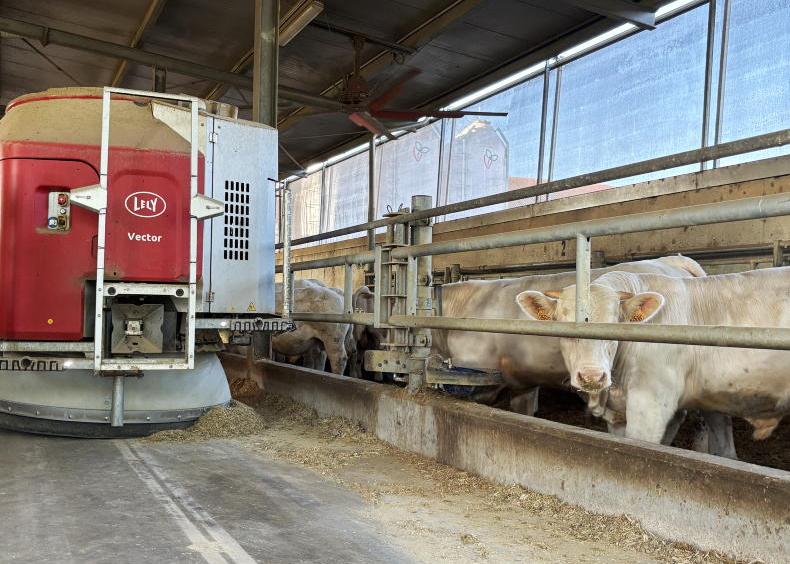
A decent five-bay shed for sucklers with a double tank within, each tank measuring 22m in length and overlayed with a 14ft 6in slat, was already on site and was converted over to cubicle accommodation, with just over 70 cubicles fitted between indoor and a small number of outdoor cubicles.
Outside the shed itself is a large open feed area which is partly slatted, with this new tank extending out in to the new shed which houses the milking apparatus, measuring 64m in length and again overlayed with a 14ft 6 in slat.
The walls of the old tank were cut to allow the new and old tanks to merge together. With the slurry from the uncovered yard mixing with that of the roofed tank, it should help when it comes to agitation.
The total slurry storage capacity of the new and existing tanks measures 1.064m³ (234,000 gallons), not including freeboard or rainfall allowance.
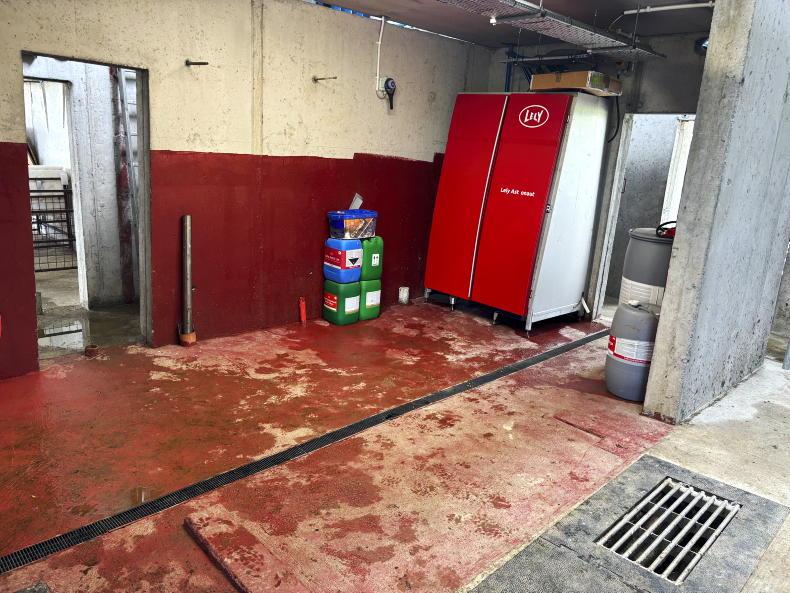
A new shed was then braced on to the older shed. Here the plant room, dairy, office, calving and calf area, separation area with seven cubicles and the robot room itself are housed. While the farm is currently operating with one A5 unit, a second one has been purchased and will be fitted in the later stage of the year. The general plan is to build to circa 110 cows, but Robert will increase cow numbers gradually to see what the farm can take.

Costs
The fact that Robert is a builder (and continuing to work off farm full time) meant that he was able to complete a good deal of the concrete work himself, while the beef cattle sold made for a direct replacement for purchased dairy stock. Reseeding had been carried out on much of the grazing platform prior to entering dairying. The costs in Table 1 do not include a second robot that is to be fitted this year.
When asked about borrowing money to establish the farm, Robert said: “We have it spread over 15 years, so it is not a huge annual payment, and the first year is interest only.”
Debt-to-cow ratio
Debt and the ability to borrow was one of the focal points of one of the earlier stands of the day, hosted by Patrick Gowing, Teagasc’s new entrant specialist.
“When we look nationally at the Profit Monitor, the net profit per cow for the lowest farmer is €200 while the highest profit is €2,200 so the borrowing/debt capacity of those two farms is very different.
“Approximately 1,300 farmers use it [Profit Monitor] annually. We are now sitting at 36-38c/ litre of a cost of production.
“The biggest difference between the most profitable farms and the least profitable is the net pasture per cow (amount of grazed grass in the diet) and days at grass.
“Another thing that would annoy me is that when we look at investment costs most people start in the yard and build out, and I know why, because it’s the biggest spend, but in reality you should start out here [in the paddock] and work your way in, because there is no point having a great robot, parlour or rotary, it makes no odds if you have no grass and poor cows.
“Invest the money out here, on roadways, water, cows, and get the investment in the right place.
Going forward
I didn’t think hills like it existed in Kilkenny, and neither did a pair of fellow Mayo men that were with me on the farm walk, but it’s hugely impressive to see what can be done on what can be a challenging land type.
Robert did say that there are certain hills that if it rains ahead of going out with fertiliser, then they will have to hold off for a day or so to let it soak away or risk a tractor sliding, while at the same time the shale rock is very close to the surface and drought did affect the farm earlier in the year.
The increase in cow numbers will be facilitated by the inclusion of a second A5 Astronaut unit, though additional cubicles will likely be required, something which was not mentioned on the day.
Robert will continue to work off farm as the herd grows, and a special word of thanks should go to him for being so open and honest about the cost of conversion.


SHARING OPTIONS