TAMS was a key topic up for discussion with regard to parliamentary questions posed to Minister for Agriculture Martin Heydon on 14 April last. Questions came from a number of representatives regarding the breakdown in applications per country, the approvals per scheme and the timeline regarding processing of applications.
LESS is more
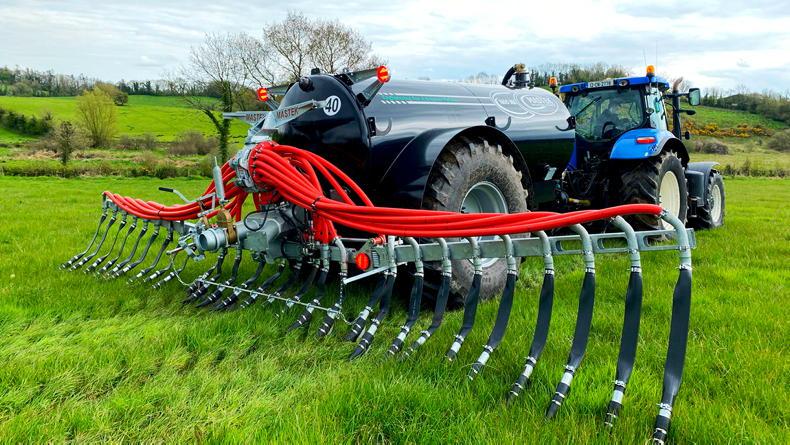
Of the €149 million paid out so far in TAMS III, the largest sum appears to be in LESS where over €33 million has been paid to date. This was paid out to 1,584 farmers to fund the purchase of new LESS equipment for the spreading of slurry.
“LESS is an important environmentally sustainable technology that will facilitate Ireland meeting its environmental commitments through reductions in ammonia and other reactive nitrogen emissions from soil’’ stated the minister. The above figure puts the average LESS grant aid given at €20,833/application.
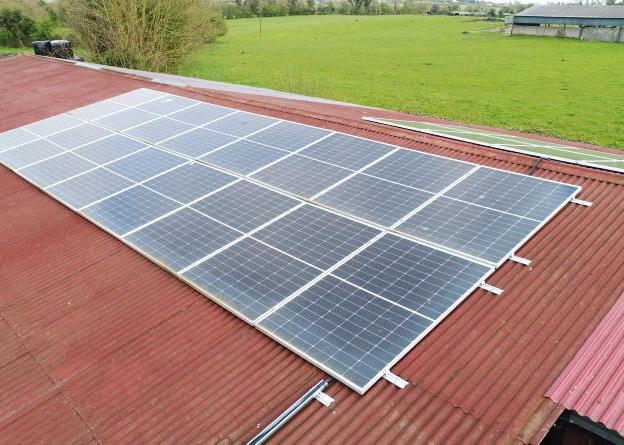
Following close behind is the Solar Capital Investment Scheme (SCIS) with over €29 million paid out between 2024, 2025 and to date in 2026. The total number of applications approved and paid equates to 1,567, meaning an average grant amount per project of circa €18,401.
The two schemes together (SCIS and LESS) have been attributed to 42% of all the monies spent so far, hence the reason for the row back in approval percentages for both. However, I do feel this was heavy handed, in that it should have been realised sooner the sheer volume of money being spent in these sub schemes and alterations made to criteria. An example of this would have been limiting LESS spending to just retrofitting LESS equipment to existing tankers or in limiting the SCIS to farm electricity usage only and not dwelling houses.
NISS fails to get out the gate
The Nutrient Storage Scheme that was opened in 2024 was also queried and the answer was telling. Just five applications were received for the scheme which carried its own separate ceiling of €90,000 for individuals and €160,000 for partnerships with an enhanced grant rate of 70%.
Restrictions around design, with concrete slatted tanks not permitted, mean that just five applications were received for the scheme, none of whom have yet drawn down their grant aid. Three applications have been made so far in 2026, with two being in Donegal and one being in Meath, while 2024 saw one application in Longford and an additional application in Meath approved, though no money was paid on either of these to date.
Cork the big winner
A breakdown of the number of applications approved was given for each sub scheme, with a trend evident in some of the most popular schemes. In the Animal Welfare and Nutrient Storage Scheme, Cork had the highest amount of approvals (1,725), followed by Galway (1,211) and Tipperary (966). For LESS, it was again Cork out on top at 313 applications, with Galway again the bridesmaid at 266 followed by an appearance by Cavan at 258. Finally, in the SCIS, Cork was again a clear leader with 227 approved applications, just shy of 100 more applications than Tipperary (129) who were the second highest approved, with Wicklow in third place (109). In the SCIS alone, Cork has seen €4.86 million paid out to date
Tick tock TAMS clock
Another question posed to the minister related the speed at which applications are processed. In his reply, the Minister highlighted the popularity of TAMS 3 with in excess of 63,700 applications submitted across the first eleven tranches of the scheme compared to 20,805 applications received over the same number of tranches in the 2014-2022 TAMS 2 scheme.
The minister also noted that despite the huge increase in applications, the Department of Agriculture has issued almost 44,000 approvals, allowing farmers to proceed with their investments, with payments of circa €2 million a week heading to farmers for completion of works/purchases.
Regarding approval timelines, the minister stated that approvals are issued within three months of ranking and selection of files under each tranche, and no longer than six months following the closure of a tranche.
‘’Payment claims are approved within two months following the receipt of the claim for payment (including valid supporting documents) and the completion of investments in accordance with specifications. Payments are issued to 100% of cleared cases within three weeks of approval for payment, when it has been determined that the work has been completed in accordance with the terms and conditions of the scheme.’’
The future of TAMS post CAP 2027 was also queried with the following response given by Minister Heydon. ‘’While discussions are still ongoing at EU level on the regulatory framework for the CAP post-2027, it is expected that on-farm capital investment will be provided for, as it is currently included in the draft legislative text.’’