This has been a challenging year for most sectors in agriculture, mainly down to increased input costs, reduced output prices and a healthy dose of bad weather in between.
The tillage sector has been particularly hard hit this year with poor grain yields, difficult harvesting conditions and the loss of straw crops.
Straw yields were poor to begin with, and many farmers opted to turn on the chopper and close the gate after them, regardless of whether they were in the straw incorporation scheme or not. The straw that was salvaged had been reportedly mediocre in quality and likely to be less absorbent.
All this leads to the likelihood of either a scarcity of straw or an increased price. So, are there alternatives?
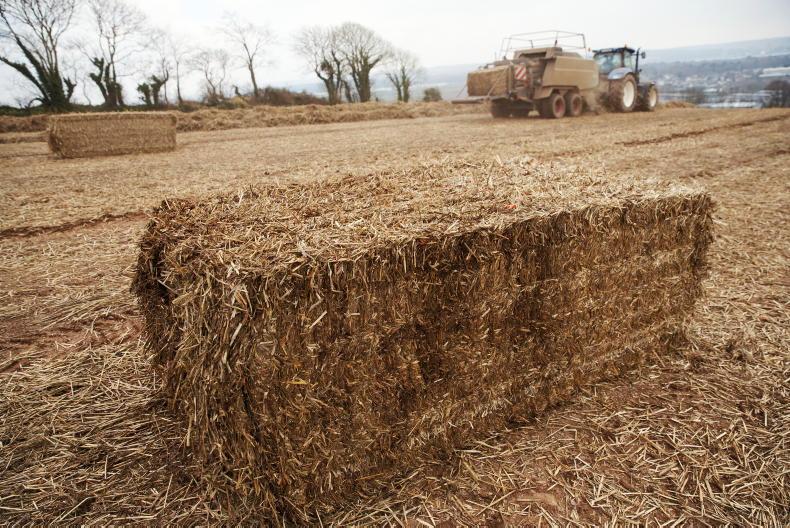
Straw has generally been lying on the ground for long periods this year, with a lack of good-quality, 'golden' straw.
Cereal straw
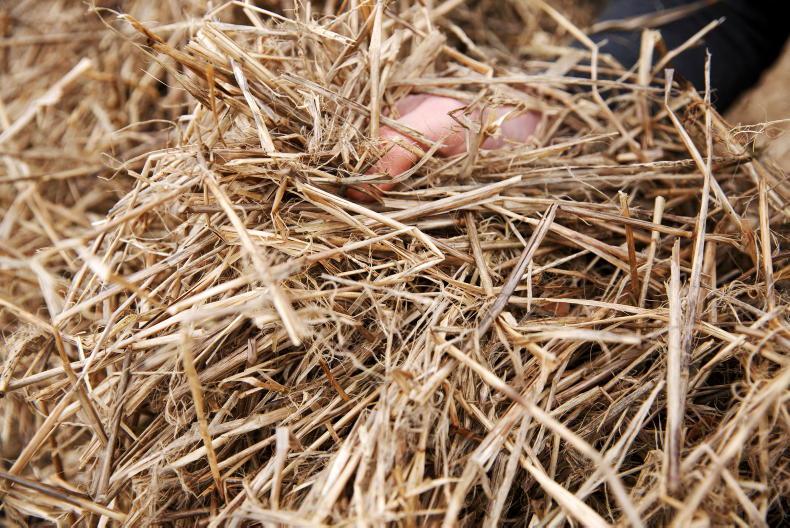
Straw is the most common bedding material as it is a useful ‘waste’ product from the tillage industry.
The benefits for soil P and K levels through chopping straw have now been realised, and a greater value on straw has been taken by tillage farmers. Any cereal straw can be used, though barley and oat straw are seen as the most popular by livestock farmers, with wheat straw mainly used in the mushroom industry.
Good quality straw has a high absorbency, provided it has been baled at the preferred moisture level of 15-20%. Absorbency levels can be increased by chopping the straw pre-bedding, with a deep layer applied for comfort. Deep bedding is particularly important for calves due to the ‘nestling’ effect. Calves prefer an ambient temperature of 18-20°c, but when a deep, dry bed of straw is provided calves can be comfortable and not waste energy on keeping themselves warm in temperatures as low as 8°c.
Straw can be used for any type of animal, with the resulting dung being of high nutrient value when composted
(generally for a number of months).
Some of the drawbacks with straw include the volume required, issues with dust (especially when using straw choppers around young animals) as well as quality and quantity issues in years like this.
Rape straw
Rape straw is a less commonly available source of straw due to the lower volumes of grain produced. However, it is seen as much more absorbent than any of the above straws with similar fertiliser values.
The coarse nature of rape straw make it unsuited to bedding of calves or lambs, although a bottom layer of rape straw with a top layer of barley/wheat/oat straw can work well.
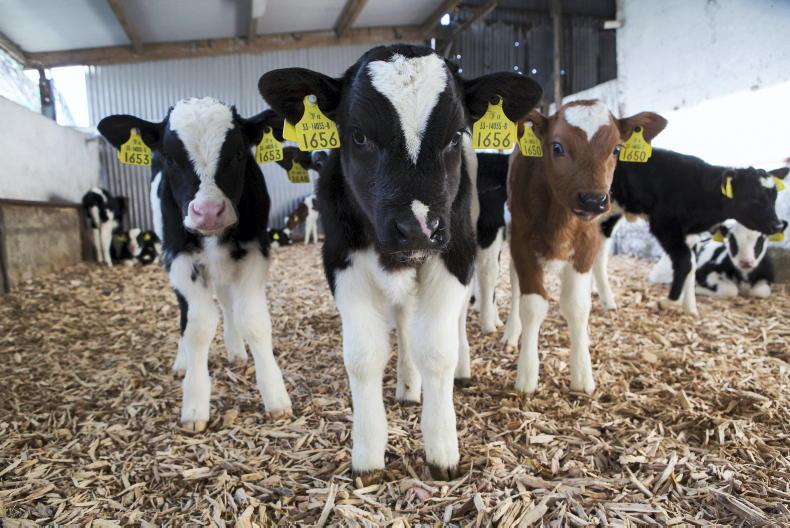
Woodchip does not allow for the nestling effect for young calves, such as those pictured, and poses difficulty with disposal.
Woodchip
Woodchip had enjoyed a few glory years pre-quota abolition for outwintering pads, but has generally been replaced by either topless cubicles or roofed structures. It is still infrequently used on some livestock farms and can work very well. It is important to source dried woodchip (below 30% moisture) to ensure adequate absorbency.
When applied in an initial deep layer of 10-12cm, the urine can pass down through the top layer of chips and be soaked by the bottom layer, and provided there is effluent channels in place, can drain off in to these channels similar to a stone drainage system. Livestock can remain very clean in woodchip bedding, and there is minimal work to keeping bedding topped up. Some of the issues around woodchip is sourcing dried wood free of preservatives, as they may be harmful to livestock. There can also be issues with foreign objects such as nails or screws through the bedding, depending on its origin. Woodchip bedding can take up to two years to be broken down in a dung store before applying on land, or can alternatively be ploughed in to ground.
The pros and cons of
sawdust and rushes
Sawdust or shavings can work in a similar way to peat, with the key being to source materials with a low moisture content.
Pre-packed sawdust or shavings can be very expensive and the key is to find a bulk source such as a local sawmill or joinery firm. As with woodchip, care needs to be taken that no preservatives or foreign objects are in the wood.
Dry sawdust and its fine particles can cause respiratory issues, and also become imbedded in sheep fleeces. But it can still be a useful base material with a layer of cereal straw used above a layer of shavings or dust.
Rushes
Rushes are often cut and baled for removal from land, with the baled rush sometimes being used for bedding.
Due to the waxy cuticle
(outer layer) of rushes it is extremely difficult to dry out rushes to make them absorbent of urine when used for bedding.
The high moisture content of rush bales can also lead to mould and fungus growth which can pose
respiratory issues for the farmer and livestock.
Finally, spreading spent rush bedding on land can cause rush seeds to be deposited and may cause an influx in rush plants on land that would normally see little to no rush
present.

Peat can absorb up to 10 times it's weight in water, though it is difficult to source and poses ethical issues.
Peat moss has become much scarcer in quantity due to the closure of many peat harvesting stations. When it can be sourced, it is probably the most highly absorbent bedding available, soaking up to 10 times its weight in liquid – three to four times more than straw. Providing a deep layer of peat (250-750mm) can greatly reduce the labour in bedding, with a well-maintained bed capable of lasting several months. Peat bedding can require loosening or rotovating to prevent caking. Heavy cattle work best for peat beds. Sheep and lighter stock lack the weight to effectively keep the bedding churned up. Peat can also be mixed with lime to create a bedding suitable for cubicles. Due to the acidic nature of peat, spreading spent peat bedding on land can reduce the pH of the soil, although no composting is required and it can be readily spread on to land. Environmental concerns should be taken into account.
This has been a challenging year for most sectors in agriculture, mainly down to increased input costs, reduced output prices and a healthy dose of bad weather in between.
The tillage sector has been particularly hard hit this year with poor grain yields, difficult harvesting conditions and the loss of straw crops.
Straw yields were poor to begin with, and many farmers opted to turn on the chopper and close the gate after them, regardless of whether they were in the straw incorporation scheme or not. The straw that was salvaged had been reportedly mediocre in quality and likely to be less absorbent.
All this leads to the likelihood of either a scarcity of straw or an increased price. So, are there alternatives?

Straw has generally been lying on the ground for long periods this year, with a lack of good-quality, 'golden' straw.
Cereal straw
Straw is the most common bedding material as it is a useful ‘waste’ product from the tillage industry.
The benefits for soil P and K levels through chopping straw have now been realised, and a greater value on straw has been taken by tillage farmers. Any cereal straw can be used, though barley and oat straw are seen as the most popular by livestock farmers, with wheat straw mainly used in the mushroom industry.
Good quality straw has a high absorbency, provided it has been baled at the preferred moisture level of 15-20%. Absorbency levels can be increased by chopping the straw pre-bedding, with a deep layer applied for comfort. Deep bedding is particularly important for calves due to the ‘nestling’ effect. Calves prefer an ambient temperature of 18-20°c, but when a deep, dry bed of straw is provided calves can be comfortable and not waste energy on keeping themselves warm in temperatures as low as 8°c.
Straw can be used for any type of animal, with the resulting dung being of high nutrient value when composted
(generally for a number of months).
Some of the drawbacks with straw include the volume required, issues with dust (especially when using straw choppers around young animals) as well as quality and quantity issues in years like this.
Rape straw
Rape straw is a less commonly available source of straw due to the lower volumes of grain produced. However, it is seen as much more absorbent than any of the above straws with similar fertiliser values.
The coarse nature of rape straw make it unsuited to bedding of calves or lambs, although a bottom layer of rape straw with a top layer of barley/wheat/oat straw can work well.

Woodchip does not allow for the nestling effect for young calves, such as those pictured, and poses difficulty with disposal.
Woodchip
Woodchip had enjoyed a few glory years pre-quota abolition for outwintering pads, but has generally been replaced by either topless cubicles or roofed structures. It is still infrequently used on some livestock farms and can work very well. It is important to source dried woodchip (below 30% moisture) to ensure adequate absorbency.
When applied in an initial deep layer of 10-12cm, the urine can pass down through the top layer of chips and be soaked by the bottom layer, and provided there is effluent channels in place, can drain off in to these channels similar to a stone drainage system. Livestock can remain very clean in woodchip bedding, and there is minimal work to keeping bedding topped up. Some of the issues around woodchip is sourcing dried wood free of preservatives, as they may be harmful to livestock. There can also be issues with foreign objects such as nails or screws through the bedding, depending on its origin. Woodchip bedding can take up to two years to be broken down in a dung store before applying on land, or can alternatively be ploughed in to ground.
The pros and cons of
sawdust and rushes
Sawdust or shavings can work in a similar way to peat, with the key being to source materials with a low moisture content.
Pre-packed sawdust or shavings can be very expensive and the key is to find a bulk source such as a local sawmill or joinery firm. As with woodchip, care needs to be taken that no preservatives or foreign objects are in the wood.
Dry sawdust and its fine particles can cause respiratory issues, and also become imbedded in sheep fleeces. But it can still be a useful base material with a layer of cereal straw used above a layer of shavings or dust.
Rushes
Rushes are often cut and baled for removal from land, with the baled rush sometimes being used for bedding.
Due to the waxy cuticle
(outer layer) of rushes it is extremely difficult to dry out rushes to make them absorbent of urine when used for bedding.
The high moisture content of rush bales can also lead to mould and fungus growth which can pose
respiratory issues for the farmer and livestock.
Finally, spreading spent rush bedding on land can cause rush seeds to be deposited and may cause an influx in rush plants on land that would normally see little to no rush
present.

Peat can absorb up to 10 times it's weight in water, though it is difficult to source and poses ethical issues.
Peat moss has become much scarcer in quantity due to the closure of many peat harvesting stations. When it can be sourced, it is probably the most highly absorbent bedding available, soaking up to 10 times its weight in liquid – three to four times more than straw. Providing a deep layer of peat (250-750mm) can greatly reduce the labour in bedding, with a well-maintained bed capable of lasting several months. Peat bedding can require loosening or rotovating to prevent caking. Heavy cattle work best for peat beds. Sheep and lighter stock lack the weight to effectively keep the bedding churned up. Peat can also be mixed with lime to create a bedding suitable for cubicles. Due to the acidic nature of peat, spreading spent peat bedding on land can reduce the pH of the soil, although no composting is required and it can be readily spread on to land. Environmental concerns should be taken into account.

SHARING OPTIONS