All farms containing livestock require a building or shed before receiving their respective flock/herd/swine number to house a sick or injured animal. While some farmers may choose to outwinter their animals, due to the high level of rainfall causing mucky grazing conditions and the fact that grass growth drops significantly due to cooler temperatures, the majority of farmers will house their animals inside and feed them on forages or concentrates.
So what makes a good livestock shed?
There are two main factors to consider here. Number one, is it a good fit for the livestock? Is there enough fresh air and light getting in to the shed? Are there good lying conditions underneath them? Secondly, the shed has to work well for the farmer from a safety and labour point of view. Let’s take a look at some of these details more closely.
Floor type
Have you ever slept in an uncomfortable bed with a spring popping up in the middle? Or have you ever gone camping and your tent leaked, getting your sleeping bag wet? Miserable, isn’t it? Livestock are the same – they hate lying down on uncomfortable or wet floors.
Dairy cows will generally be housed on cubicles with a rubber mattress underneath to keep their udder nice and clean and free from infection, while suckler cows and beef cattle will generally be housed on concrete slats.
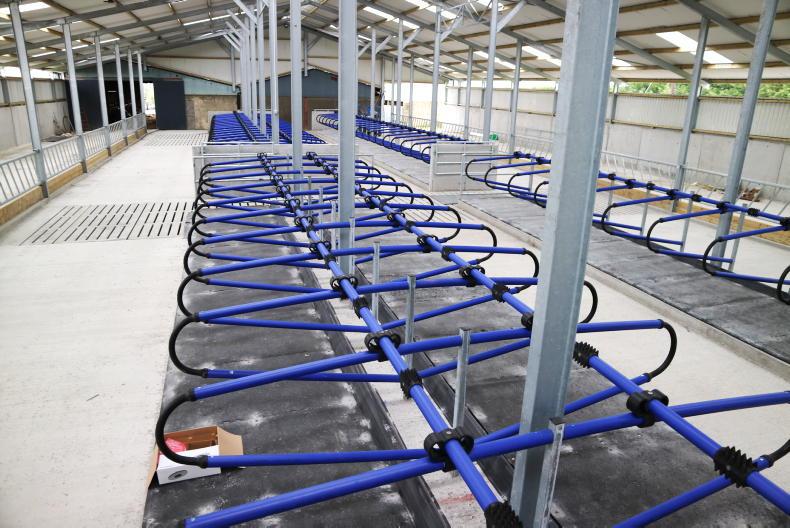
Cubicles are the bed of choice for dairy cows, as they keep the udder out of dirt and reduce the risk of infections.
To make sure dairy cows are comfortable, cubicles should be 2.4m in length when facing a wall, or 2.3m when facing another cubicle, and 1.2m wide to ensure the cow has plenty of space to get up and down.
Many farms install rubber matting on concrete slats to make them more comfortable for cattle to lie on, with Teagasc trials showing that cattle that are housed on slats with rubber matting put on 11kg more carcase weight than those on bare concrete slats. Whatever the floor type, there should be plenty of grip to ensure that an animal doesn’t fall and hurt themselves
Lighting
Good lighting is important for both animals and humans. Good natural lighting can be achieved by installing skylights in the roof of the shed, although these should be reinforced with steel bars to protect anyone falling through them.
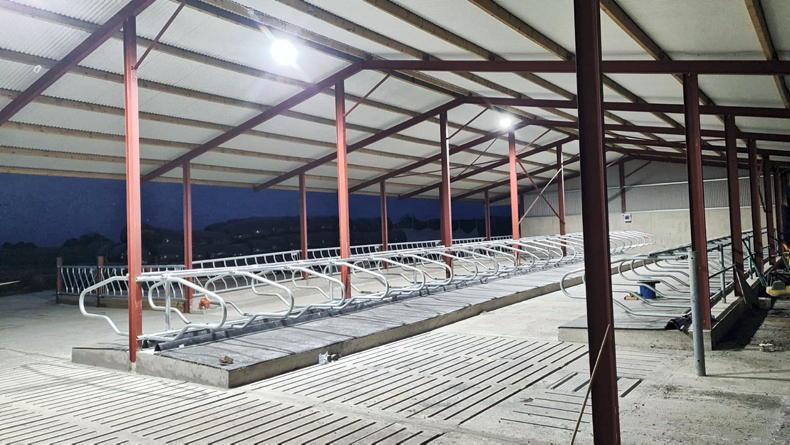
Having several high bay lights, like this shed, makes working in the dark much safer.
Artificial lighting should be installed for night time working, with LED tube lights or high bay lights providing good lighting while using less power than older fluorescent lighting.
Ventilation
Ventilation is one of the most important factors in a livestock shed. Signs of poor ventilation include black mould growing on sheeting or roof timbers, condensation or a high percentage of livestock contracting respiratory illnesses such as pneumonia.
A farmer should always try to have plenty of clean, fresh air coming into the shed, with a way for the warm, stale air to exit.
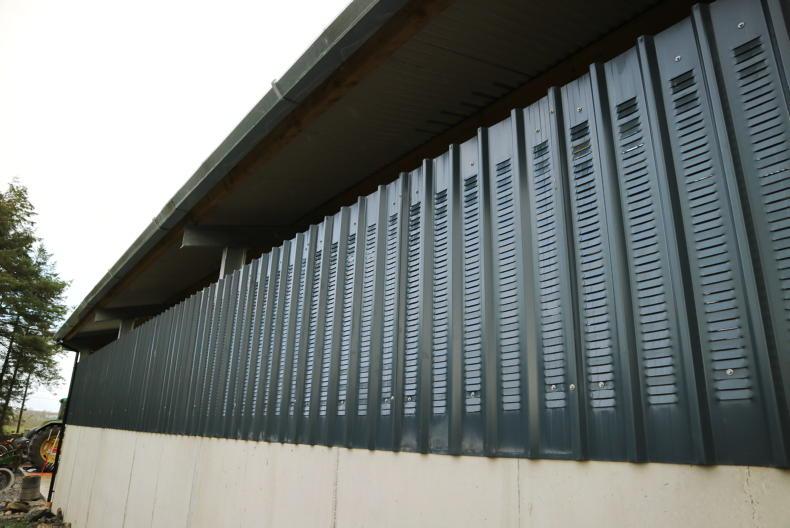
Vented sheeting or Yorkshire boarding on the sides of the shed, as opposed to solid sheeting, will allow more air to enter, while an outlet at the ridge (the highest point of the shed) will remove the stale air.
Access and safety
Safety for livestock and the farmer should always be to the front of the farmer’s mind when designing their shed. Gates and barriers should be correctly hung and high enough that livestock can’t jump over them. Vertical bars (that go up and down) are safer for cattle, as they are less likely to get their foot caught in them.
Farmers should be conscious of their own safety as well.
Head-locking barriers or a skulling gate should be installed on calving pens to allow for the proper restraining of freshly calved cows or to assist with a calving.
Access for machinery such as tractors and front loaders to enter dry bedded areas for cleaning out bedding should be kept in mind, with a minimum width of 3m required. Agitation points for mixing slurry tanks should be placed outside the shed.
All farms containing livestock require a building or shed before receiving their respective flock/herd/swine number to house a sick or injured animal. While some farmers may choose to outwinter their animals, due to the high level of rainfall causing mucky grazing conditions and the fact that grass growth drops significantly due to cooler temperatures, the majority of farmers will house their animals inside and feed them on forages or concentrates.
So what makes a good livestock shed?
There are two main factors to consider here. Number one, is it a good fit for the livestock? Is there enough fresh air and light getting in to the shed? Are there good lying conditions underneath them? Secondly, the shed has to work well for the farmer from a safety and labour point of view. Let’s take a look at some of these details more closely.
Floor type
Have you ever slept in an uncomfortable bed with a spring popping up in the middle? Or have you ever gone camping and your tent leaked, getting your sleeping bag wet? Miserable, isn’t it? Livestock are the same – they hate lying down on uncomfortable or wet floors.
Dairy cows will generally be housed on cubicles with a rubber mattress underneath to keep their udder nice and clean and free from infection, while suckler cows and beef cattle will generally be housed on concrete slats.
Cubicles are the bed of choice for dairy cows, as they keep the udder out of dirt and reduce the risk of infections.
To make sure dairy cows are comfortable, cubicles should be 2.4m in length when facing a wall, or 2.3m when facing another cubicle, and 1.2m wide to ensure the cow has plenty of space to get up and down.
Many farms install rubber matting on concrete slats to make them more comfortable for cattle to lie on, with Teagasc trials showing that cattle that are housed on slats with rubber matting put on 11kg more carcase weight than those on bare concrete slats. Whatever the floor type, there should be plenty of grip to ensure that an animal doesn’t fall and hurt themselves
Lighting
Good lighting is important for both animals and humans. Good natural lighting can be achieved by installing skylights in the roof of the shed, although these should be reinforced with steel bars to protect anyone falling through them.
Having several high bay lights, like this shed, makes working in the dark much safer.
Artificial lighting should be installed for night time working, with LED tube lights or high bay lights providing good lighting while using less power than older fluorescent lighting.
Ventilation
Ventilation is one of the most important factors in a livestock shed. Signs of poor ventilation include black mould growing on sheeting or roof timbers, condensation or a high percentage of livestock contracting respiratory illnesses such as pneumonia.
A farmer should always try to have plenty of clean, fresh air coming into the shed, with a way for the warm, stale air to exit.
Vented sheeting or Yorkshire boarding on the sides of the shed, as opposed to solid sheeting, will allow more air to enter, while an outlet at the ridge (the highest point of the shed) will remove the stale air.
Access and safety
Safety for livestock and the farmer should always be to the front of the farmer’s mind when designing their shed. Gates and barriers should be correctly hung and high enough that livestock can’t jump over them. Vertical bars (that go up and down) are safer for cattle, as they are less likely to get their foot caught in them.
Farmers should be conscious of their own safety as well.
Head-locking barriers or a skulling gate should be installed on calving pens to allow for the proper restraining of freshly calved cows or to assist with a calving.
Access for machinery such as tractors and front loaders to enter dry bedded areas for cleaning out bedding should be kept in mind, with a minimum width of 3m required. Agitation points for mixing slurry tanks should be placed outside the shed.





SHARING OPTIONS