


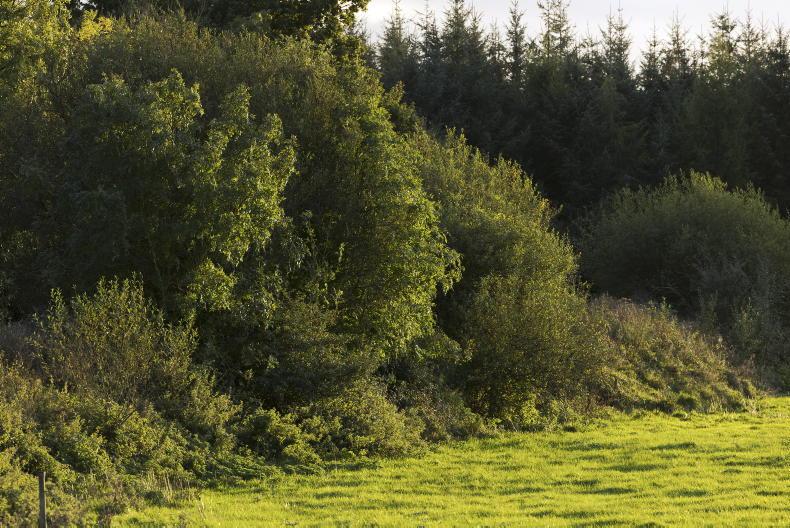
Hedgerows provide food and shelter for insects, birds and other animals, as well as forming corridors for wildlife to move between habitats.
In addition to this, nearly two thirds of Ireland’s bird species nest in hedges.
In general, hedges that are wide and high have a more diverse range of plant species and are the most beneficial to wildlife.
Hedges are also durable and provide shelter from wind for stock and crops alike.
Hedges as wildlife habitats
Hedgerows provide food, shelter and a habitat for many of our native flora and fauna. Hedgerow trees provide roosts for bats, while saplings just above the height of the hedgerow are important perching posts for birds.
Of the 110 species recorded in the countryside bird survey in Ireland during the breeding season, 55 use hedgerows. Of these, 35 nest in hedgerows over 1.4m high and 1.2m wide. These provide cover from overhead and ground predators.
Hedges with a dense base provide cover for small birds and mammals, such as the hedgehog. They also provide places for many native flora such as the primrose.
In turn, flora provides food sources, such as blackberries on the bramble. The network of hedgerows allows wildlife to move through the countryside. Birds, bats and butterflies travel along hedgerows, instead of across open fields.


SHARING OPTIONS