



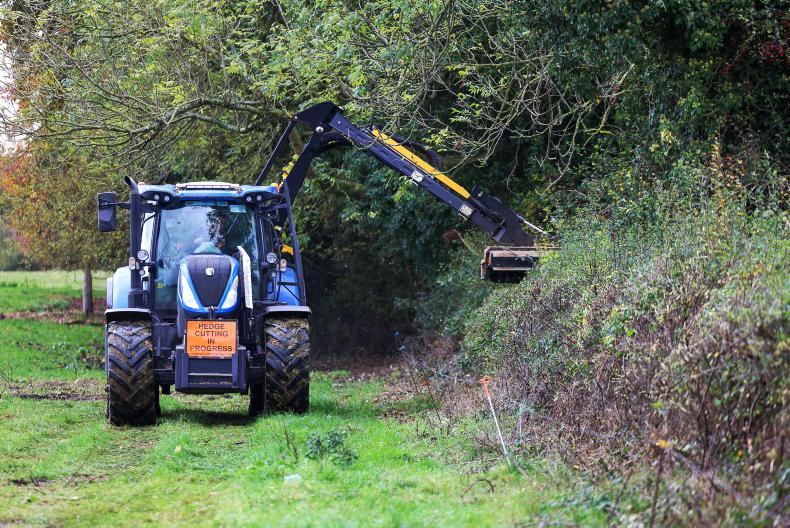
With hedge-cutting season under way, it’s time to move away from the overly manicured approach, Alan Moore of Hedgerows Ireland has said.
The group is hoping to challenge current thinking by asking what are you trying to achieve and could you get the same or improved results by small changes in practice?
“With changing weather patterns, hedges are now seen as a key defence system against flooding, soil erosion, water pollution, as well as accelerating biodiversity loss and CO2 emissions.
“Shelter and shade for livestock is increasingly recognised as a benefit during extreme weather. The cost-benefit ratio of hedges includes consideration of those beneficial insects in hedges that pollinate crops, such as oilseed rape and clovers, and those that control aphid infestation in cereals,” he said.
Best results
Moore said that severe annual cutting can kill a hedge and actually lead to net carbon emissions.
“In intensively managed farmland, hedges and ditches are where most wildlife can survive. The best results are achieved if there is a range of different hedge sizes and shapes in the landscape.
"This is because different birds, mammals, insects and plants have varying requirements and life cycles.
“If all hedges in a locality are cut to the same pattern and at the same time every year, then berries, seeds, nuts and fruit are removed and this greatly decreases biodiversity including winter feeding for bird life,” he added.
He said that some hedges should be trimmed annually to an A shape, with a wide base (which allows sunlight in to thicken the growth) and the cutting height should be increased incrementally by about 10cm each year.
Farmers should try leaving some hedges uncut or side trimmed only for up to three years on a rotation, he advised, as this will allow flowers, fruit, berries and nuts to grow.
If possible, he said to try to delay some hedge-cutting from the autumn until later in the winter to allow wildlife to feed on berries and nuts through the ‘hungry’ months.




SHARING OPTIONS