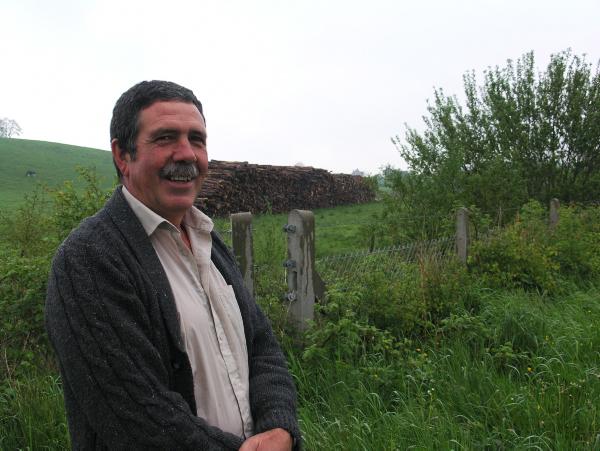
Willie McKenna formed Farm Woodlands Ltd in 1992 after 12 years with the Forest Service Northern Ireland. “It wasn’t a leap in the dark as the Woodland Premium Scheme for new woodlands was introduced that year, so there was optimism,” he says.
There was always a strong sense of entrepreneurship in the family and the lure to start up a business was inviting. While he enjoyed his work as a civil servant, he felt that he needed a more demanding challenge. The security of a pensionable job has its attractions but can also lead to negativity and the danger of “believing there is a problem for every solution,” as he puts it.
He had been prepared for the transition from civil servant to businessman since his early 20s. Encouraged by his parents, Willie along with his brothers Dessie and Michael purchased the local public house in Augher in 1977 from Packie Hackett. Like a lot of bars in rural Ireland at that time, it served more than spirits and ale; customers left with groceries, coal, meal and other goods, which were part and parcel of sustainable living in Ireland before the arrival of the supermarket and online shopping.
Thirty-seven years on, the bar is still going strong but, today, the McKennas also cater for the needs of different customers. Instead of groceries, forestry matters are discussed and, instead of selling coal, sustainable and renewable wood biomass is sold to heat the homes and businesses in the surrounding area. So, sustainable living is still at the heart of life at 59 Main Street, Augher.
Like the traditional shop, the forestry business has had to change since it was established in 1992. “The introduction of the Woodland Premium Scheme increased the interest in planting by private owners and we responded to this by taking on Michael and Anthony McConnell,” says Willie.
“At this point, all our work was in establishing woodlands and, by 2002, we employed six, including my youngest sister Kathleen, who took over the administration of Farm Woodlands, and Chris Keenan, who operated with the McConnell brothers,’’ he says.
Woodland maintenance
Slowly, the company’s work diversified, comprising approximately 80% woodland establishment and 20% woodland maintenance, which was funded under the Countryside Management Scheme, similar to REPS in the Republic of Ireland.
“Cathal Woods had also joined us and he had a keen interest in the management of older woodlands and in harvesting,” he says. “Whether it was by good luck or good management – I say the latter – Cathal’s timing couldn’t have been better,” he maintains.
“State support for the Woodland Scheme decreased, and afforestation dropped significantly, so we had to diversify into thinning, harvesting and marketing timber, all areas which Cathal excelled in.”
However, he admits that there are major challenges in harvesting and marketing timber in private forests. Forest blocks are small and fragmented, requiring a different approach to harvesting and sale compared with large-scale State plantations.
“We tried various methods of small-scale extraction, which had limited success but weren’t practical in the long-term,’” he claims.
“Cathal and I went to the Elmia Forestry Show in Sweden in 2013 with the Society of Irish Foresters, to see how they solved this problem which they had, but at a cost. The Swedes use special harvesting and extraction machinery suitable for small timber lots but these are expensive, anywhere between €80,000 and €200,000.
‘‘Swedish contractors have a continuous flow of large volumes of timber to harvest while we have limited work, so the machines lie idle from time to time.”
Instead, Farm Woodlands Ltd has been experimenting with developing a mini-forwarder for small timber lots with Aidan McKenna, a cousin who owns Allied Woodlands in Co Monaghan.
After clever and innovative modification of a dump truck, the McKenna ‘‘Irish Mini Forwarder’’ was born.
“It was built at a fraction of the cost of imported harvesters and is currently successfully deployed in extracting thinnings in Cloone, Co Leitrim,” he says.
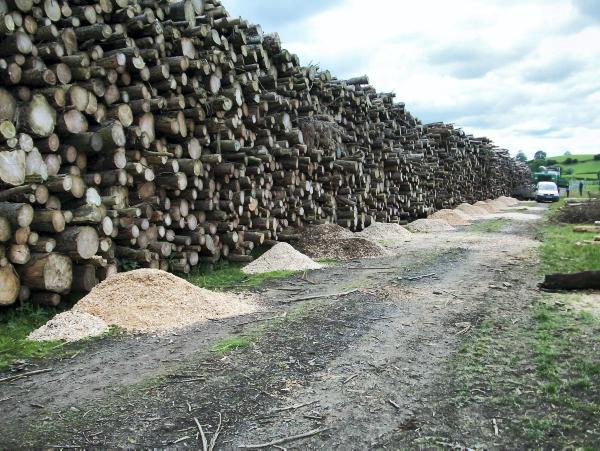
While the McKennas are no longer selling coal imported from Britain and Poland, they are now selling wood biomass, which is sourced locally and far better for the environment.
“In 2007, we diversified into the wood energy market by supplying woodchips to a number of local commercial enterprises,” he says.
“The introduction of the Renewable Heat Incentive (RHI) here in 2010 has had a positive effect on that side of our business.”
Woodfuel heating
The company is practising what it preaches and recently installed the first woodfuel mini-district heating system in the Augher area, supplying its own building and the neighbouring commercial premises.
The virtual collapse of private afforestation in Northern Ireland has forced Farm Woodlands to shift its workload from woodland establishment to mainly thinning, harvesting and woodfuel supply.
The company employs 12, comprising seven permanent staff and five machine operators subcontracted as required, while a number of experienced seasonal workers are employed during the planting season.
Willie McKenna is positive about the future, but believes that Farm Woodlands could easily double the workforce if a viable afforestation programme were achieved in Northern Ireland.
“New planting dropped to around 250ha in recent years and, currently, there is no afforestation scheme,” he says.
“An annual afforestation programme of 1,500ha to 2,000ha is necessary, to achieve the Department’s own target of doubling forest cover to 12% by 2050,” he maintains.
“Achieving this level of planting would transform forestry in Northern Ireland and the job creation opportunities,” he believes.
See www.farmwoodlands.co.uk for information.Approximately 6.5% of the land area of Northern Ireland is under forest compared with 11% in the Republic. Unlike the Republic, private planting is almost non-existent in the North. Both the North and South had 80% State and 20% private forest ownership up until the early 1980s. Realistic grant and premium payments transformed forest ownership in the Republic from the 1980s onwards and, today, 48% of forests are privately owned (mainly by farmers) while private ownership has remained static in the North.
The long-term forestry strategy in Northern Ireland is to achieve 12% forest cover by 2050, while the Republic aims to achieve 17% forest cover in the same period. To achieve its target, the North will need to plant 1,800ha annually, a sevenfold increase over recent planting returns. This level of planting would transform the forestry and forest products sector as well as creating much needed employment in rural area, as Willie McKenna points out.
However, it is unlikely to be achieved. During the six-year period from 2007/08 to 2012/13, total afforestation in the North amounted to 1,551ha when short rotation coppice (SRC) is excluded (Table 1). The solution is to provide farmers with the same supports available in the Republic, including annual 20-year premium payments between €370/ha and €515/ha. Perhaps Ministers Hayes and O’Neill might put this on the agenda at the next North-South body meeting.
Willie McKenna formed Farm Woodlands Ltd in 1992 after 12 years with the Forest Service Northern Ireland. “It wasn’t a leap in the dark as the Woodland Premium Scheme for new woodlands was introduced that year, so there was optimism,” he says.
There was always a strong sense of entrepreneurship in the family and the lure to start up a business was inviting. While he enjoyed his work as a civil servant, he felt that he needed a more demanding challenge. The security of a pensionable job has its attractions but can also lead to negativity and the danger of “believing there is a problem for every solution,” as he puts it.
He had been prepared for the transition from civil servant to businessman since his early 20s. Encouraged by his parents, Willie along with his brothers Dessie and Michael purchased the local public house in Augher in 1977 from Packie Hackett. Like a lot of bars in rural Ireland at that time, it served more than spirits and ale; customers left with groceries, coal, meal and other goods, which were part and parcel of sustainable living in Ireland before the arrival of the supermarket and online shopping.
Thirty-seven years on, the bar is still going strong but, today, the McKennas also cater for the needs of different customers. Instead of groceries, forestry matters are discussed and, instead of selling coal, sustainable and renewable wood biomass is sold to heat the homes and businesses in the surrounding area. So, sustainable living is still at the heart of life at 59 Main Street, Augher.
Like the traditional shop, the forestry business has had to change since it was established in 1992. “The introduction of the Woodland Premium Scheme increased the interest in planting by private owners and we responded to this by taking on Michael and Anthony McConnell,” says Willie.
“At this point, all our work was in establishing woodlands and, by 2002, we employed six, including my youngest sister Kathleen, who took over the administration of Farm Woodlands, and Chris Keenan, who operated with the McConnell brothers,’’ he says.
Woodland maintenance
Slowly, the company’s work diversified, comprising approximately 80% woodland establishment and 20% woodland maintenance, which was funded under the Countryside Management Scheme, similar to REPS in the Republic of Ireland.
“Cathal Woods had also joined us and he had a keen interest in the management of older woodlands and in harvesting,” he says. “Whether it was by good luck or good management – I say the latter – Cathal’s timing couldn’t have been better,” he maintains.
“State support for the Woodland Scheme decreased, and afforestation dropped significantly, so we had to diversify into thinning, harvesting and marketing timber, all areas which Cathal excelled in.”
However, he admits that there are major challenges in harvesting and marketing timber in private forests. Forest blocks are small and fragmented, requiring a different approach to harvesting and sale compared with large-scale State plantations.
“We tried various methods of small-scale extraction, which had limited success but weren’t practical in the long-term,’” he claims.
“Cathal and I went to the Elmia Forestry Show in Sweden in 2013 with the Society of Irish Foresters, to see how they solved this problem which they had, but at a cost. The Swedes use special harvesting and extraction machinery suitable for small timber lots but these are expensive, anywhere between €80,000 and €200,000.
‘‘Swedish contractors have a continuous flow of large volumes of timber to harvest while we have limited work, so the machines lie idle from time to time.”
Instead, Farm Woodlands Ltd has been experimenting with developing a mini-forwarder for small timber lots with Aidan McKenna, a cousin who owns Allied Woodlands in Co Monaghan.
After clever and innovative modification of a dump truck, the McKenna ‘‘Irish Mini Forwarder’’ was born.
“It was built at a fraction of the cost of imported harvesters and is currently successfully deployed in extracting thinnings in Cloone, Co Leitrim,” he says.
While the McKennas are no longer selling coal imported from Britain and Poland, they are now selling wood biomass, which is sourced locally and far better for the environment.
“In 2007, we diversified into the wood energy market by supplying woodchips to a number of local commercial enterprises,” he says.
“The introduction of the Renewable Heat Incentive (RHI) here in 2010 has had a positive effect on that side of our business.”
Woodfuel heating
The company is practising what it preaches and recently installed the first woodfuel mini-district heating system in the Augher area, supplying its own building and the neighbouring commercial premises.
The virtual collapse of private afforestation in Northern Ireland has forced Farm Woodlands to shift its workload from woodland establishment to mainly thinning, harvesting and woodfuel supply.
The company employs 12, comprising seven permanent staff and five machine operators subcontracted as required, while a number of experienced seasonal workers are employed during the planting season.
Willie McKenna is positive about the future, but believes that Farm Woodlands could easily double the workforce if a viable afforestation programme were achieved in Northern Ireland.
“New planting dropped to around 250ha in recent years and, currently, there is no afforestation scheme,” he says.
“An annual afforestation programme of 1,500ha to 2,000ha is necessary, to achieve the Department’s own target of doubling forest cover to 12% by 2050,” he maintains.
“Achieving this level of planting would transform forestry in Northern Ireland and the job creation opportunities,” he believes.
See www.farmwoodlands.co.uk for information.Approximately 6.5% of the land area of Northern Ireland is under forest compared with 11% in the Republic. Unlike the Republic, private planting is almost non-existent in the North. Both the North and South had 80% State and 20% private forest ownership up until the early 1980s. Realistic grant and premium payments transformed forest ownership in the Republic from the 1980s onwards and, today, 48% of forests are privately owned (mainly by farmers) while private ownership has remained static in the North.
The long-term forestry strategy in Northern Ireland is to achieve 12% forest cover by 2050, while the Republic aims to achieve 17% forest cover in the same period. To achieve its target, the North will need to plant 1,800ha annually, a sevenfold increase over recent planting returns. This level of planting would transform the forestry and forest products sector as well as creating much needed employment in rural area, as Willie McKenna points out.
However, it is unlikely to be achieved. During the six-year period from 2007/08 to 2012/13, total afforestation in the North amounted to 1,551ha when short rotation coppice (SRC) is excluded (Table 1). The solution is to provide farmers with the same supports available in the Republic, including annual 20-year premium payments between €370/ha and €515/ha. Perhaps Ministers Hayes and O’Neill might put this on the agenda at the next North-South body meeting.





SHARING OPTIONS