



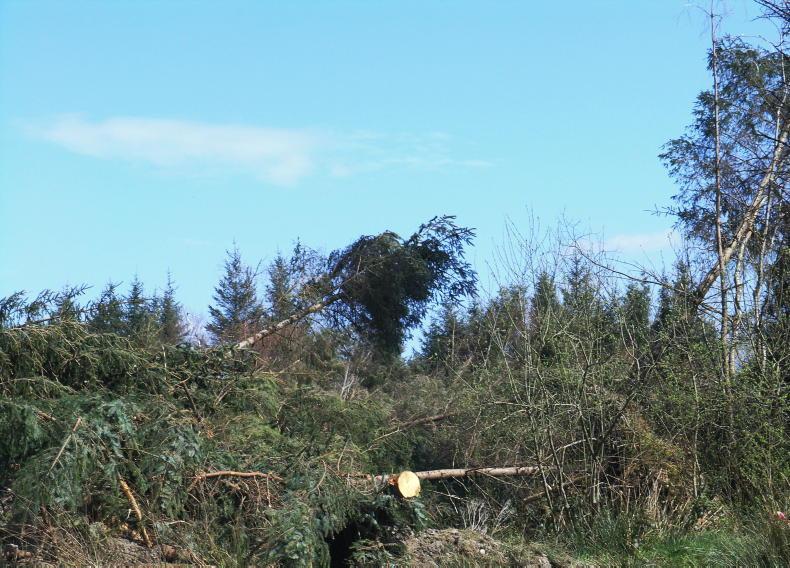
As forecast at the end of the spring planting season, last year’s increase in afforestation was unlikely to be matched this year, with 1,750ha planted so far, down by 22% compared with 2,258ha for the same period in 2025.
Road and felling licences are up while road construction remains the same as previous years. These returns are based on Department of Agriculture, Food and the Marine (DAFM) dashboard data up to the end of September.
Afforestation
An estimated 1,750ha of new forests were planted up to the end of September, compared with 2,258ha this time last year and 1,257 in 2024, but down on the average 1,900ha for 2020-22 (Table 1). This performance is well below the annual 8,000ha afforestation target required but at least the programme is no longer in freefall if you are a glass quarter full optimist.
It is likely that this year’s planting will come in around 2,000ha with little improvement next year. This is due to the constant poor level of licence approvals which were averaging over 3,000ha for the first three quarters up to 2024, not counting 2023 which was negligible due to the uncertainty in approving the Forestry Programme 2023-2027.
Source: Adapted by D. Magner from DAFM data 2021-2027
*licences negligible in 2023 during delay in approving Forestry Programme 2023-2027.
Licences were issued for 2,591ha for the first three quarters this year which should yield over 3,000ha by year end. At 60-70% uptake it will result in little more than a 2,000ha afforestation next year.
Annual planting returns at current levels, comprising up to 50% broadleaf – mainly native species – along with a mandatory 65% cap on commercial forests, rules out a sustainable long-term productive forest estate to support a viable construction and renewable energy sector as envisaged in Ireland’s Climate Action Plan.
Forest roads
Road licences were issued for 192km for the first three quarters, up on 181km last year but well down on 258km approved in 2024. Road completions so far this year are at 52km compared with 53km last year and 49km in 2024.
Felling licences
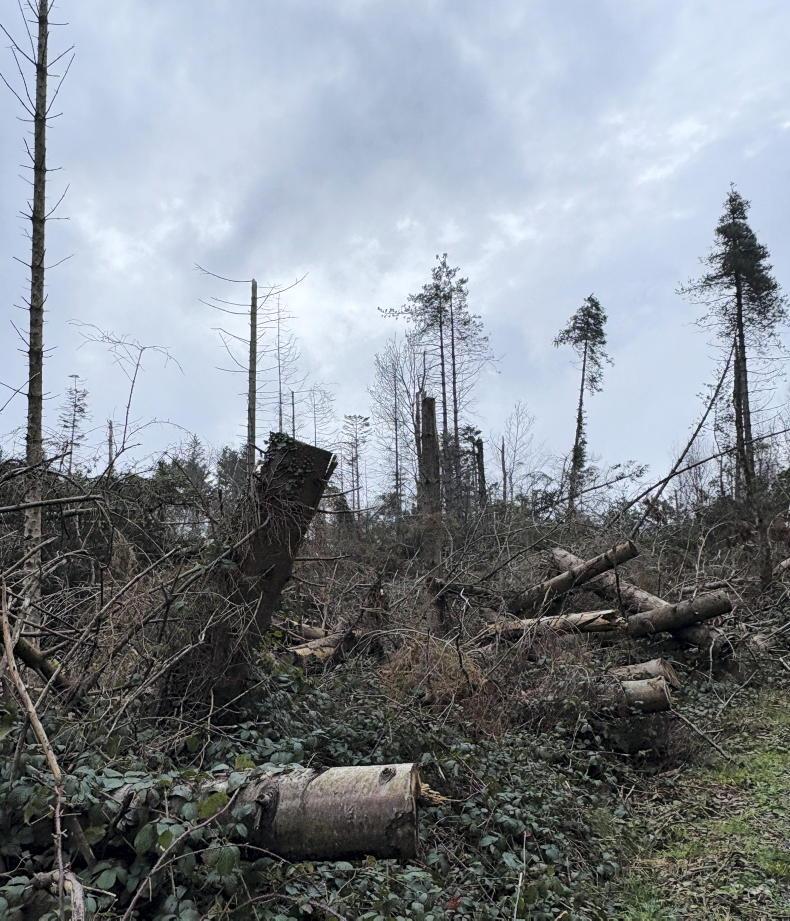
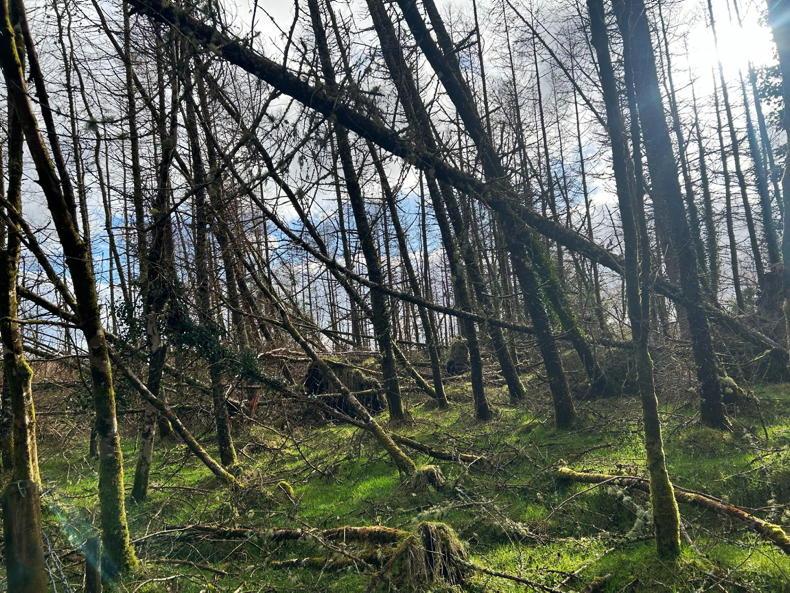
Felling licences were issued for 16,550ha up to September, which is well up on 2025’s performance of 13,832ha, but marginally down on 17,698ha achieved in 2024. It is difficult to assess this data in timber volume production as windblown licences are likely to impact on production levels.
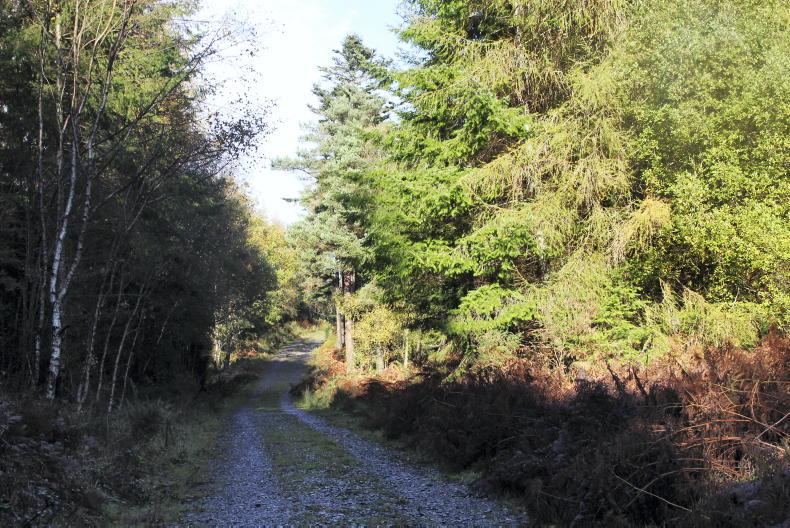
Up to September, 241 licences were issued under the Reconstitution Scheme for Windblow (RSW) amounting to 1,713ha. It’s early days as the first of these licences were only activated in July. The general view of forestry company spokespersons is positive in relation to the issuing of felling licences by Forest Service inspectors for windblown forests so that harvesting contractors can work without undue delays.
Replanting windblown sites
Less positive are the comments on conditions for grant aid under the RCW. Some interviewed said the conditions were onerous and “penny-pinching”.
For example a commercial windblown forest might be reduced significantly due to a new setback condition for roads, streams and other features.
Foresters had no objection to setbacks but said the new forest might include 10-15% biodiverse non-planted setback areas and these had to be managed and maintained. The total unit is classed as a forest area but the RSW is only being approved for 85-90%, so in a 12ha forest, between 10 and 11ha is grant approved.
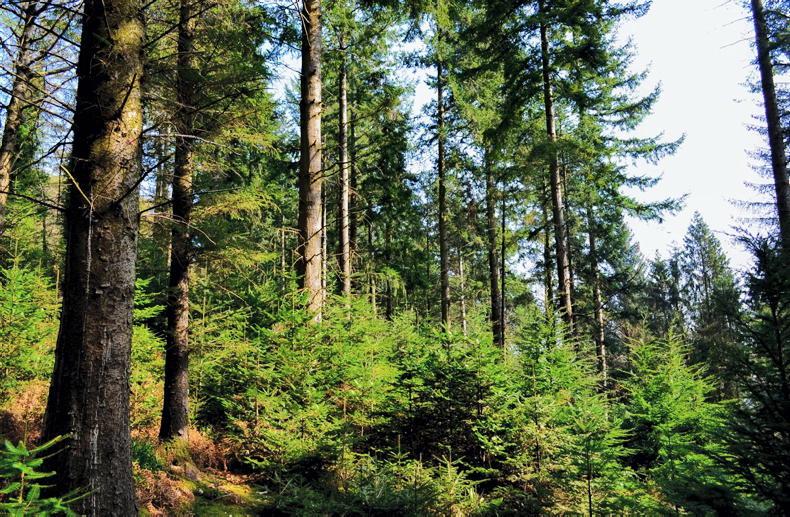
It is now apparent that the grant aid of €3,858 – paid in two instalments – for commercial crops is no longer sufficient to cover all the costs of ground preparation, replanting and maintenance.
Some forestry companies are carrying out establishment work and collecting the first instalment, while leaving the maintenance grant – four years after replanting – to the forest owner for cost reasons and also because the risk involved in four year maintenance is too great.
Forest owners may be attracted to this arrangement but should be familiar with challenges such as pine weevil control and plant replacement as Forest Service inspectors insist on survival rates of at least 90% before the final grant is paid.
When asked about felling and replanting small areas in the 3-5ha category, most forestry company representatives said these were not economically viable to harvest unless they are carrying quality logs with commercial potential.
“The sad refrain from some of these owners is ‘do I really have to replant’ when faced with little or no income now in what they thought would be a supplement to their pension,” maintained one forester.
A flexible RSW and an increase in the grant aid would help said one forestry company representative.
The terms and conditions of the RCW “may be revised from time to time by the Minister” so now may be the time to resurrect the dormant Windblow Task Force.
Forestry funding now only 4% of Department’s budget compared with 7.6% in 2017
Since 2017, funding for forestry has fallen from 7.6% to 4% (Table 2) within the Department’s own allocation, which in turn has shrunk from 2.5% to 1.8% of the total exchequer budget during the same period.
Source: Adapted by D. Magner from DAFM and Exchequer data.
When asked for comments on the Department’s allocation, there was a sense of resignation among forestry companies and consultants about the decline in funding which is matched by an even greater percentage drop in afforestation – from 5,500ha in 2017 to a likely outturn of 2,000ha this year.
Minister of State Niall Collins countered this argument by saying that the allocation for forestry has increased from €91m last year to €93m in Budget 2027.
He said that this level of funding will cover the coming afforestation programme. He was confident about achieving a good programme and pointed out that there “is 5,000ha of afforestation approvals” in the system.
He said the allocation will also be “sufficient to support forest owners impacted by the storms in 2025 through the Reconstitution Scheme for Windblow (RSW), which provides significant funding to clear and replant damaged forests.”
Afforestation challenges
After last week’s Budget 2027 press conference he spoke candidly about the challenges facing the afforestation programme including “environmental constraints” and “competing land uses”.
In relation to addressing environmental constraints in the new forestry programme, he said: “Without trying to reinvent the wheel, without having to go back to the Commission, and have the whole State-Aid conversation with them in terms of a successful programme, we are going to look at how we can push the boundaries a bit more in terms of the biodiverse requirement that we have at the moment”.
He said that he was “conscious that the replanting obligation is a significant part of the decision making process because you are committing land to forestry forevermore” but said he could not commit to changing the replanting requirement.
He was familiar with the recent Trinity College Dublin study on why farmers either delay or don’t plant. “My Department is conducting as wide as possible engagement with farmers and other landowners,” he said.
“Our behaviour and attitude survey is assessing people’s fears and concerns [about planting]. We’re doing a deeper dive into the reasons why people don’t plant because it is a huge commitment in terms of entering a programme that can be a 20- to 45-year time commitment.”
Budget response from FII
Forest Industries Ireland (FII) director Mark McAuley welcomed the increased allocation for forestry but said that “structural barriers and excessive red tape are choking the sector, rendering available funding moot as national afforestation rates languish at critically low levels”.
“The harsh reality is that funding is not the problem,” he said. “Irish afforestation rates remain far too low at around 2,000 hectares per annum. Clearly, there are major systemic issues preventing greater uptake by farmers, and the Government must urgently address these as it designs the next Forestry Programme commencing in 2028.”
He said the “chronically low planting rates pose a direct threat to the future viability” of Ireland’s wood products sector.
“To protect this vital sector, FII is calling for a redoubling of efforts to make forestry a highly attractive option for farmers, which requires drastically reducing red tape and ensuring forestry can compete effectively with other land-use options.”
“Problems continue to arise regarding stringent land eligibility criteria and hidden costs.” McAuley said “ We need to confront these issues head-on and allow more land to be planted. Right now, we are unnecessarily ruling out too much farmland that could be used for valuable, sustainable forestry.”
FII is calling on the Department “to immediately engage with industry stakeholders to streamline administrative processes, overhaul eligibility constraints, and secure the future of the Irish forestry sector while designing the 2028 Forestry Programme”.


SHARING OPTIONS