



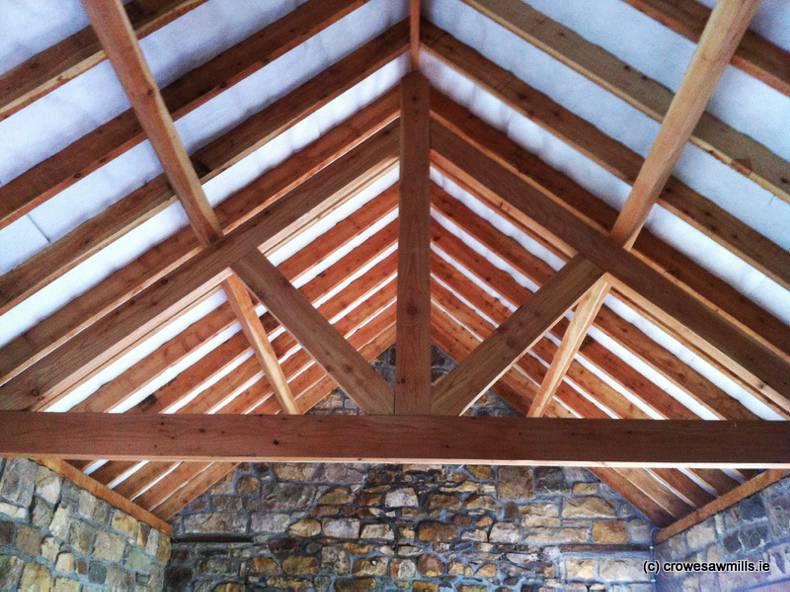
The year 1903 left its mark on Irish forestry by the great storm which blew down an immense number of trees, but it was significant for far more than this; it marked, however imperceptibly, the first definite turning of the tide of deforestation.
– HM Fitzpatrick (1965). The Forests of Ireland.
Only a brave man would establish a sawmill in Ireland in 1903, a year that saw Irish forestry at its lowest ebb for centuries. Forest cover had declined to 1.4% of the land area after centuries of exploitation and neglect, and sawmills also began to rapidly vanish from the landscape.
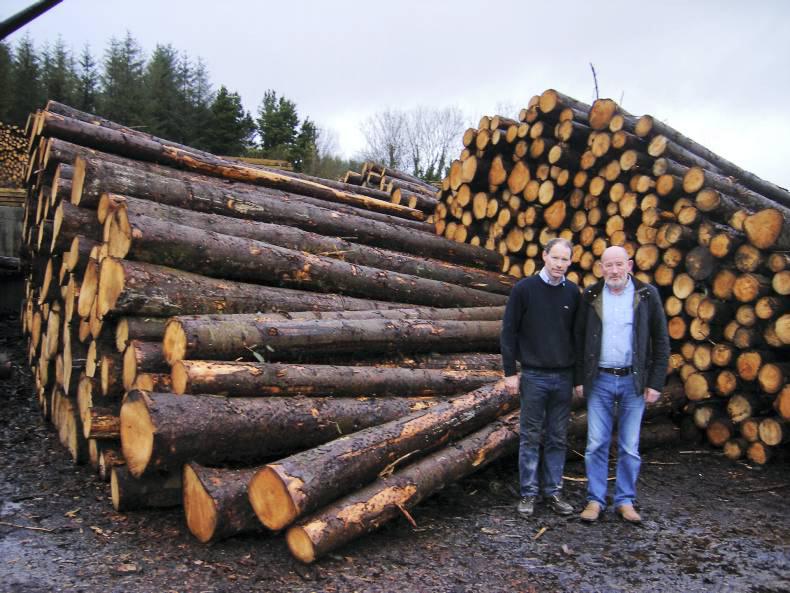
Yet in 1903, WA Crowe established Crowe’s Sawmill outside Mohill, Co Leitrim, and remarkably it has remained in family ownership since, despite further deterioration of Irish forestry, especially during and after World War II.
Generations of Crowes kept it in business, as outlined to the Irish Farmers Journal by Mack Crowe, who celebrated 50 years in the business this year. He has handed on the baton to his son Alan, but is still very much involved in the mill.
The sawmill’s capacity is 15,000 cubic metres, so it differs from other mills in terms of scale and diversity. It processes a much wider range of species than the larger sawmills, so the end product reflects – and enhances – the characteristics of the timber sawn, planed and treated.
The mill supplied the construction and pallet markets during the building boom, but even then margins were small in what is essentially a commodity market. By the time the construction industry collapsed, Mack and Alan were already changing their marketing philosophy from being a supplier of sawn timber to a manufacturer of niche products.
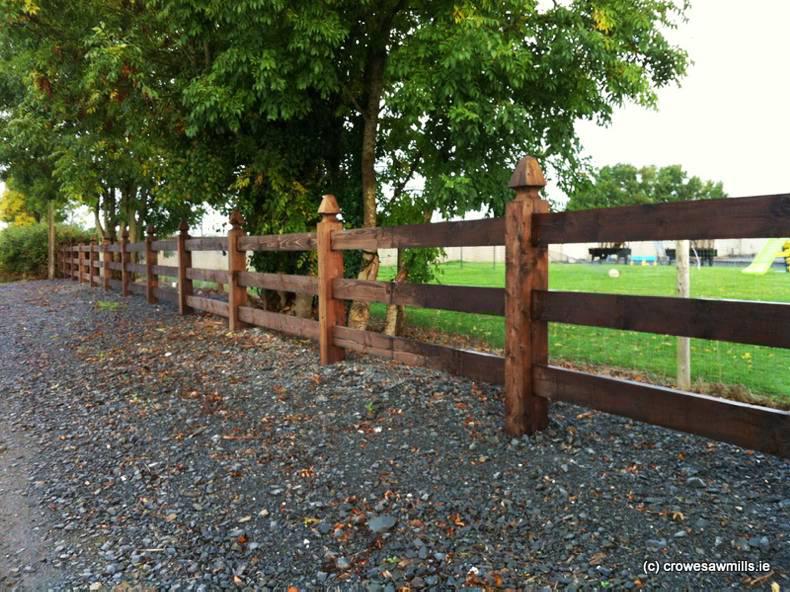
“Our aim is to add value to the timber by providing a quality product, mainly to the fencing market,” says Alan. The mill is no longer a “price taker”.
“We are not in the business of giving the timber away, so we aim to get a good return for a specialist product for fencing, cladding and related markets,” he says.
In the process, the mill has gradually changed from being a wholesaler to a predominantly retail business.
While the mill specialises in diverse species, it still processes spruce, some of it sourced in their own forest which Mack established in 1989. This acts as a reserve for the mill and even though it is only 26 years old, it has already supplied four thinnings.
However, the Crowes product range requires more diverse species than spruce. These include “minor conifers”, which the Crowes opt for because they are more durable and more aesthetically pleasing.
The preferred species include European and Japanese larch, Douglas fir and Scots pine. These are scarce and while some are imported, the Crowes try to source as much raw material as possible in Ireland.
“This often requires travelling long distances for suitable species – we recently purchased a lot of Douglas fir and Japanese larch from Coillte in Co Cork,” says Mack.
But he maintains that it is worth it even though transport is now a major production cost. However, their customers understand the benefits of using these specialist timbers and the demand is brisk.
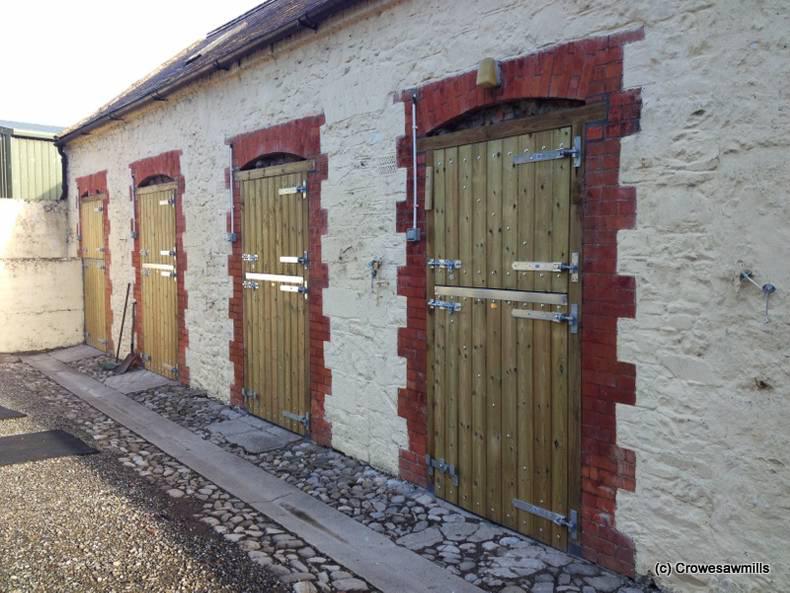
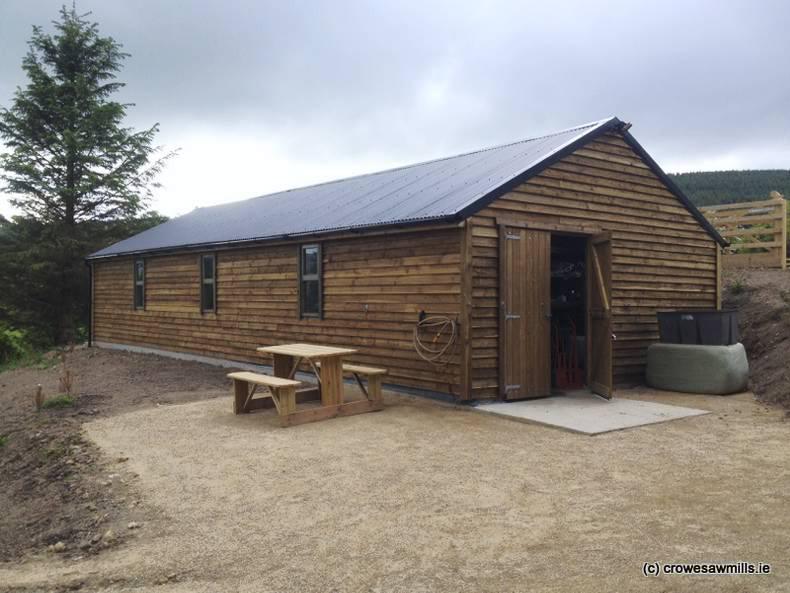
Walking around the mill, the visitor realises how extensive the Crowe product range actually is. It includes:
When asked about future plans, Alan says that they will continue to develop their product range while being conscious of maximising the service life, especially of timbers in ground contact.
“All our timber is kiln-dried and pressure-treated with environmentally friendly preservatives,” he says.
They want to further enhance the timber’s lifespan.
“We are currently exploring the installation of a timber incising machine to add to the service life of timber,” he explains.
Incising is a mechanical process whereby customised blades make tiny cuts into round or squared timber fencing posts. This, he explains, “will allow deep penetration of preservatives into heartwood and sapwood”.
The mill also plans to trial export some of their high added-value products to the UK. However, both Mack and Alan are realistic about this and conscious of the stiff competition they are likely to face from similar mills dotted around the UK that have inbuilt transport cost and other logistical advantages.
They both discuss issues such as timber supply which is important in a sector that has overcapacity.
Apart from their own forest, all their logs are purchased from Coillte. Alan says that the recent change in the Coillte marketing strategy to provide 50% of logs on a quota system is a positive move and ensures security and continuity of supply.
He also praises Coillte’s staff for their co-operation, especially in sourcing specialist timber.
As Irish timber processing continues to grow in scale, it is important to emphasise the role of smaller mills. Private growers have planted a diverse range of species over the past three decades – hardwoods and softwoods – and mills such as Crowe’s have the expertise to maximise the value of these species, providing the quality is high.
They also generate much-needed employment and wealth, especially in rural Ireland. Crowe’s Sawmill employs 10 people directly, as well as being responsible for additional jobs in transport, harvesting and service areas.
After 112 years of sawmilling, generations of Crowes have surely demonstrated that their business is sustainable and profitable and an important part of the Irish forestry and forest products industry.



SHARING OPTIONS